
GVSN: Breaking the Script with Virtual Social Networks for NPCs
A Gossip Virtual Social Network for Non Playable Characters in Role Play Games
The paper introduces a Gossip Virtual Social Network (GVSN) for Non-Playable Characters (NPCs) in Role-Playing Games, which enables decentralized information exchange using gossip algorithms. By shifting from pre-scripted static behaviors to a dynamic social-psychological rule-based system, the authors achieve self-evolving NPC knowledge and believable social interactions.
TL;DR
Researchers have developed a Gossip Virtual Social Network (GVSN) that allows NPCs to talk behind your back—and to each other. By moving away from rigid scripts and toward a decentralized "gossip" protocol based on social psychology, this system creates NPCs that learn, forget, and evolve their relationships autonomously. The result? A living world where the player’s reputation spreads through a digital grapevine.
The Problem: The "Static Shopkeeper" Syndrome
For decades, NPCs in Role-Playing Games (RPGs) have suffered from a lack of agency. Whether in the 1990s classics or modern MMORPGs, most NPCs are "vending machines for dialogue"—they stand in one spot, repeat the same three lines, and lack any awareness of what other characters know.
The industry faces a dilemma:
- Scripted NPCs are cheap but immersion-breakingly dull.
- Intelligent Agents (fully autonomous AI) are incredibly expensive to program at scale.
The authors of this paper propose a "middle way": don't try to make every NPC a genius; just let them talk to each other.
Methodology: The Mechanics of Gossip
The core of this research is the Gossip Virtual Social Network (GVSN). Instead of a central server telling every NPC what to say, each NPC acts as a node in a peer-to-peer network.
1. The Four Pillars of Interaction
The communication is governed by four specific rule sets:
- Contact: Proximity-based triggers. If NPCs are close, they might talk.
- Observation: Based on the Five-Factor Model (specifically Extraversion). An extroverted NPC is more likely to initiate a chat than an introverted one.
- Status: A mix of social knowledge (who is who) and inventory (who has what).
- Relationships: A dynamic scale ranging from "Arch Enemy" to "Best Friend."
2. The Memory System
The system mimics human biology by implementing Memory Decay and Strengthening. If an NPC hears a piece of gossip once, it stays in short-term memory. If they hear it multiple times (stimulus), it moves to permanent storage. If they never hear it again, it is eventually forgotten.
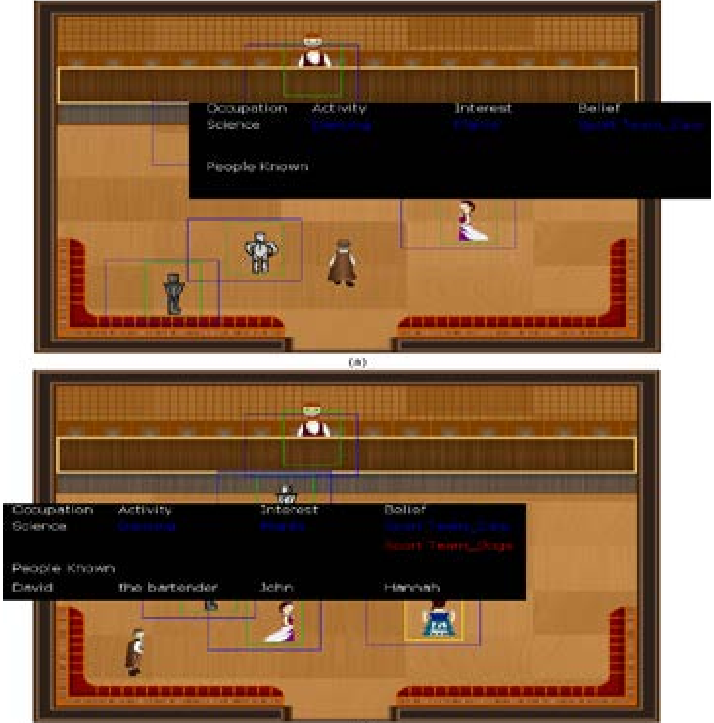 Figure 1: Evolution of NPC Jessica’s knowledge from game start to 5 minutes into the simulation.
Experiments: Measuring the Grapevine
The researchers built a custom game, The Search for the Stolen Ring, to test the GVSN. One of the most fascinating findings was the Relationship Evolution.
In the simulation, the NPC "Jessica" could become your ally or your enemy without you ever speaking to her—simply because she heard things about you from her friends. The study tracked these shifts over 90-minute intervals, demonstrating that a character could fluctuate between being an "acquaintance" and an "arch enemy" based on the flow of information.
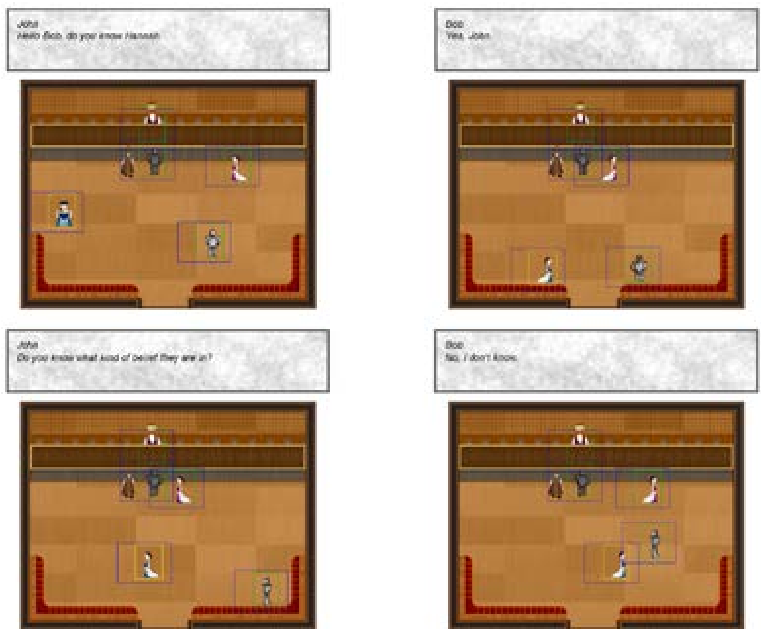 Figure 2: Statistical tracking of relationship tiers (Strangers, Friends, Enemies) evolving over time.
Key Statistical Insights:
- Diversity Matters: NPCs with diverse traits (varied age, class, race) interact less frequently but more meaningfully than a homogeneous group.
- Topic Selection: NPCs prioritize talking about shared interests. If two NPCs both like "Religion," that topic dominates their gossip.
Critical Analysis: Why This Matters
The brilliance of GVSN is its low cost. It doesn't require a supercomputer or a massive neural network. It uses simple "epidemic algorithms" (the same ones that model virus spreads or database syncing) to simulate social behavior.
Limitations: Currently, the system is one-on-one. In a real social setting, groups talk simultaneously. Furthermore, while the paper handles what they know, it doesn't solve the natural language generation problem—the NPCs are still selecting from pre-defined templates, even if the logic for selection is dynamic.
Conclusion: Toward a Living World
This research proves that believable NPCs don't need complex individual "brains" as much as they need social context. By implementing a gossip-based virtual network, developers can create worlds where players feel the weight of their actions as their reputation ripples through the town square.
As one survey participant put it: "I thought it was great that they shared information with each other about their conversations... You build, I buy!"