
Government Accounting Optimization: Bridging Cognitive Psychology and SVM-K-Nearest Neighbors
Government accounting optimization based on computational linguistics
This paper presents a hybrid framework for optimizing government accounting by combining cognitive psychology with computational data mining. It specifically introduces a Support Vector Machine (SVM) model enhanced by the weighted K-Nearest Neighbor (KNN) algorithm to predict financial credit risks and evaluate the ethical decision-making processes of accountants.
TL;DR
This research tackles the inefficiency in government accounting by merging cognitive psychology and computational linguistics (via data mining). It proposes that accounting quality is a product of both the social moral environment and technical predictive accuracy. By using an optimized Support Vector Machine (SVM), the study demonstrates a more precise way to forecast financial risks while modeling the ethical "cost-benefit" logic of accountants.
Problem & Motivation: The Human and Data Gap
In government finance, risk prevention is often hampered by two factors:
- The Subjectivity of Ethics: Accountants face "moral dilemmas" where professional ethics conflict with management interests. Traditional models ignore the psychological cost of these decisions.
- The Complexity of Risk: Old-school methods like "5C" elemental analysis are too rigid. Modern financial data is high-dimensional and non-linear, requiring intelligent algorithms that can generalize from relatively small governmental datasets.
Methodology: The Dual-Engine Framework
1. The Ethical Intelligence Component
The author views moral reasoning as a conceptual process involving four stages: moral identification, judgment, intention, and behavior. To quantify this, the paper introduces a Cost-Benefit Model for ethical behavior:
- Total Cost (): Sum of transaction costs (labor/material) and psychological costs (probability of punishment).
- Total Income (): Sum of material rewards and spiritual/mental satisfaction.
The study uses the Defining Issues Test (DIT) to assign a "P score" (principled moral score) to individuals, creating a scientific metric for human reliability in accounting.
2. The Technical Engine: Optimized SVM
The core technical innovation is the optimization of the Support Vector Machine (SVM). While SVMs are excellent for finding an optimal separating hyperplane, they can struggle with overlapping data samples.
The author introduces a weighted K-Nearest Neighbor (KNN) algorithm into the SVM training process. This allows the model to map original data into a high-dimensional feature space and use a distance formula (Kernel function) to resolve ambiguous classification points.
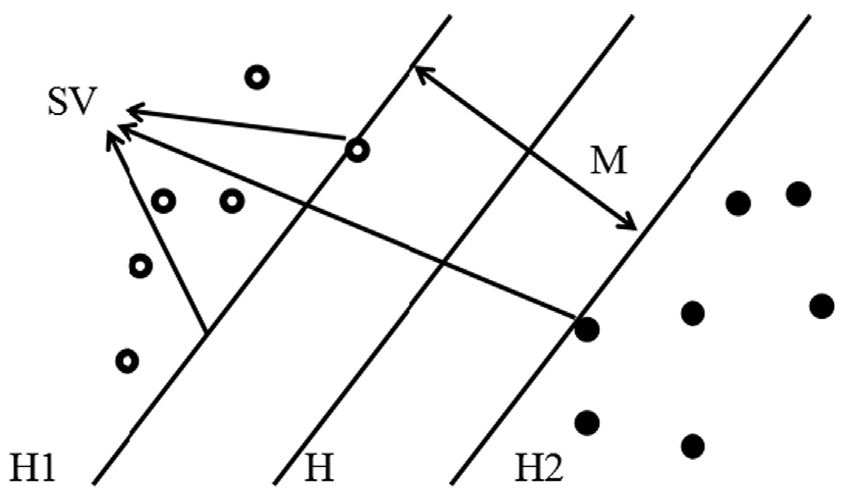 Figure 1: The standard SVM flow which the author optimizes using KNN.
Experiments & Results
The study conducted a simulation using data from a provincial government financial system (286 staff members and 66 financial indicators).
Psychological Findings
- Supervision and Pressure: Multivariate analysis of variance proved that "Supervisor Pressure" and "Supervision" have a significant impact (P < 0.001) on an accountant’s moral intention.
- Interaction Effect: Interestingly, the level of moral development () interacts strongly with superior pressure, suggesting that even high-principle accountants can be swayed by organizational hierarchy.
Machine Learning Performance
The optimized SVM-KNN model was tested against 66 risk indicators.
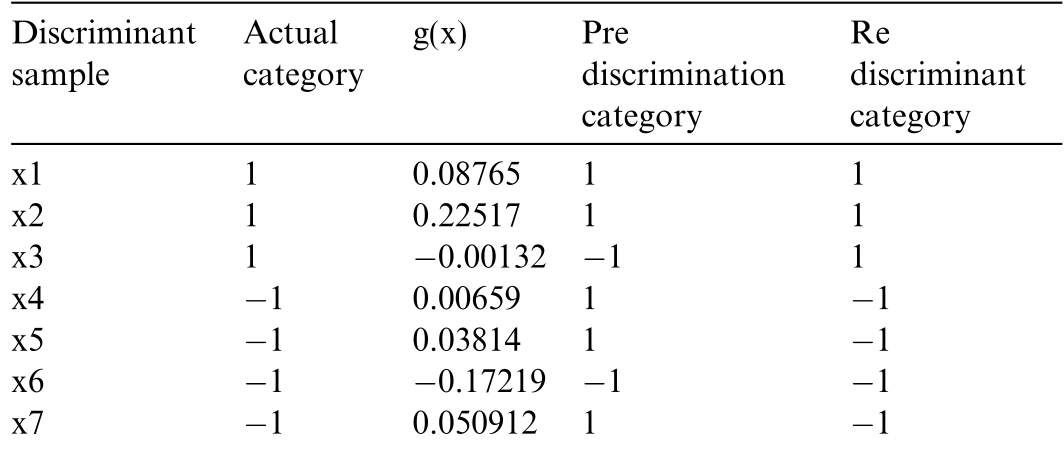 Table 1: Comparison of standard discrimination vs. the proposed re-discriminant category.
As shown in the experimental results, samples like x3, x4, and x5 were initially misclassified. By applying the weighted KNN optimization, the model corrected these errors, proving that the hybrid approach is more robust for complex government risk datasets.
Critical Analysis & Conclusion
Takeaway
The optimization of government accounting isn't just a software upgrade; it is a behavioral alignment. By strengthening supervision (reducing the "benefit" of unethical behavior) and using optimized SVM models (increasing the "detection" of risk), governments can create a self-correcting financial ecosystem.
Limitations & Future Work
While the SVM-KNN approach is effective for small-sample governmental data, it may face scalability issues with massive "Big Data" sets. The author notes that the next step involves moving toward Advanced Prediction Models (potentially Deep Learning) to further refine the quality of financial management and handle even more diverse data types.