
Predicting Firm Vulnerability: Merging Government Data with Machine Learning for Crisis Resilience
Using Government Data and Machine Learning for Predicting Firms’ Vulnerability to Economic Crisis
This paper proposes a machine learning-based methodology to predict individual firms' vulnerability to economic crises using government data. By training models on historical data from the Greek financial crisis (2009–2014), the authors demonstrate that AI can identify firms at risk based on their strategic, technological, and human resource characteristics.
TL;DR
The paper introduces a structured methodology for governments to predict which firms are most likely to suffer during an economic recession. By feeding historical data from Taxation and Statistical Authorities into Machine Learning models (like Decision Trees and Random Forests), the authors provide a toolkit for data-driven public policy that can preemptively identify and support vulnerable businesses before they collapse.
Background: The Repeating Loop of Economic Crisis
Economic cycles are an "old story." From the 2008 financial crash to the COVID-19 pandemic, recessions cause a steepening curve of firm closures and social instability. Traditionally, governments intervene by offering loans and subsidies. However, these programs are often "blind"—allocating funds based on simple metrics like firm size or sector, rather than the firm’s actual internal capacity to weather the storm.
The authors argue that a firm’s vulnerability isn't just about the sector it belongs to, but its internal DNA: its technology stack, human capital, and strategic agility.
Methodology: The Leavitt’s Diamond Approach
To capture a firm's "DNA," the researchers combined two distinct government data sources:
- Taxation Data: Used to define the ground truth (the Dependent Variable: Sales Revenue Reduction).
- Statistical Data: Used to define 43 Independent Variables based on an expanded Leavitt’s Diamond (Strategy, Processes, People, Technology, and Structure).
Model Architecture
The researchers didn't just rely on one model. They benchmarked five distinct approaches:
- Decision Trees (DT): Splitting data into homogeneous subsets.
- Random Forests (RF): An ensemble of trees for robust voting.
- Gradient Boosted Trees (GBT): Sequentially minimizing errors from previous learners.
- Support Vector Machines (SVM): Finding the optimal hyper-plane in n-dimensional characteristic space.
- Generalized Linear Models (GLM): The statistical baseline.
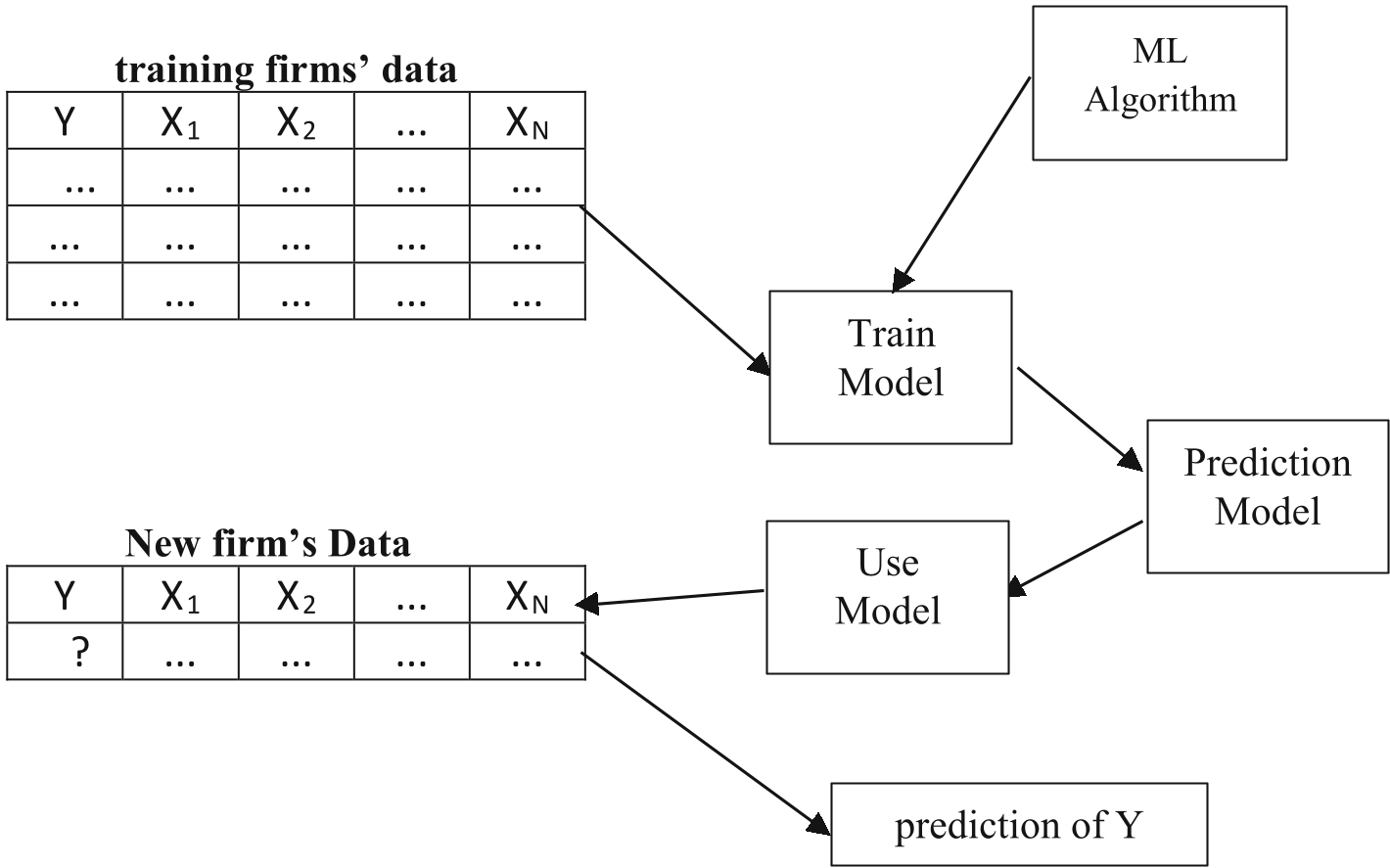 Figure 1: The proposed methodology for predicting firm-level vulnerability.
Experimental Results: Precision in Prediction
The study focused on 363 Greek firms during the 2009–2014 crisis. The dependent variable SALREV_RED was discretized into 13 levels, ranging from "Increase >100%" to "Decrease >100%".
Key Findings:
- Top Performer: The Decision Tree algorithm achieved the lowest Mean Absolute Error (1.422).
- Consistency: All models performed within a tight range (1.42 to 1.57 MAE), suggesting the selected features (internal firm characteristics) are highly informative regardless of the model architecture.
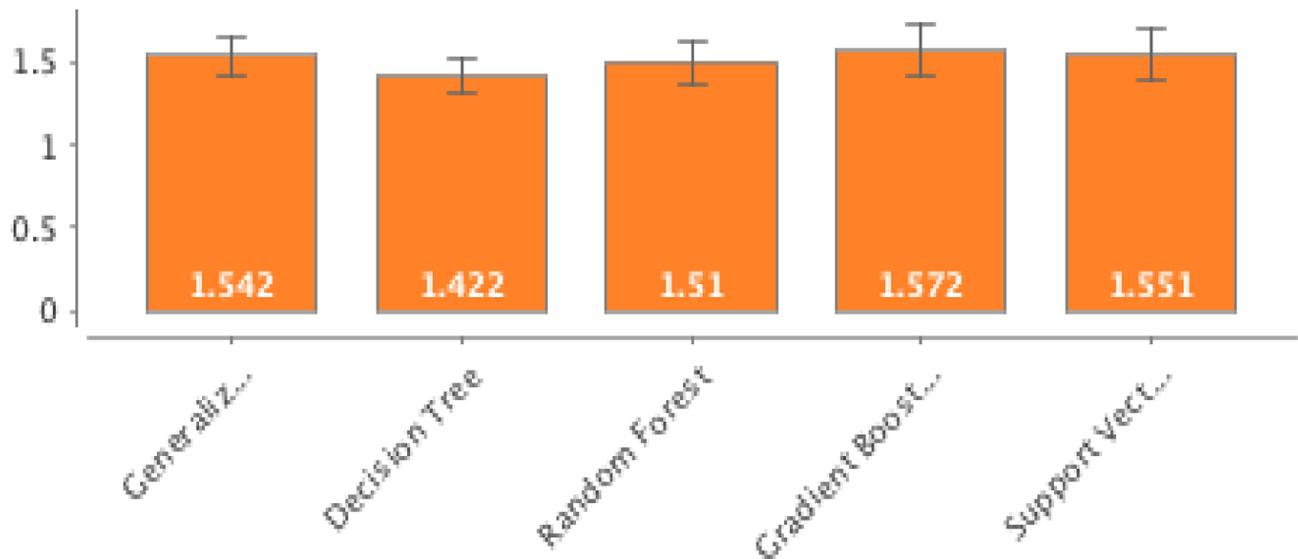 Figure 2: Mean Absolute Error across different ML algorithms. Decision Trees emerge as the most accurate predictor.
Critical Insight: Why Does This Work?
The effectiveness of this approach lies in its Inductive Bias. It assumes that "resilience" is a latent trait of a company that manifests through its adoption of ERP/CRM systems, the education level of its employees, and its focus on innovation.
For instance, firms with high ICT personnel percentages or those utilizing Cloud Computing (SaaS/IaaS) showed different survival patterns compared to traditional firms. By quantifying these "Strategy" and "Technology" variables, the ML models can "see" a firm's armor before the battle begins.
Challenges and Future Outlook
While the results are encouraging, the authors acknowledge two main hurdles:
- Data Scalability: The initial study was limited to 363 firms. Applying this to a national dataset of thousands would likely increase accuracy but also require more robust data pipelines.
- GDPR & Ethics: Using tax and statistical data for purposes other than their original collection raises legal questions in the EU.
Conclusion
This paper serves as a blueprint for Algorithmic Governance. Instead of broad-brush subsidies, governments can move toward "Surgical Economic Support," ensuring that limited funds are funneled into the most vulnerable but viable firms, ultimately maximizing public value and social stability.