
Government Social Media in Crisis: From Broadcasting to Active Engagement
Government social media communications during zika health crisis
This study investigates the use of Twitter by federal, state, and local government agencies during the 2015–2016 Zika virus outbreak. By applying a mixed-methods approach to 721 tweets, the research identifies significant disparities in social media engagement, network size, and content strategy across different levels of government.
TL;DR
During the Zika health crisis, government communication was far from uniform. While federal agencies like the CDC acted as "Information Powerhouses" using massive follower bases to push educational content, local and state communications were often caught in the crossfire of political maneuvering. This study reveals that the most successful strategies involved "Active Listening" and leveraging the high visibility of elected officials rather than just official agency accounts.
The Problem: The "Expectations Gap"
When a health crisis hits, citizens turn to social media for real-time updates. However, government agencies—especially at the local level—often lag behind. The researchers identified a critical "expectations gap": the public expects two-way interaction and rapid response, but many agencies still treat Twitter like a digital bulletin board. This is compounded by limited resources and the "politicization" of public health at the state and local levels.
Methodology: Decoding the Tweet
The research team collected 721 tweets during the peak of the Zika outbreak (Aug–Sept 2016). They focused on 54 handles across three levels:
- Federal: White House, HHS, CDC.
- State: Florida’s Governor and Senators.
- Local: Mayors and health departments in affected counties (e.g., Miami-Dade).
The content was coded into four categories: Information Provision (The "What"), Interaction (The "How"), Politics (The "Who"), and Symbolic Presentation (The "Image").
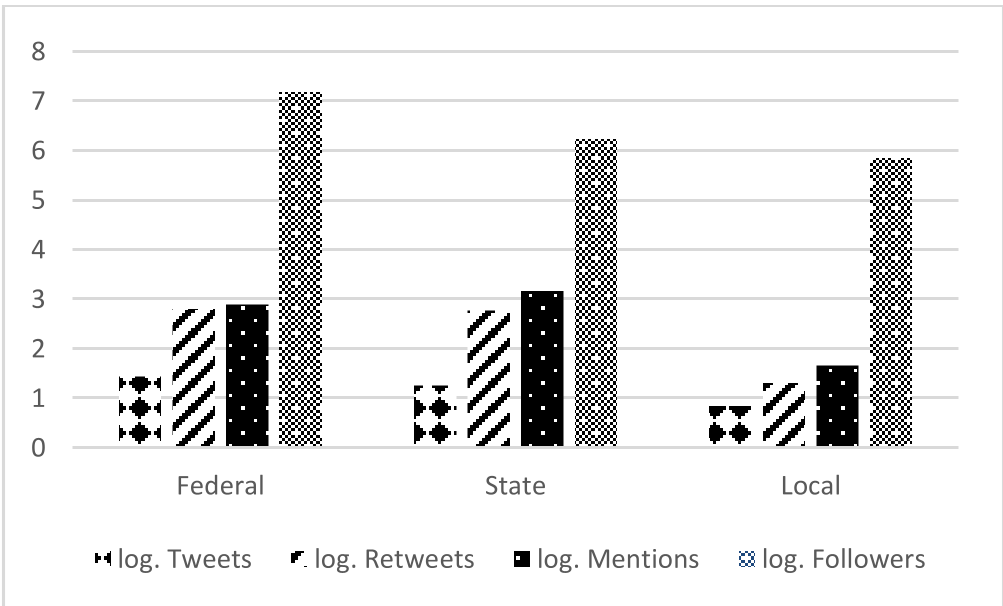 Figure 1: Comparison of followers, retweets, and mentions across government levels (Log scale).
Key Insights: Who is Doing What?
1. The Federal Information Hub
Federal agencies predominantly used Twitter for Information Provision (69%). They acted as technical experts, using URLs to link to rich resources, infographics, and videos. Their goal was clear: educate the public and provide a sense of control over the chaos.
2. The Local Political Arena
Counter-intuitively, as you move closer to the local level, the content becomes more political. State and local tweets were dominated by "Politics" (31% overall), often involving "Blame" games regarding funding or "Promotion" of local officials' efforts. The researchers found that local engagement was highly sensitive to:
- Population Size: Larger cities mention and are mentioned more.
- Election Cycles: Politicians up for re-election (like Marco Rubio at the time) saw significantly higher engagement.
3. The Power of Personal Accounts
One of the most striking findings was the influence of individual leaders. Accounts like DrFriedenCDC (then CDC Director) or local Mayors often had more "reach" and "trust" than the faceless official agency handles. They provide a human element that facilitates higher engagement during high-stress periods.
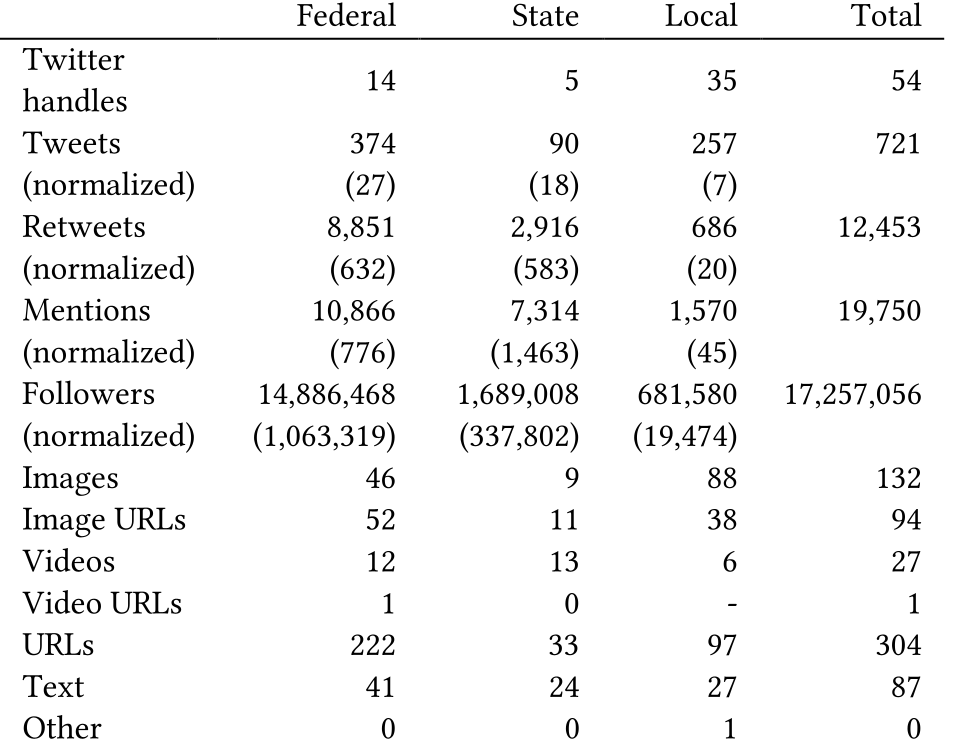 Table 1: Normalized data showing that Federal accounts have 58x more followers than local accounts on average.
Moving Beyond the Broadcast
The study highlights the #AtoZika campaign as a gold standard for Active Listening. By soliciting questions from the public and answering them via Facebook Live or Twitter Town Halls, the government moved from just "pushing" data to "addressing" concerns.
Limitations & Future Work
The study is focused on a single crisis (Zika) and a single platform (Twitter). In the post-COVID-19 era, the landscape of misinformation and platform diversity (TikTok, Mastodon, etc.) has changed. Future research must address how "fake news" alters the effectiveness of these government communication strategies.
Conclusion
For practitioners, the takeaway is simple: Unified messaging is not enough. To bridge the expectations gap, local agencies must leverage their elected officials' popularity and adopt a "listening-first" approach. Crisis communication isn't just about what you say; it's about how you listen to the anxiety of the public.