
Graceful Network State Migration: Minimizing Disruption through Intelligent Scheduling
Graceful Network State Migrations
This paper introduces the Graceful Network State Migration (GNSM) framework to optimize premeditated network maintenance and configuration changes. It specifically addresses two combinatorial problems: Link Weight Reassignment Scheduling (LWRS) and Link Maintenance Scheduling (LMS), utilizing Dynamic Programming and Ant Colony Optimization (ACO) to find transition sequences that minimize Maximum Link Utilization (MLU) and routing churn.
TL;DR
Network downtime isn't always an accident; over 20% of transient failures are caused by planned maintenance. This paper introduces the Graceful Network State Migration (GNSM) framework, moving away from "rule-of-thumb" procedures to a mathematically optimized approach for reconfiguring links and weights. By using Ant Colony Optimization (ACO), the authors show that simply changing the order of operations can reduce traffic congestion by up to 50% during maintenance windows.
Background: The Cost of "Planned" Chaos
In high-availability environments where "five-nines" (99.999% uptime) is the standard, even premeditated events like topology changes or OSPF weight re-optimization can trigger catastrophic performance degradation. Traditionally, network engineers follow simple heuristics: reactivate one link at a time or hope that a random sequence of weight updates won't cause a transient loop.
The authors argue that these heuristics are fundamentally flawed because they ignore the network state manifold. Every intermediate step in a migration is a new state with its own Traffic Engineering (TE) properties. GNSM aims to find the path of least resistance through these states.
Problem Formulation: LWRS and LMS
The paper focuses on two primary challenges:
- Link Weight Reassignment Scheduling (LWRS): If you need to update 20 link weights to reflect a new traffic matrix, in what order do you type the commands?
- Link Maintenance Scheduling (LMS): When taking links down for physical repair, is it always better to do it one by one? (Surprisingly, the answer is often "No").
These are combinatorial optimization problems. For links, LWRS has possible sequences, while LMS has a search space of feasible schedules.
Methodology: Ant Colony Optimization (ACO)
While small jobs can be solved using Dynamic Programming, the state space for a Tier-1 ISP topology is astronomical. To solve this, the authors adapted Ant Colony Optimization.
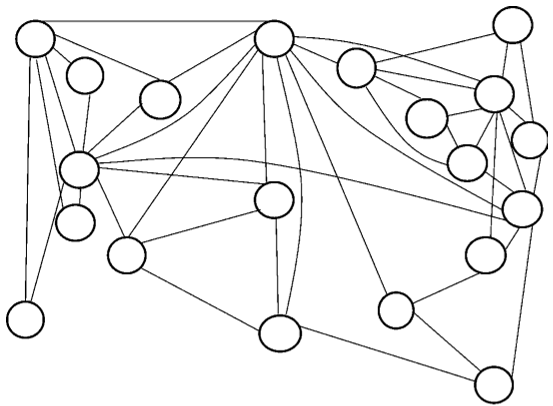 Figure 1: Comparison of ISP A and ISP B topologies used for stress-testing the algorithms.
In this framework, "ants" explore the sequence of operations. At each step, an ant chooses the next operation based on:
- Pheromone Intensity: How successful was this specific transition in previous iterations?
- Visibility (Heuristic): What is the immediate disruption cost (e.g., Maximum Link Utilization) of this specific change?
Through iteration, the colony converges on a sequence that maintains a "graceful" trajectory—minimizing the peak congestion experienced at any intermediate point.
Experimental Insights: Better than Rule-of-Thumb
The simulation results on Abilene and Tier-1 POP-level topologies revealed several "Aha!" moments for network operators:
1. The Performance Gap
The difference between a "naive" (random/heuristic) schedule and an ACO-optimized schedule is massive. In ISP A, the optimized sequence reduced disruption costs by nearly 50%.
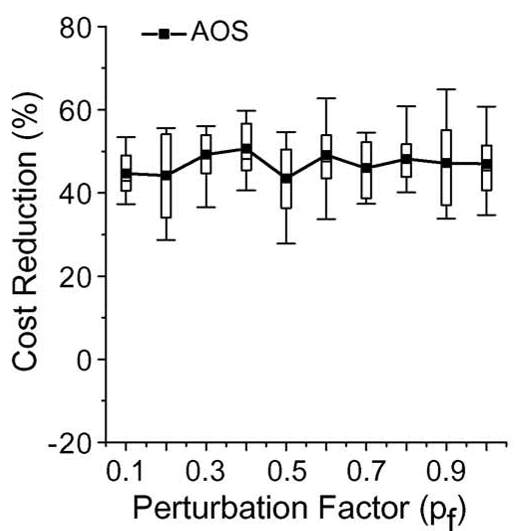 Figure 2: Performance gains for LWRS in Tier-1 topologies. Note the significant reduction in disruption compared to random permutations (NS+).
2. Counter-Intuitive Maintenance
One of the paper's most striking findings was in the LMS problem. Prevailing industry wisdom suggests failing links one by one. However, the authors found instances where taking four links down simultaneously actually resulted in lower peak utilization than taking them down one at a time. This occurs when intermediate one-link-down states create unique bottlenecks that "all-down" states avoid by forcing traffic onto entirely different, less-congested regions of the network.
Critical Analysis & Takeaways
The GNSM framework's greatest strength is its generality. Because the core engine is decoupled from the metric, it works whether you are optimizing for:
- MLU: Minimizing the most congested link.
- CHURN: Minimizing the volume of traffic rerouted.
- Energy: Data center power-saving transitions.
Limitations: The primary bottleneck remains the computation of the disruption cost at each step (e.g., re-running a SPF algorithm and traffic matrix mapping). While ACO is faster than DP, calculating the "visibility" for every ant in every step is still computationally intensive for very large networks.
Conclusion
This work shifts the paradigm of network management from "safe" manual procedures to "intelligent" algorithmic trajectories. By treating the transition period as a first-class citizen in network design, operators can achieve significantly higher service availability without adding a single unit of extra capacity.