
Graceful Performance Modulation: Moving Beyond Hibernate/Restore in Transient Computing
6797_Graceful Performance Modulation for Power-Neutral Transient Computing Systems.
This paper introduces "Power-Neutral" operation for transient computing systems, a paradigm that matches instantaneous power consumption to harvested power via Dynamic Frequency Scaling (DFS). By adaptively modulating clock frequency in response to supply voltage thresholds, the system enables continuous execution even during power fluctuations, significantly outperforming traditional stop-and-start (hibernate/restore) methods.
TL;DR
The paper proposes a Power-Neutral paradigm for battery-less IoT devices. Instead of simply shutting down when power is low, the system uses an intelligent Dynamic Frequency Scaling (DFS) algorithm to match its energy consumption to the harvest rate in real-time. This "graceful degradation" extends device lifetime by up to 88% and speeds up task completion by 21% by eliminating the energy-draining overhead of frequent state-saving.
The Problem: The High Cost of Intermittency
Energy harvesting (EH) sources like solar and wind are notoriously volatile. Traditional transient computing systems handle this through a "Checkpoint and Stop" strategy:
- The Overhead Trap: Every time power dips, the system must spend precious energy saving its entire RAM to non-volatile memory (e.g., FRAM).
- Binary Operation: Systems are either "Fully On" (at max clock) or "Off." There is no middle ground to utilize low-current periods that are insufficient for peak speed but enough for slow execution.
Methodology: Achieving Power Neutrality
The core innovation is a threshold-based control loop that steers the microcontroller's MCLK frequency based on the voltage of the on-board decoupling capacitors.
1. The Threshold Logic
The system defines three critical voltage points:
- : Frequency increment threshold. If voltage rises here, the harvester is providing excess power; scale up for performance.
- : Frequency decrement threshold. If voltage drops below this, the system reduces the clock speed to lower current draw.
- : The ultimate safety net. If voltage hits this bottom limit, the system hibernates.
2. Physical Intuition
By reducing the frequency, the system behaves as a variable current load. Lowering the frequency reduces , which in turn slows the discharge of the decoupling capacitor (). This buys the system time, allowing it to "ride out" power transients without resetting.
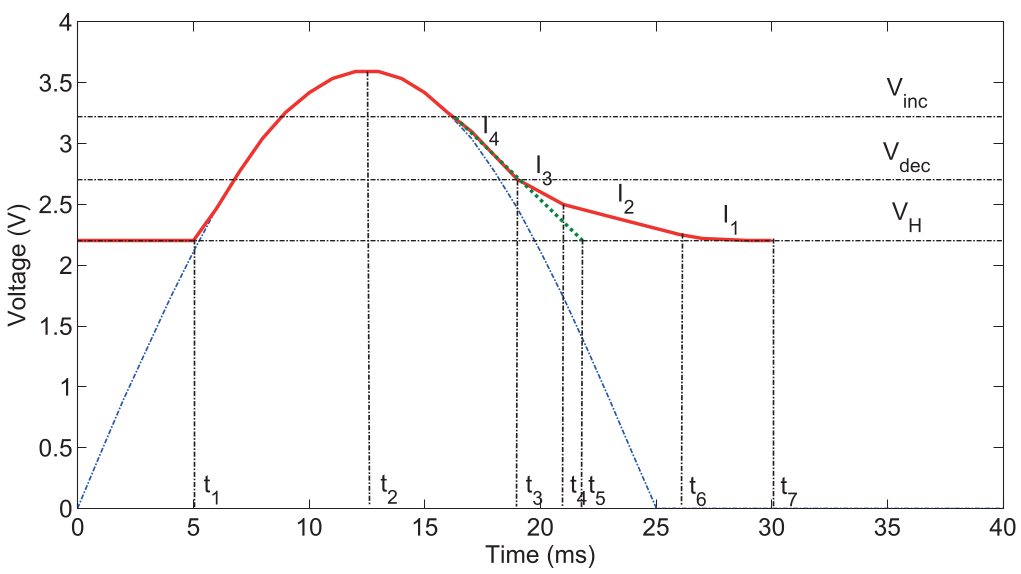 Fig 1: Idealized response (Red) vs. traditional Hibernus system (Green). Power-neutral operation avoids the repeated shutdown-startup cycles.
Experimental Setup & Results
The authors validated their model using a TI MSP430FR5739 (FRAM-based) and real-world harvesters (PV cells and micro-wind turbines).
Key Evidence: Performance & Lifetime
- Execution Speed: For an FFT task under 200μA current, the Power-Neutral system was 21% faster because it spent less time "saving its life" and more time computing.
- Lifetime Extension: In sinusoidal power tests (simulating AC-rectified harvesting), the system's active time improved by 87.7% at high frequencies (20Hz) compared to the Hibernus baseline.
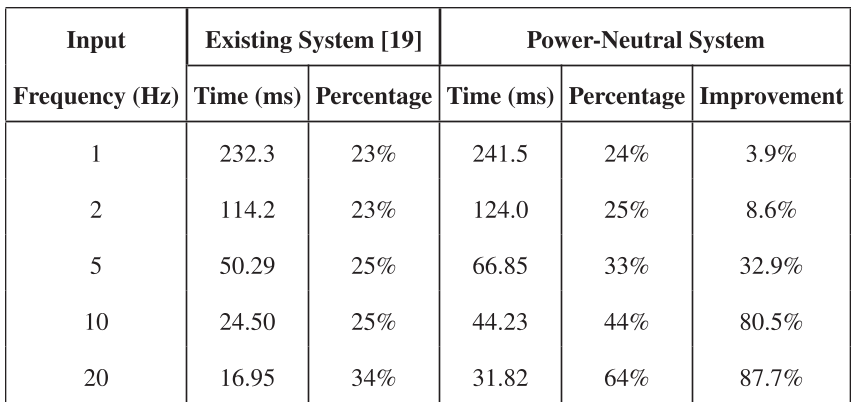 Table 1: Drastic improvements in active percentage as harvester frequency increases.
Critical Analysis: Why This Matters
The most striking takeaway is the Energy Efficiency of Frequency Scaling. The authors observed that it is actually more energy-efficient to perform the actual hibernation at the highest frequency (8MHz) rather than the lowest (1MHz), because the reduced execution time outweighs the higher power draw. This nuanced understanding of the "Race-to-Sleep" vs. "Power-Neutral" trade-off is what makes this control algorithm effective.
Limitations:
- Fixed Voltage Interval: The current model uses a linear current-frequency relationship. In more complex ARM-based MCUs with non-linear power profiles, the threshold selection would require more complex optimization.
- Peripherals: The study assumes peripherals are disabled. In a real IoT node, a radio (transceiver) draws massive peak currents that might exceed the capacity of DFS-based modulation alone.
Future Outlook
This work lays the foundation for Task-Aware Intermittent Computing. Future systems could prioritize which tasks to ralentize (e.g., background data logging) while maintaining high speed for critical tasks (e.g., encryption), all while staying strictly within the boundaries of the harvested power envelope.