
GREETING: Bridging the Gap Between Fuzzy Model Interpretability and Accuracy
A Gradient-Descent-Based Approach for Transparent Linguistic Interface Generation in Fuzzy Models
The paper introduces GREETING, a Gradient-Descent-based framework for generating transparent linguistic interfaces in fuzzy models. By utilizing flexible trigonometric-shaped membership functions, it achieves State-of-the-Art performance in balancing model interpretability with data representation accuracy.
TL;DR
The paper "A Gradient-Descent-Based Approach for Transparent Linguistic Interface Generation" introduces GREETING, a novel method to generate fuzzy membership functions that are both semantically meaningful (transparent) and mathematically accurate. By optimizing a joint objective of data distribution and information loss, it outperforms traditional clustering methods like FCM in building interpretable models such as fuzzy decision trees.
The "Transparency" Crisis in Fuzzy Modeling
In the realm of Fuzzy Logic, a Linguistic Interface is the bridge between raw numbers (e.g., 35°C) and human concepts (e.g., "Hot"). For a model to be truly "interpretable" or "transparent," these concepts must follow certain human-centric rules:
- Convexity: As you move away from the "core" of a concept, the membership should only decrease.
- Complementarity: The sum of memberships across all labels should equal 1 (Bezdek partition).
- Distinguishability: "Hot" and "Warm" shouldn't overlap so much that they become indistinguishable.
Most existing methods fail this. FCM (Fuzzy C-Means), the industry standard, often produces non-convex sets that make no sense to a human observer. On the other hand, One-Step methods that manually define triangles are rigid and ignore the underlying data distribution.
GREETING: The Unified Optimization Approach
The authors argue that we shouldn't have to choose between "looking right" and "being right." They define the GREETING method (GRadiEnt-descEnt-based Transparent lInguistic iNterface Generation) which optimizes a combined objective :
Where:
- (Dissimilarity Index): Ensures the fuzzy sets are placed where the data is most dense.
- (Information Loss): Minimizes the error when converting numbers to fuzzy terms and back again.
- : A regularization parameter to balance these two goals.
Architectural Innovation: Generalized Trigonometric Functions
Instead of simple triangles, GREETING uses flexible , , and -shaped functions. These maintain strict transparency (normality, convexity, and coverage) while allowing the gradient descent to shift "overlapping points" and "fuzziness rates" to fit the data perfectly.
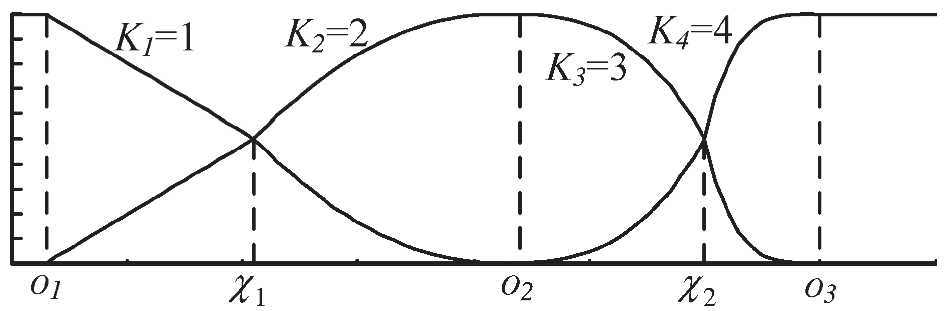 Fig 1: The flexible structure of generalized trigonometric-shaped fuzzy sets used in GREETING.
Experimental Proof: Dominating the Pareto Front
The researchers tested GREETING against benchmarks like ACE and FCM using UCI datasets. The results are striking. When plotting vs. , GREETING forms a Pareto Front that sits below and to the left of all other interpretable methods. This means for any level of interpretability you desire, GREETING provides a more accurate representation of the data.
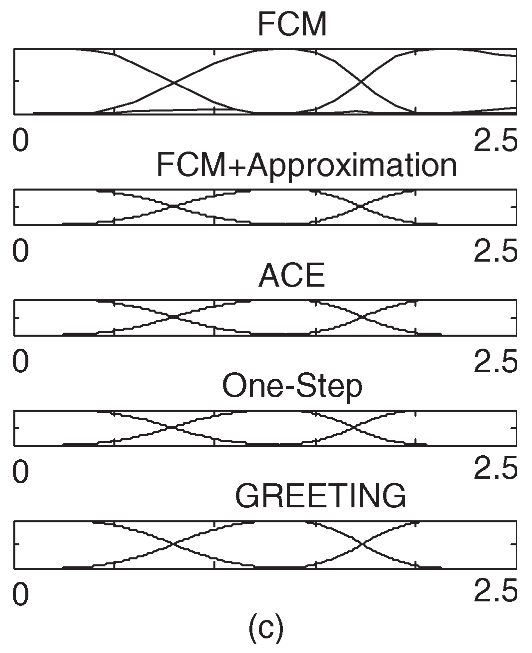 Fig 2: GREETING (solid line) dominating other methods in the trade-off space between interpretability (Q) and accuracy (V).
Real-world Application: Better Fuzzy Decision Trees
The ultimate test was Induction of Fuzzy Decision Trees. By using GREETING interfaces:
- Classification Accuracy increased: On the Wine dataset, the testing rate jumped to 83.3% compared to 77.8% using traditional methods.
- Model Size stayed compact: The trees remained small enough for human experts to read and verify.
Critical Insight: Why This Matters
The GREETING method marks a shift from "heuristic-based" interpretability to "optimization-based" interpretability. By proving that semantically constrained membership functions can be trained via gradient descent, the authors provide a template for building Explainable AI (XAI) that doesn't sacrifice the performance we expect from modern machine learning.
Conclusion & Future Work
The GREETING method successfully harmonizes the "low-level" interpretability of fuzzy sets with high-level model performance. While the current work focuses on static datasets, the next frontier for this technology lies in Dynamic Linguistic Interfaces—systems that can adapt their definitions of "Hot" or "Fast" in real-time as data streams evolve, maintaining transparency in a changing world.