
Beyond the Classroom: How Professional Virtual Communities Fuel Graduate Creativity
Graduate students’ creative professional virtual community behaviors and their creativity
This study investigates the relationship between graduate students' behaviors in Professional Virtual Communities (PVCs) and their scientific creativity. By analyzing 930 students, the authors identify three key behavioral dimensions—Knowledge & Networking, Behave Manner, and Interactivity—and establish that the first two are significant predictors of creative output.
TL;DR
Is browsing academic forums just a distraction, or is it a "second classroom" for innovation? A study of 930 graduate students reveals that specific behaviors in Professional Virtual Communities (PVCs)—namely Knowledge & Networking and a disciplined Behave Manner—directly predict higher creativity, even when accounting for a student's natural motivation and self-confidence.
The "Second Classroom" Paradigm shift
In the digital age, a graduate student's development isn't confined to the lab. PVCs like Xiaomuchong (Emuch) have become vital external knowledge sources. However, the academic community has long struggled to define what "productive" online behavior looks like. Is it the number of posts? The time spent logged in? This research argues that quality of engagement trumps quantity of interaction.
Breaking Down the Digital Behavior: The Three Dimensions
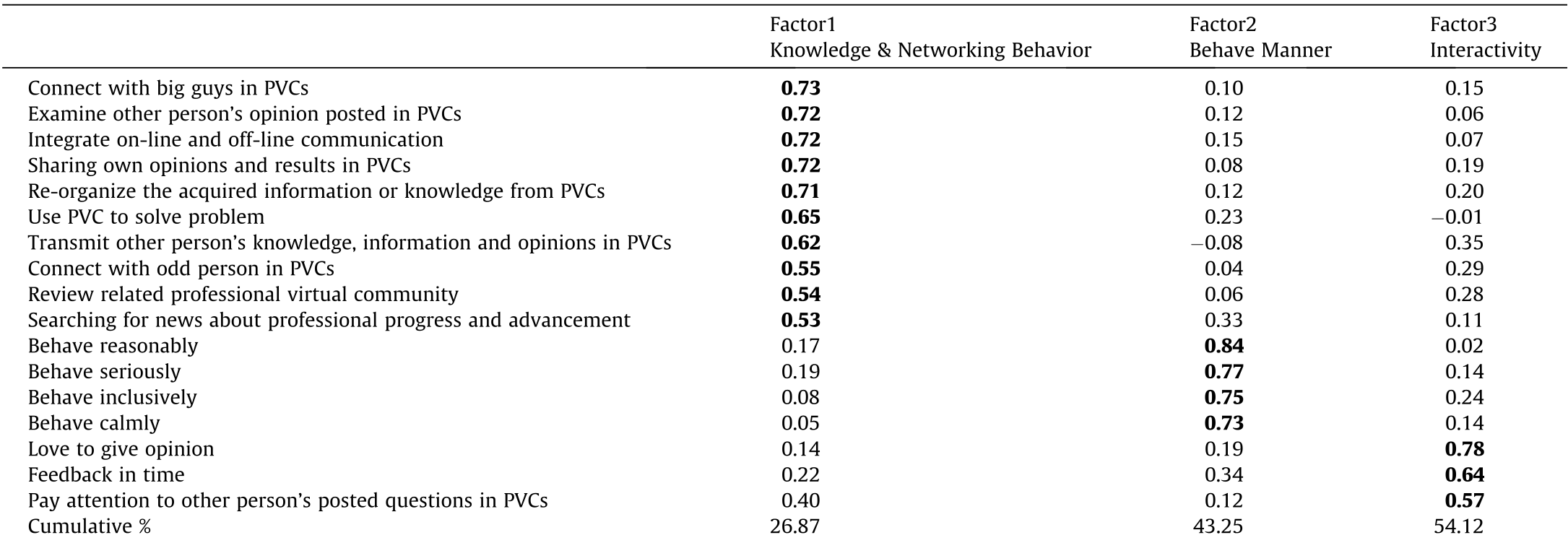
Using implicit theory—the idea that participants can best define their own mental constructs—the authors categorized student PVC activity into three distinct buckets:
- Knowledge & Networking Behavior: This involves connecting with "big guys" (experts), sharing original results, and re-organizing acquired information. It is about building cognitive resources through strategic social ties.
- Behave Manner: This represents the psychological "vibe" of the user—being inclusive, reasonable, and serious. It reflects the open-mindedness required to filter and absorb diverse perspectives.
- Interactivity: The social "noise"—how fast you reply or how much you "love to give opinions."
The Surprise: Socializing Isn't Enough
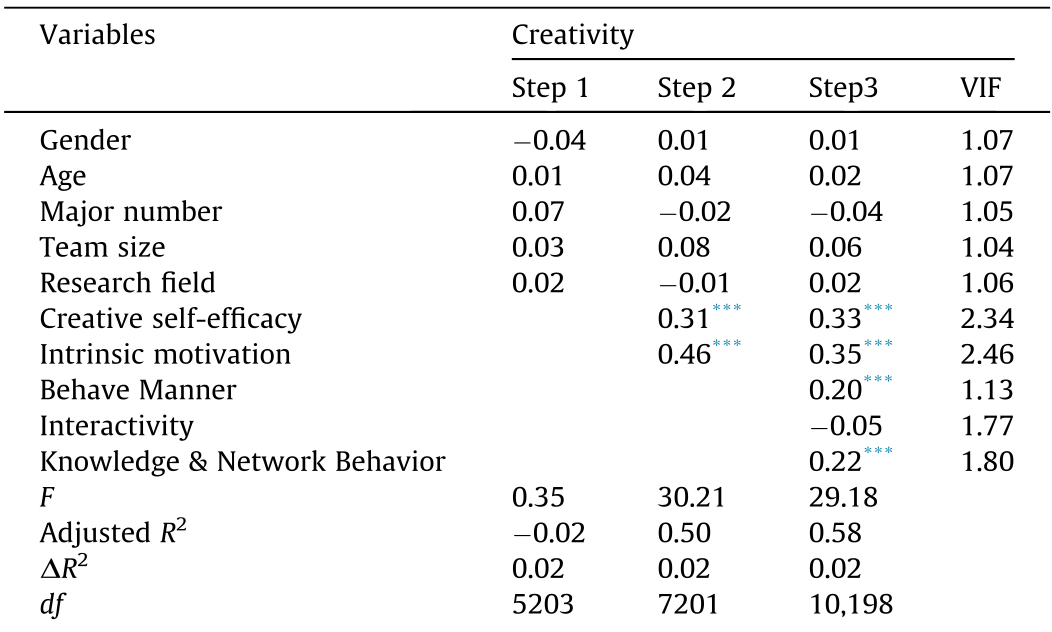
The most striking finding from the regression analysis is what didn't work. While Knowledge & Networking and Behave Manner were strong predictors of creativity, Interactivity was not.
Why? The authors argue that pure interactivity (socializing for the sake of it) can actually increase cognitive cost. It occupies attention and time without necessarily providing the "know-who" or "know-how" required for creative breakthroughs.
Insights for the Modern Researcher
- Filter the Noise: To boost creativity, stop worrying about being the most active user in a forum. Instead, focus on reorganizing the information you find and integrating it with your offline research.
- The "Know-Who" Advantage: Connecting with experts (the "big guys") via PVCs provides shortcuts to high-value insights that aren't yet in textbooks.
- Cultivate Online Professionalism: Treating virtual interactions with the same seriousness as a physical seminar (Behave Manner) correlates with better creative synthesis.
Conclusion & Future Outlook
This work highlights that PVCs are a double-edged sword. To truly leverage them as a tool for innovation, students must move beyond "lurking" or "chatting" toward a structured strategy of knowledge networking. Future researchers should look into how these digital behaviors translate into verifiable outputs like patents or high-impact publications, potentially using non-self-reported data to avoid bias.
Takeaway: Creative success in the 21st century depends heavily on how you weave your digital thread into your scholarly fabric.