
Granular Functional Networks: Melding Fuzzy Logic with Temporal Dynamics for Social Sign Prediction
A Granular Functional Network with delay: Some dynamical properties and application to the sign prediction in social networks
This paper introduces a Granular Functional Network (GFN) with time delay, integrating information granularity and temporal dynamics to enhance predictive performance. The proposed method demonstrates superior accuracy in sign prediction tasks for social networks, outperforming standard Time Delay Neural Networks (TDNNs).
TL;DR
The paper proposes a Granular Functional Network (GFN) with delay, a hybrid architecture that replaces standard neural layers with functional granules. By combining fuzzy set theory (for transparency) with time-delay differential equations (for realism), the authors achieve State-Of-The-Art (SOTA) accuracy in predicting positive/negative relationships in social networks like Slashdot and Epinions, while significantly reducing computational overhead.
Problem & Motivation: The Quest for Realistic & Transparent Models
Current link prediction models in social networks often treat interactions as static snapshots. However, real-world systems are inherently delayed—past interactions dictate future sentiments. While Time Delay Neural Networks (TDNNs) exist, they remain "black boxes."
The authors identified that Functional Networks (FNs), a more efficient alternative to NNs where activation functions are learned rather than fixed, could be revolutionized by adding:
- Information Granularity: Grouping data into fuzzy "granules" to handle uncertainty and increase structural transparency.
- Explicit Time Delay: Modeling the system's state based on to capture the physical reality of signal propagation and social influence.
Methodology: The Granular Architecture
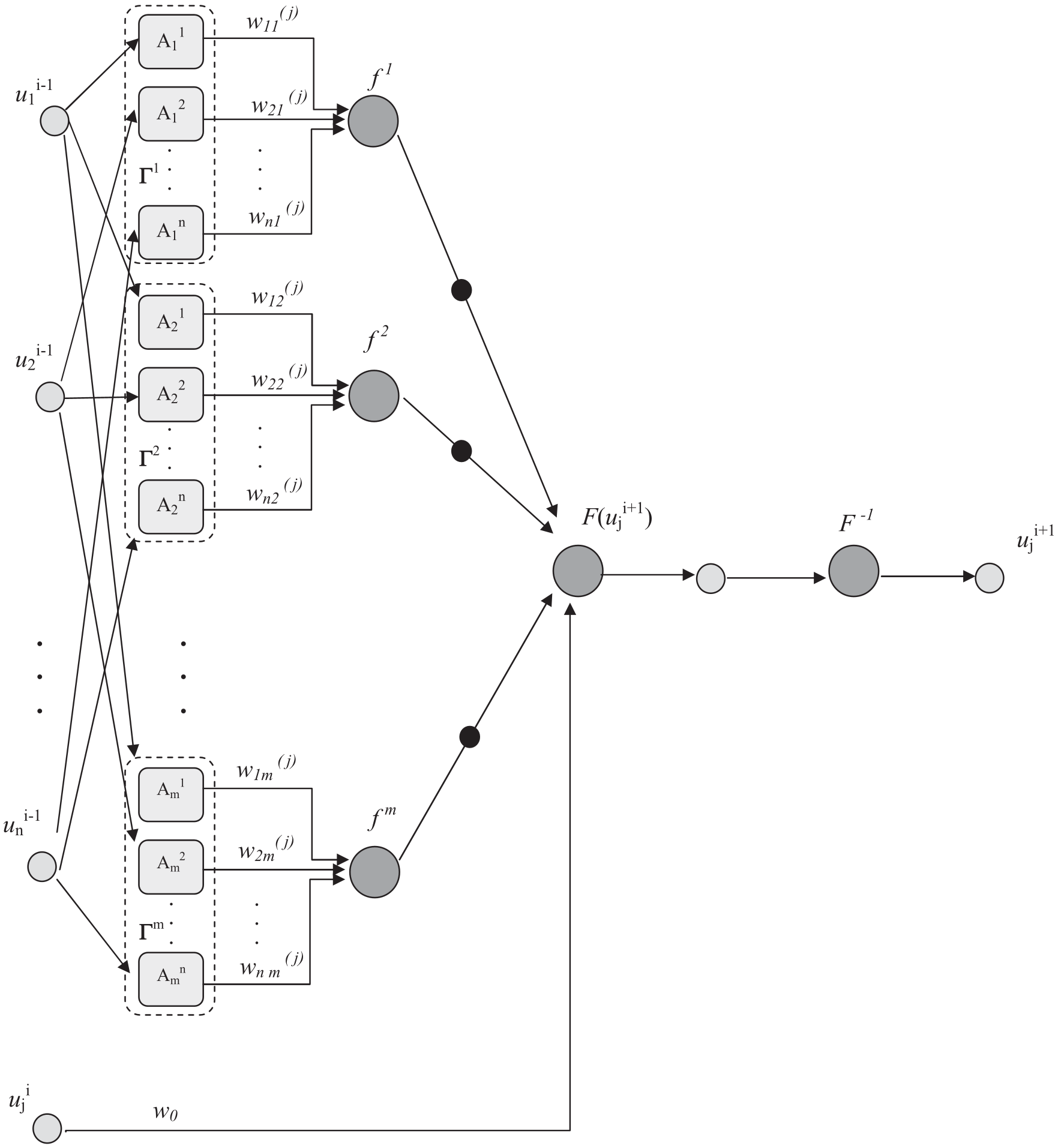
The core of the model is a three-layered scheme: an input layer processing temporal data, a granular layer where data is mapped to fuzzy partitions, and an output layer.
1. The Granular Mechanism
Instead of raw scalar values, the network processes information through fuzzy partitions using either Cubic B-splines or Bernstein polynomials. This allows the network to represent "coverage" and "specificity"—quantifying how much data a granule represents versus how detailed that representation is.
2. Dynamics and Stability
The authors don't just build a model; they prove it works. Using Neimark–Sacker bifurcation analysis (the discrete equivalent of a Hopf bifurcation), they establish the conditions under which the network remains stable. This is critical: without stability, a delayed network can easily spiral into chaotic oscillations, rendering predictions useless.
The formula above encapsulates the discrete-time delay () and the granular processing ().
Experiments: Superior Performance with Less Compute
The model was tested on the task of Sign Prediction: identifying if a user-to-user link is a "friend" (positive) or "foe" (negative).
Key Datasets:
- Slashdot: 82,140 nodes, 77.4% positive edges.
- Epinions: 119,217 nodes, 85.0% positive edges.
Results Analysis
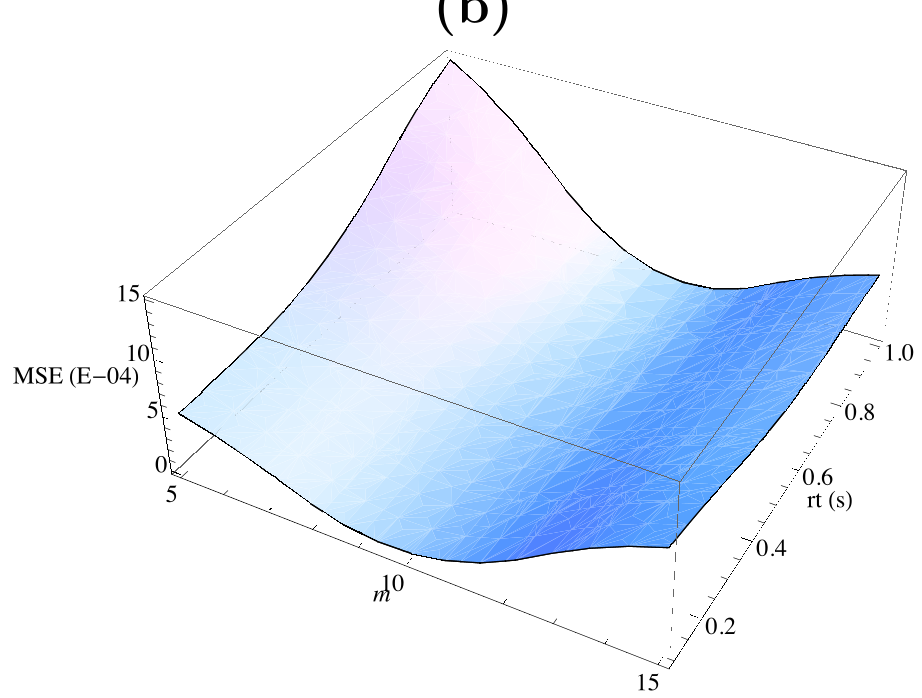
The Granular Functional Network (DGFN) consistently outperformed the benchmark TDNN. One notable finding was the efficiency-accuracy trade-off. As the number of nodes () increased, the DGFN maintained a vastly superior rrt (relative running time) compared to traditional models, often solving the training problem 2-3x faster while keeping MSE in the range.
The ablation study on different basic functions showed that Bernstein polynomials provided high accuracy for Epinions, while Cubic B-splines excelled in Slashdot, suggesting that the choice of "granule shape" is a powerful hyperparameter for domain-specific tuning.
Critical Insight & Conclusion
The true value of this work lies in bridging the gap. While the AI community moves toward ever-larger "black box" Transformers, this paper argues for Mathematical Transparency. By using functional units and granular computing, we gain a model that is not only mathematically tractable (we can prove its stability) but also computationally lean.
Limitations: The restricted stability analysis assumes certain connections are negligible (Assumption 1). Future work involves extending this to fully connected, non-restricted architectures.
Final Takeaway: For industrial applications where interpretability and inference speed are as vital as accuracy—such as real-time social sentiment monitoring or risk assessment—Granular Functional Networks represent a sophisticated and underutilized alternative to standard deep learning.