
Gravity-Based Trust: Reimagining Social Reputation through Physical Intuition
Towards a Gravity-Based Trust Model for Social Networking Systems
This paper introduces a "Gravity-Based Trust Model" for social networking systems, leveraging a distributed optimization procedure similar to virtual coordinate systems. By mapping users into a multi-dimensional "Trust Space" and applying physics-inspired mechanics, the model dynamically estimates trust levels and defines trusted social neighborhoods.
TL;DR
Trust in social networks is rarely binary or static, yet most platforms treat it that way. Researchers from McGill University have proposed a Gravity-Based Trust Model that treats users like objects in a multi-dimensional "Trust Space." By utilizing spring-system optimization and gravity-inspired equations, the model automatically updates the strength of social ties and predicts trust for strangers based on spatial distance and "node age."
The Core Challenge: Static Trust in a Dynamic World
Most social networks today (like LinkedIn or the early Orkut) use static trust models. If you connect with someone, the "trust" value is typically fixed. This ignores two realities:
- Heterogeneity: Not all friends are trusted equally.
- Context: You might trust a friend for "Technical Advice" but not for "Financial Planning."
- Decay/Evolution: Friendships strengthen or weaken over time without users manually updating a "trust slider."
Existing solutions from e-commerce (Reputation Systems) are often centralized and vulnerable to "bogus rating" attacks. The authors argue we need a decentralized, automated system that mirrors social intuition.
Methodology: The "Spring" and the "Gravity"
The proposed model operates in a multi-dimensional Trust Space (Γ) where each dimension represents an independent context (e.g., medical, social, professional).
1. The Spring-System (Trusted Neighborhoods)
To find a user's position in this space, the authors treat trust observations as mechanical springs.
- If you trust someone highly, the "natural length" of the spring is short.
- If there is a conflict between different trust ratings, the system acts like a network of springs under tension or compression.
- The goal is to minimize the Total Error (Energy) of the system using a distributed algorithm:
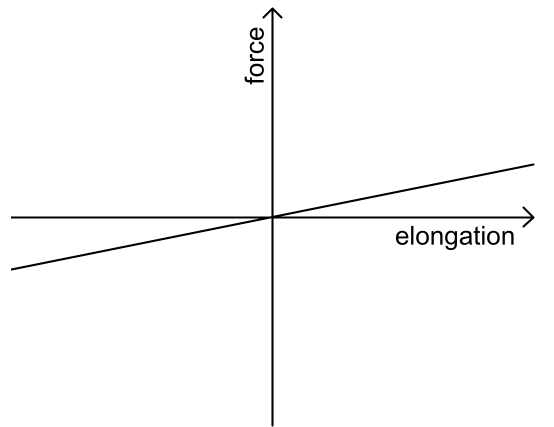 Non-linear spring constants allow users to set "hard constraints"—for example, high stiffness (k) prevents the system from pushing a definite friend out of your trusted circle during optimization.
2. The Gravity Formula (Extending Trust)
Once coordinates are settled, how do you trust someone far away? The authors use a Gravity-Inspired Model. Trust () is calculated based on the "Age" () of the node (seniority/reputation) and the distance () in the trust space:
This formula ensures that trust is positive when nodes are closer than a neutral distance () and becomes negative (distrust) as they move further apart, behaving much like physical attraction and repulsion.
Experimental Insights
The researchers simulated networks of up to 40 nodes to check if this "social physics" actually settles into a stable state.
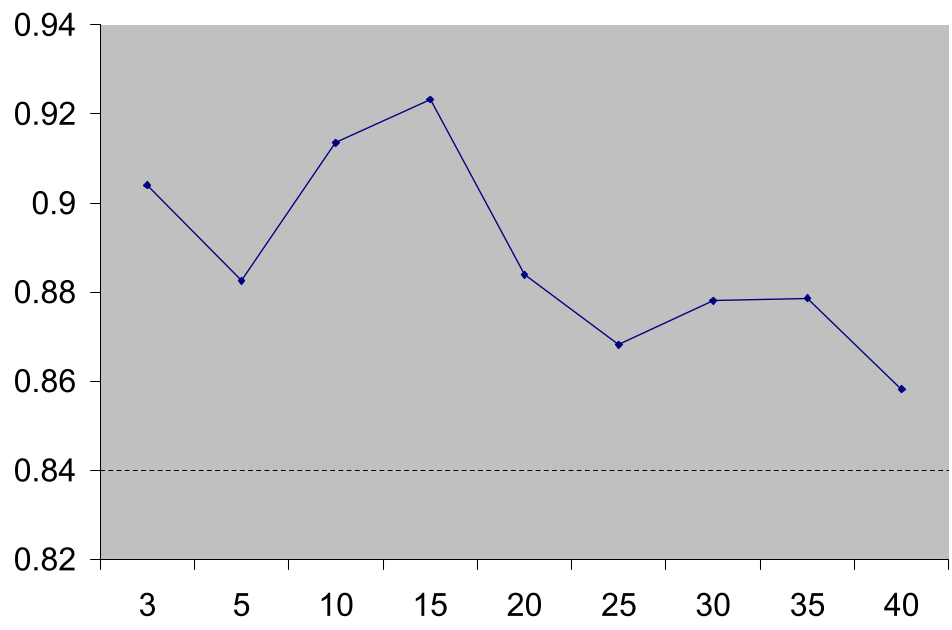 Figure 2: Convergence of the model. The error remains manageable even as the network scales, suggesting the distributed optimization is feasible.
One key finding was that the Spring Constant () is vital. If springs are too stiff or too weak, the error in trust estimation increases. The system performs best when it has a "nominal" elasticity, allowing the network to find a natural equilibrium between varying user opinions.
Critical Analysis & Conclusion
Takeaway
The beauty of this model lies in its interpretability. Unlike a black-box AI model, a user can ask: "Why is this person in my trusted neighborhood?" The answer is visible in the Trust Space coordinates and the "forces" (ratings) applied by mutual friends.
Limitations
- Context Discovery: The paper assumes "independent contexts" exist but doesn't detail how to automatically discover or define them.
- Sybil Attacks: While distance-based metrics help, very large malicious clusters might still be able to warp the "Trust Space" geometry.
Future Outlook
This work lays the groundwork for P2P social networks where reputation is an emergent property of the system's physics rather than a centralized database. Integrating this with modern blockchain or self-sovereign identity (SSI) could provide a robust backbone for decentralized social media.