
Optimized Heart Disease Prediction: The Power of Hybrid Spiral-KNN
Green Computing Process and its Optimization Using Machine Learning Algorithm in Healthcare Sector
The paper introduces a hybridized machine learning approach for cardiovascular disease prediction, combining a K-Nearest Neighbor (KNN) classifier with a Spiral Optimization Algorithm (SOA). By utilizing PCA for dimensionality reduction and pre-processing techniques on the UCI Cleveland Heart Dataset, the method achieves a 5% performance enhancement over standard machine learning baselines.
TL;DR
Researchers have developed a new hybrid machine learning model that combines K-Nearest Neighbor (KNN) with the Spiral Optimization Algorithm (SOA) to predict heart disease with higher precision. By integrating PCA for noise reduction and SOA for parameter optimization, the system achieves an 86% accuracy rate, outperforming standard Neural Networks and Support Vector Machines by approximately 5%.
Background: The High Stakes of Cardiac Diagnosis
Cardiovascular diseases (CVDs) remain the leading cause of death globally. While clinical data (like age, cholesterol, and heart rate) is abundant, the "hidden patterns" within this data are often missed by human doctors or traditional linear models. The challenge lies in the dimensionality of the data—too many redundant factors can cloud a model's judgment, while a poorly optimized classifier might fail to distinguish between a healthy patient and one at risk.
Methodology: A Hybrid Leap
The authors propose a "Green Computing" pipeline designed to minimize computational waste while maximizing diagnostic reliability.
1. Dimensionality Reduction with PCA
Medical datasets like the UCI Cleveland Dataset contain 14 core attributes (e.g., trestbps, chol, thalach). However, not all features contribute equally to heart failure. The authors utilized Principal Component Analysis (PCA) to transform these variables into 10 principal components, effectively stripping away noise and reducing the computational load.
2. The Core Innovation: Spiral-KNN
The standard KNN algorithm is "lazy"—it classifies samples based on their proximity to others. To make it "smarter," the authors introduced the Spiral Optimization Algorithm (SOA). Inspired by natural spiral phenomena (like hurricanes or galaxies), SOA uses a logarithmic search path to find the optimal solution in the center of the search space.
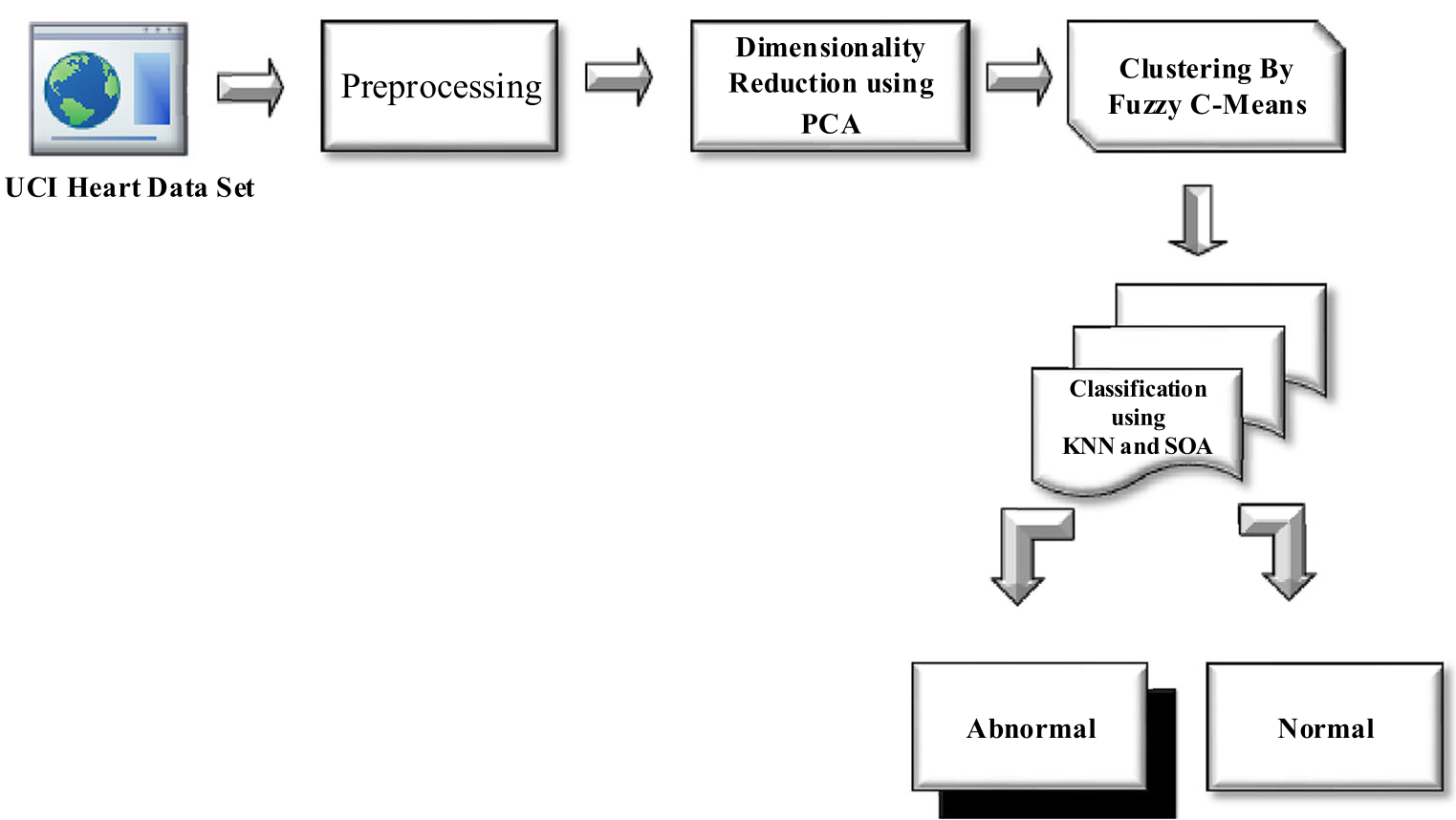 Figure 1: The proposed hybrid system workflow, from data cleaning to optimized classification.
The combined KNN+SOA approach allows the model to:
- Dynamically adjust the search point via a rotation matrix.
- Avoid the "local optima" trap that often catches simpler algorithms.
- Provide a weighted voting mechanism that is more sensitive to the nuances of cardiac risk factors.
Experimental Performance
The model was tested against 270 clinical samples (120 with heart disease, 150 healthy). The results were compared against heavyweights like Convolutional Neural Networks (CNN) and Support Vector Machines (SVM).
| Metric | KNN-SOA (Proposed) | SVM | ANN | CNN |
|---|---|---|---|---|
| Accuracy | 0.86 | 0.82 | 0.84 | 0.85 |
| Precision | 0.90 | 0.89 | 0.84 | 0.87 |
| F-Measure | 0.89 | 0.83 | 0.86 | 0.87 |
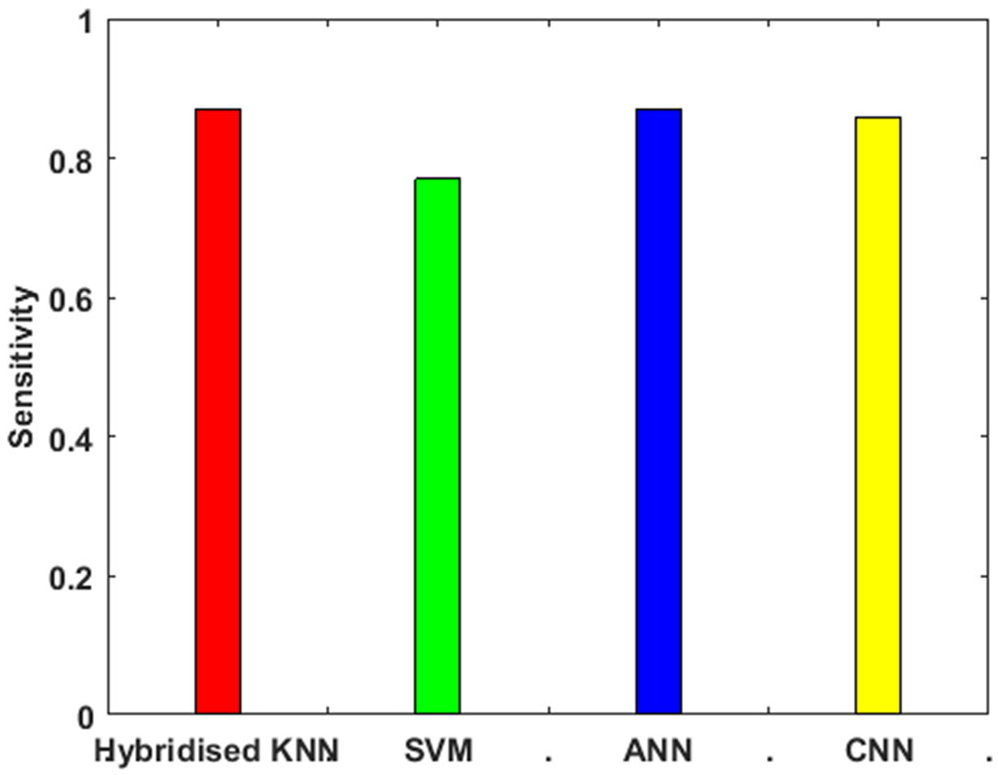 Figure 2: Sensitivity (Recall) analysis showing the proposed model's ability to correctly identify true positives.
Critical Insight: Why Does This Matter?
The 5% improvement cited in the paper may seem incremental, but in a clinical setting, a 5% increase in accuracy translates to thousands of correctly diagnosed cases that might have otherwise been missed. The use of Fuzzy C-Means clustering as a pre-classification step further ensures that "borderline" cases—patients whose signals aren't clearly healthy or diseased—are handled with the necessary probabilistic "fuzziness" rather than hard boundaries.
Future Outlook
While the results are promising, the study is limited to the Cleveland dataset. The authors suggest that future work should involve Extreme Learning Machines (ELM) and Genetic Algorithms to further reduce training time, making these tools viable for real-time "Big Data" analytics in hospitals.
Conclusion
The hybrid KNN-SOA approach demonstrates that sometimes the best way to solve a modern problem (Big Data in Healthcare) is to combine a foundational classifier with a nature-inspired optimization strategy. It is a win for both "Green Computing" and patient outcomes.