
Green IT and Behavioral Shifts: Reforming Car Owner Attitudes via Collaborative Platforms
Green Information Technology influence on car owners’ behavior: Considerations for their operative support in collaborative eLearning and social networks
This study presents a Proposed Green Information Technology (pGIT) system designed to influence car owners' behavior regarding vehicle emissions in Mexico City. By integrating the Technology Acceptance Model (TAM) and the Theory of Planned Behavior (TPB), the authors developed a mobile-based collaborative platform that provides real-time exhaust diagnostics and environmental education, achieving a significant shift in user awareness and willingness to perform preventive maintenance.
TL;DR
This research tackles the stagnation of air quality improvements in Mexico City by moving beyond forced government regulations. It introduces a Green Information Technology (pGIT) platform that provides car owners with real-time exhaust data and collaborative social features. The study proves that when drivers are empowered with data and social connectivity, their motivation shifts from "avoiding fines" to "protecting community health."
The Core Challenge: Compliance vs. Awareness
In many developing megacities, vehicle emission tests are viewed as a "nuisance tax." The authors identify a critical gap: car owners lack the technical understanding of how their vehicles pollute and why it matters. This disconnect leads to a "linear way of life" where environmental deterioration is accepted as inevitable. The motivation for this study was to test if collaborative eLearning and mobile interfaces could break this cycle by making "invisible" pollutants visible and socially relevant.
Methodology: The VECS Framework
The researchers developed the Vehicle Emission Control Scheme (VECS), a three-phase architecture:
- On-Road Sensing: Unlike static station tests, this captures data during real-world driving.
- Embedded Evaluation: A portable five-gas analyzer processes concentrations of CO, HC, and NOx.
- Mobile Interaction: Data is pushed to an Android application that translates complex chemical readings into actionable maintenance advice.
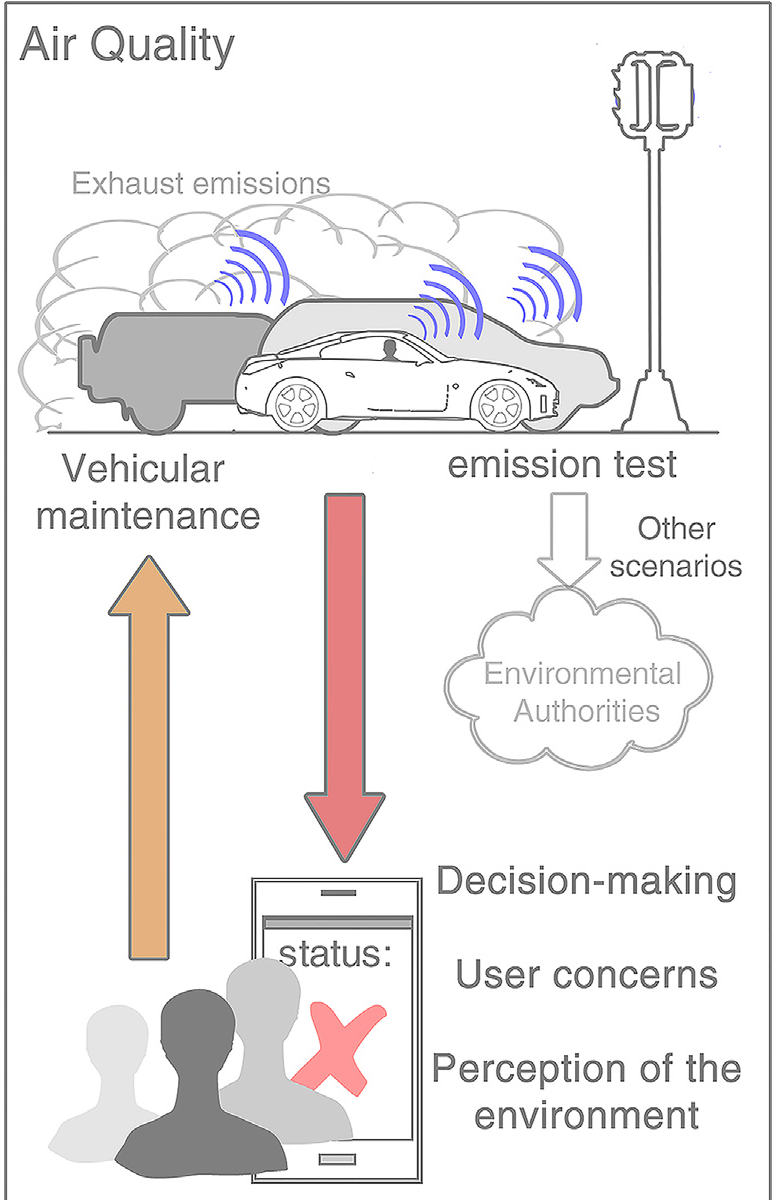 Figure 1: The VECS infrastructure showing the interaction between the vehicle, mobile devices, and urban roadside infrastructure.
The study utilized a dual-theoretical lens:
- TAM (Technology Acceptance Model): To measure if the app was easy to use and perceived as useful.
- TPB (Theory of Planned Behavior): To analyze how the information changed the intent to perform vehicle maintenance.
Experimental Results & Insights
The study involved testing 15 vehicles ranging from older carburetor models to modern fuel-injection systems.
The "Pass/Fail" Psychology
Initial surveys revealed a stark reality: if a vehicle passes a government test, the owner's concern for emissions drops to near zero. If it fails, the only concern is the cost of the fine.
The pGIT Effect
After using the mobile application, the data showed a fundamental shift. Participants began to link vehicle performance with family health.
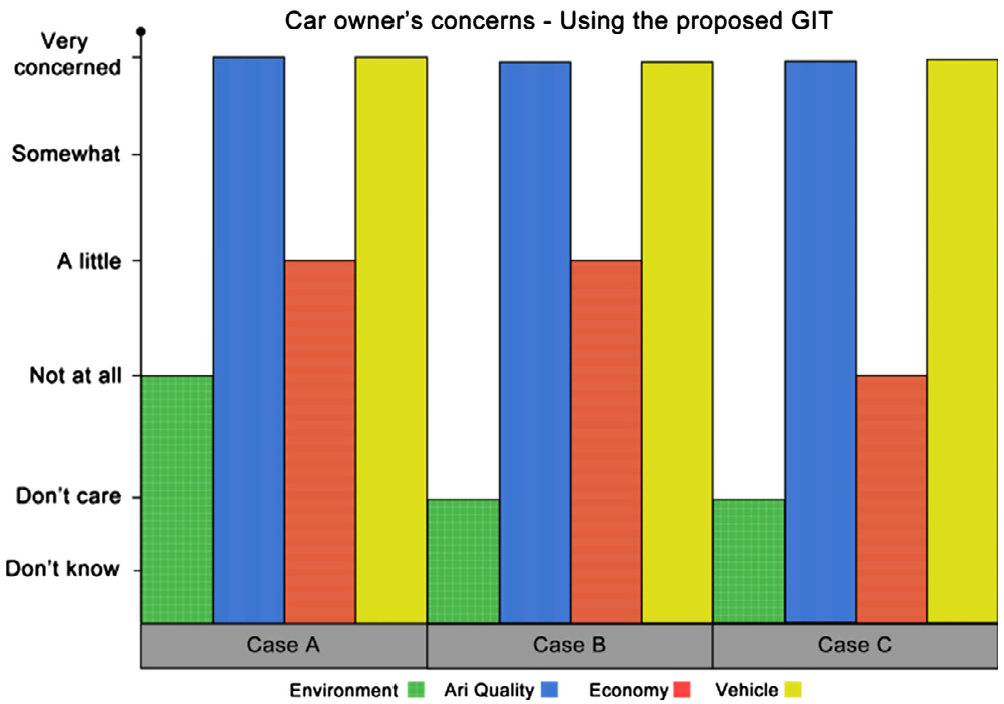 Figure 2: Significant increase in concerns regarding Health and Environment after interacting with the pGIT platform.
Key findings include:
- Social Influence: 65% of the drive to adopt the technology came from the perception that "important others" (family and peers) valued the behavior.
- Knowledge Gap: Before the study, 95% of participants were unaware of the specific Mexican Standards (NOM-041) governing their own cars.
- Volitional Control: The shift from "forced testing" to "voluntary pre-diagnostic" empowered users, resulting in higher maintenance intent.
Critical Analysis & Conclusion
Takeaway
The success of this Green IT intervention demonstrates that Information is the ultimate nudge. By moving environmental data from the "black box" of a government testing station to a personal smartphone, the researchers converted passive citizens into active "social sensors."
Limitations & Future Work
While the study showed a massive increase in intent and awareness, it noted a lack of concrete "collaborative efforts" (e.g., community-led emission reduction groups). The authors suggest that future iterations must combat the "Like-culture" trap—where users feel that clicking a button is a substitute for actual vehicle repair.
Ultimately, the research suggests that "viral noise" and misinformation remain threats, but the power of socially-verified environmental data offers a potent tool for sustainable urban mobility in the 21st century.