
The Green Revolution: How Genetic Architecture Saved a Billions from Famine
Green revolution_ the way forward(科研通-ablesci.com)
This seminal paper by Gurdev S. Khush reviews the historical trajectory and genetic foundations of the "Green Revolution," a period that saw world food grain production double between 1960 and 2000. It details the development of high-yielding semi-dwarf varieties of rice and wheat and outlines future strategies integrating conventional breeding with modern functional genomics to meet the needs of a projected 8 billion people by 2025.
TL;DR
The "Green Revolution" was not just a historical event but a masterclass in biological engineering. By leveraging specific "dwarfing" genes (like sd1), scientists fundamentally changed the architecture of staple crops—rice, wheat, and maize—enabling them to withstand heavy fertilization and double their yield potential. This article explores the historical shift from traditional "leafy" varieties to the "Super Rice" of the future, driven by functional genomics.
The Despair of the 1960s: A World on the Brink
In 1967, the Paddock brothers published Famine 1975!, predicting catastrophic global starvation. The math was simple but grim: population growth was accelerating due to medical advances, while food production remained stagnant. Traditional crop varieties were tall and weak-stemmed; if you applied fertilizer to help them grow, they simply grew too tall, became top-heavy, and "lodged" (fell over), rotting in the fields.
The technical bottleneck wasn't just a lack of fertilizer—it was the Inductive Bias of the plants themselves. They were biologically hardwired to prioritize straw over grain.
Methodology: The Architecture of Productivity
The breakthrough came from a radical redesign of the plant's morphology. The International Rice Research Institute (IRRI) and CIMMYT focused on several core pillars:
1. The Power of "Dwarfism"
By introducing the sd1 gene into rice and Rht1/Rht2 into wheat, breeders reduced plant height.
- The Logic: Shorter plants are structurally more stable.
- The Result: The Harvest Index (the ratio of grain to total biomass) jumped from 0.3 to 0.5. Instead of wasting energy on long stems, the plant channeled it directly into the grain.
2. Photoperiod Insensitivity
Traditional crops were "seasonal," only flowering under specific daylight conditions. Introducing photoperiod-insensitivity genes allowed farmers to grow crops during any season, effectively enabling multiple harvests on the same plot of land per year.
3. Multiple Resistance (The Biological Shield)
The shift to a few high-yielding varieties created a risk of genetic monocultures. To counter this, breeders "pyramided" resistance genes against dozens of pests and diseases (like blast and bacterial blight).
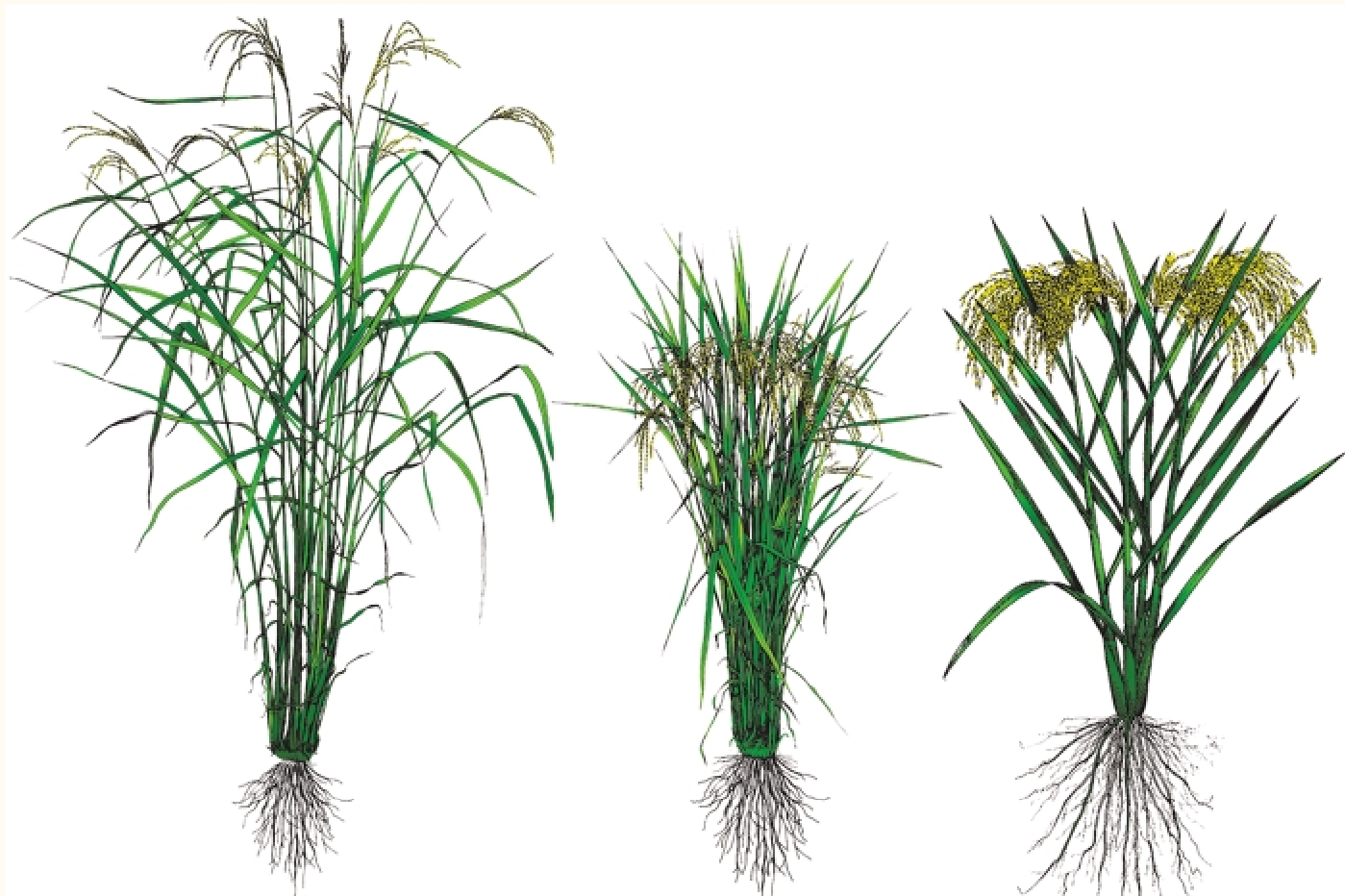 Figure 1: Evolution of rice architecture from tall conventional types to the "Super Rice" (New Plant Type) with low tillering and massive panicles.
Experiments and Global Impact
The results were unprecedented. Between 1966 and 2000, while the population in low-income countries doubled, food production outpaced it, rising by 125%.
- Economic Impact: The unit cost of production dropped by 20-30%, and the real price of staples fell by 40% (adjusted for inflation).
- Environmental Sustainability: This "Intensification" saved millions of hectares of forest. Without these yields, India and China would have needed 2-3 times more land to produce the same cereal volume, likely leading to the total destruction of their natural ecosystems.
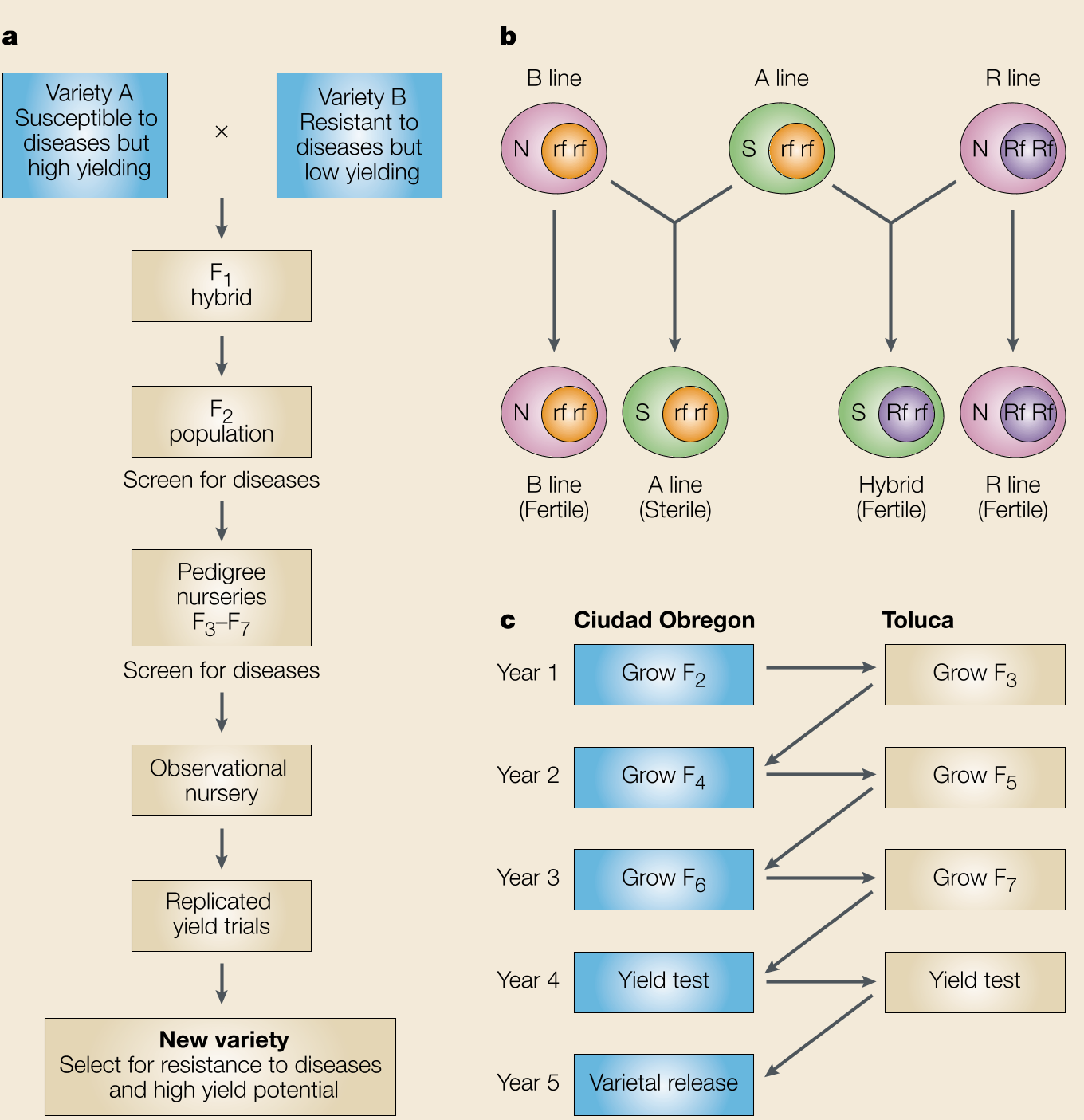 Figure 2: Overview of conventional, hybrid, and shuttle breeding—the engine behind the yield explosion.
Critical Analysis & The Way Forward: The Genomics Era
While the Green Revolution solved the caloric deficit of the 20th century, we now face the "Double Burden" of malnutrition and climate change.
The Next Frontier: Trait Synthesis
The author identifies Plant Genomics as the engine of the next revolution. With the rice genome fully sequenced (roughly 450 Mb), we are moving from "finding" genes to "designing" them.
- Abiotic Stress: Engineering crops to withstand salinity, drought, and aluminum toxicity—problems that traditional breeding struggled to solve due to low heritability.
- Nutritional Quality: "Quality Protein Maize" (QPM) is a prime example, doubling lysine and tryptophan levels to treat malnutrition.
Limitations and Ethical Considerations
The paper acknowledges the tension between private and public sector research. As gene discovery becomes proprietary, there is a risk that subsistence farmers will be left behind. The proposed solution is a Material Transfer Agreement (MTA): allowing patents for commercial markets but ensuring zero-royalty access for subsistence farming.
Conclusion
Gurdev S. Khush’s retrospection reminds us that agricultural science is a game of structural optimization. The Green Revolution was the first successful attempt to optimize the "hardware" (plant architecture). The next revolution will optimize the "software" (gene expression and functional pathways), ensuring that a planet of 8 billion people remains a planet that can be fed.