
Enhancing Child Gross-Motor Recognition: From Noisy Skeletons to Precise AI Assessment
Enhancement of gross-motor action recognition for children by CNN with OpenPose
The paper introduces an AI-driven system for Gross-Motor Action Recognition (GM-AR) in children using OpenPose for skeleton detection and a custom CNN architecture. By incorporating a self-organized particle filter for robust tracking and a viewpoint-standardization preprocessing step, the system achieves a 82.3% classification accuracy across 13 types of gross motor skills.
Executive Summary
Early childhood developmental assessment is a critical but labor-heavy task. This paper presents a significant upgrade to a Gross-Motor Action Recognition (GM-AR) system designed to automate the TGMD-3 (Test of Gross Motor Development) standards. By combining OpenPose for skeleton extraction with a novel Self-Organized Particle Filter for person tracking and a CNN-based classifier, the researchers achieved a state-of-the-art accuracy of 82.3% across 13 complex motor skills. This work effectively bridges the gap between high-level pose estimation and practical, real-world pediatric screening.
Motivation: The Japanese Staffing Bottleneck
In Japan, the utilization rate of standardized gross motor assessment tools is a mere 4%. The culprit isn't a lack of interest, but a lack of time and personnel. Manual evaluation requires experts to watch and score children repeatedly. While AI offers a solution, technical hurdles like tracking a single child in a crowded playground and the inherent noise in children's erratic movements have made automated "Action Recognition" (AR) difficult to deploy reliably.
Methodology: The Three Pillars of Improvement
The authors tackled the problem through a sophisticated three-stage pipeline:
1. Robust Tracking with Self-Organized PF
Standard pose estimators like OpenPose provide skeletons but often "forget" which person is which between frames (ID switching). To solve this, the authors used a Particle Filter (PF).
- The Innovation: Instead of manual parameter tuning, they used a self-organized mechanism where the filter dynamically estimates its own standard deviation () based on the child's movement intensity. This allowed for a 98.8% success rate in tracking, even during occlusions.
2. Viewpoint Standardization
Raw video data varies by distance and angle. To ensure the AI learns the motion and not the camera position, the authors developed a geometric normalization process. It calculates the ratio of acromion height to shoulder width to "rotate" and "scale" the skeleton into a standardized 2D plane.
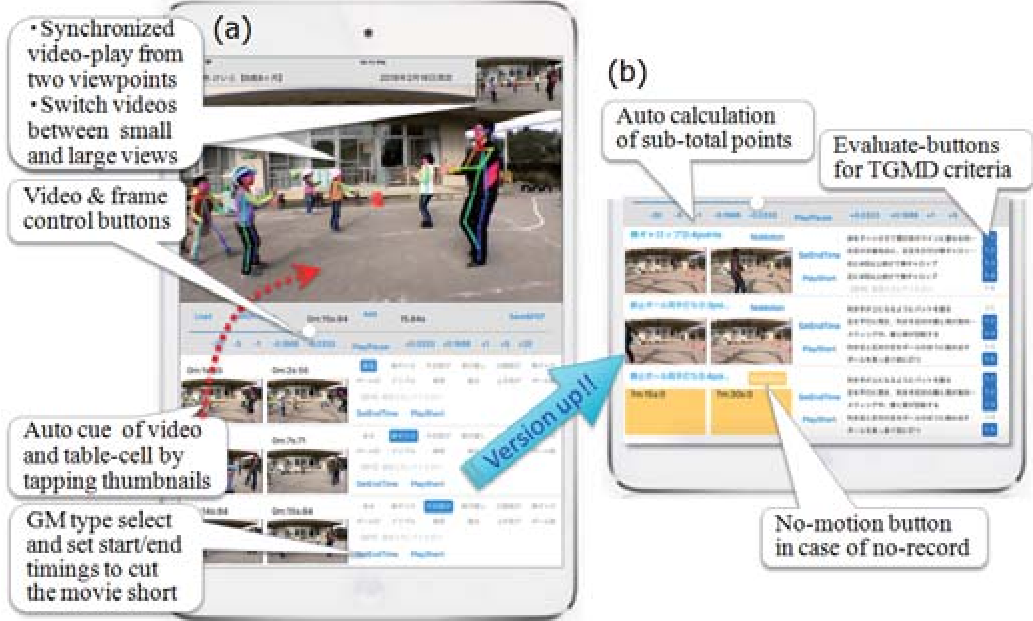 Fig. 1: The multi-stage data processing pipeline from video input (Step 2a) to standardized skeleton frames (Step 2c).
3. Transitioning from LSTM to CNN
While LSTMs are traditional for time-series data, the authors found them limited. They shifted to a VGG-like CNN architecture.
- The Input: An 8-frame "strobe" image (vertical montage) of the standardized skeleton.
- The Architecture: 4 Convolutional layers, Batch Normalization, and Leaky ReLU activations to prevent gradient vanishing.
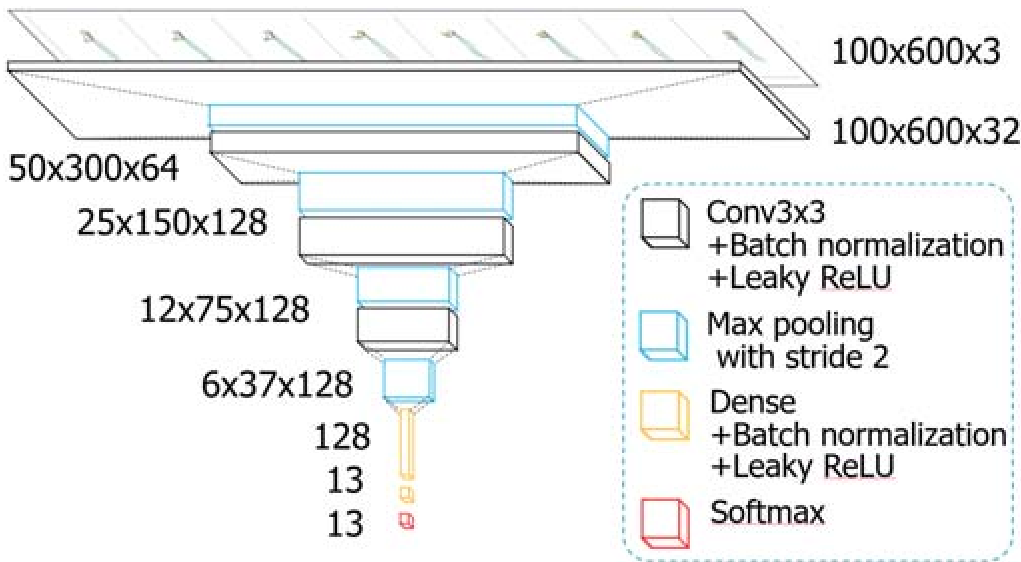 Fig. 2: The VGG-style CNN structure designed to classify 13 distinct motor skills.
Experimental Results
The system was tested on a dataset of 604 video clips featuring 24 preschool children performing skills like galloping, skipping, and two-hand strikes.
- Accuracy: The CNN model achieved 82.3% accuracy.
- Comparative Performance: This outperformed the previous LSTM-based iteration (76.3%) and a pseudo-RGB baseline (60.1%).
- Tracking Reliability: The self-organized PF correctly tracked targets through nearly all 600 clips, proving its readiness for "in-the-wild" kindergarten environments.
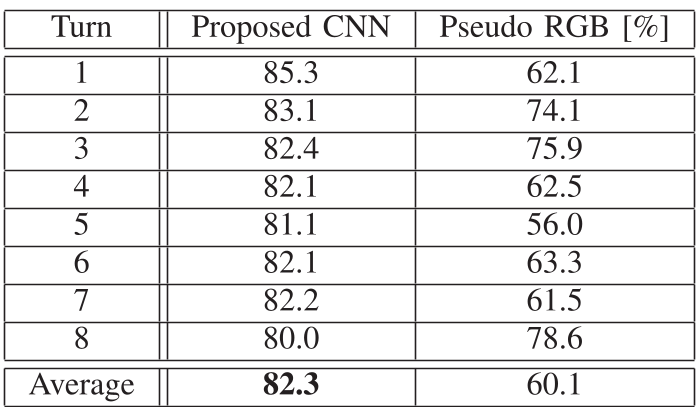 Table 1: 8-fold cross-validation showing the consistent superiority of the proposed CNN.
Critical Insight & Conclusion
The core "Aha!" moment of this paper is the realization that spatial-temporal information can often be better captured by CNNs through image reconstruction rather than relying on the sequential memory of LSTMs, provided the skeletons are properly standardized first.
Future Outlook: While the system is robust, the current 82% accuracy still leaves room for improvement in high-stakes clinical diagnosis. The next step for this field will likely involve 3D Lifted Poses or Graph Convolutional Networks (GCNs) to better model the skeletal joints as nodes in a graph. For now, this system stands as a practical, high-performance tool that could significantly reduce the burden on Japanese preschool educators.