
Beyond the Lab: Navigating the Ground-Truth Crisis in Emotion AI
A survey of ground-truth in emotion data annotation
This paper provides a comprehensive survey on the challenge of establishing "ground-truth" in emotion data annotation for machine learning. It reviews various methodologies for data acquisition and annotation, pinpointing major pitfalls in current emotion recognition systems and proposing a refined set of criteria to enhance classification accuracy.
TL;DR
Building a machine that "feels" is difficult, but building a machine that accurately recognizes human feelings is even harder. This survey by Layale Constantine and Hazem Hajj exposes the fundamental crisis in affective computing: the lack of high-quality Ground-Truth. The authors argue that modern systems are bottlenecked by flawed data annotation processes and propose a shift toward Context-Aware Ambulatory Assessment to bridge the gap between biological signals and genuine emotional experience.
The Ground-Truth Paradox
In most machine learning domains, ground-truth is objective (e.g., "this is a cat"). In emotion research, ground-truth is a moving target. The authors define it as an emotion that is simultaneously:
- Perceived by others.
- Agreed upon by observers.
- Actually felt by the subject.
The "crisis" stems from the fact that most training data is collected in artificial lab settings. When you show a subject an IAPS (International Affective Picture System) image, their heart rate might change, but is it a "genuine" emotion or a fleeting reaction to a screen? Furthermore, without context, a high heart rate could mean the subject is angry, or it could simply mean they just finished a cup of coffee or climbed a flight of stairs.
Methodology: The Anatomy of Emotion Assessment
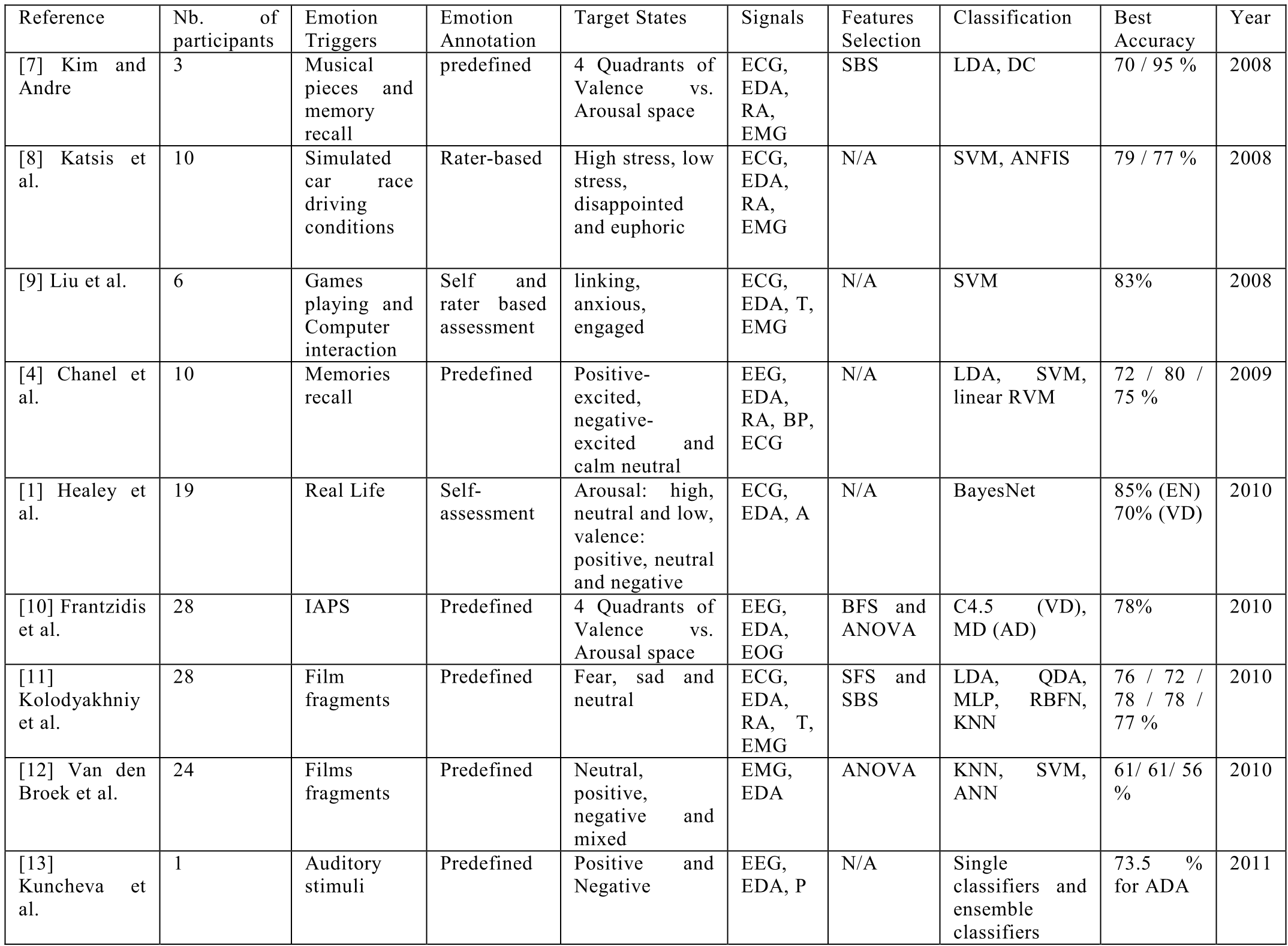
The paper deconstructs the emotion recognition pipeline into several critical components, comparing how various SOTA works handle them:
1. The Model Choice
Should we use Discrete Labels (Anger, Sadness, Joy) or Dimensional Spaces (Valence and Arousal)?
- Discrete Models: Simple but struggle with "co-occurrence" (feeling proud and joyful simultaneously).
- Dimensional Models: Great for nuances but struggle to distinguish between emotions in the same quadrant (e.g., Fear and Anger are both high-arousal/negative-valence).
- Recommendation: A hybrid approach is necessary for a granular understanding of affect.
2. Signal Modalities
The survey evaluates peripheral vs. central nervous system signals:
- ECG/BVP: Vital for capturing cardiovascular responses.
- EDA (Electrodermal Activity): The gold standard for measuring "arousal."
- EEG/fMRI: Highly accurate but "obtrusive" and impractical for real-world (ambulatory) use.
The Context-Aware Solution
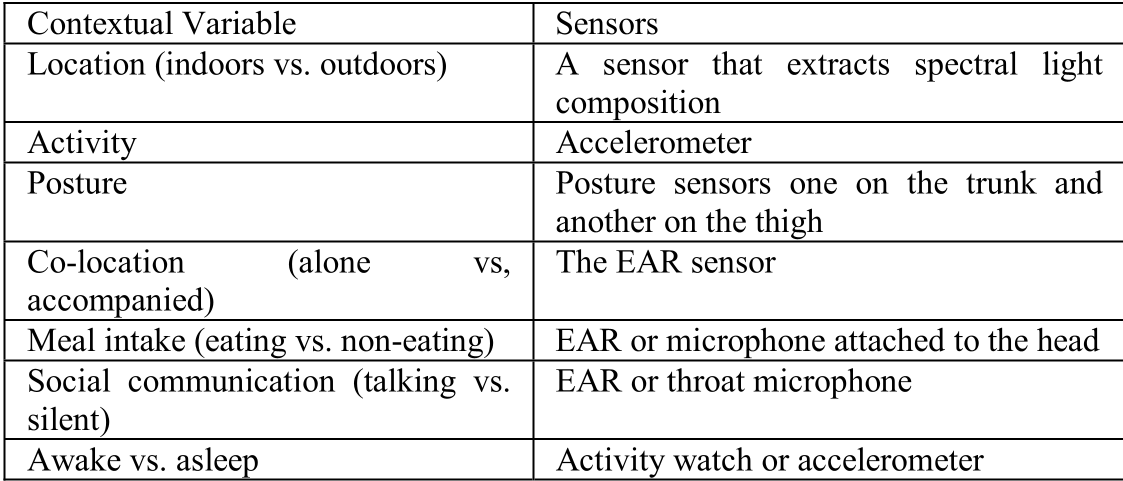
The paper’s most significant contribution is the argument for Contextual Sensing. To achieve true ground-truth, we must know what the user is doing. The authors propose a suite of sensors to track:
- Location: Spectral light (indoors vs. outdoors).
- Activity: Accelerometers (running vs. sitting).
- Social Context: EAR (Electronically Activated Recorder) or microphones to detect if the subject is alone or talking.
By "subtracting" the physical context from the physiological signal, we can isolate the "pure" emotional component of the biological data.
Critical Insight: The "Best" Ground-Truth Setup
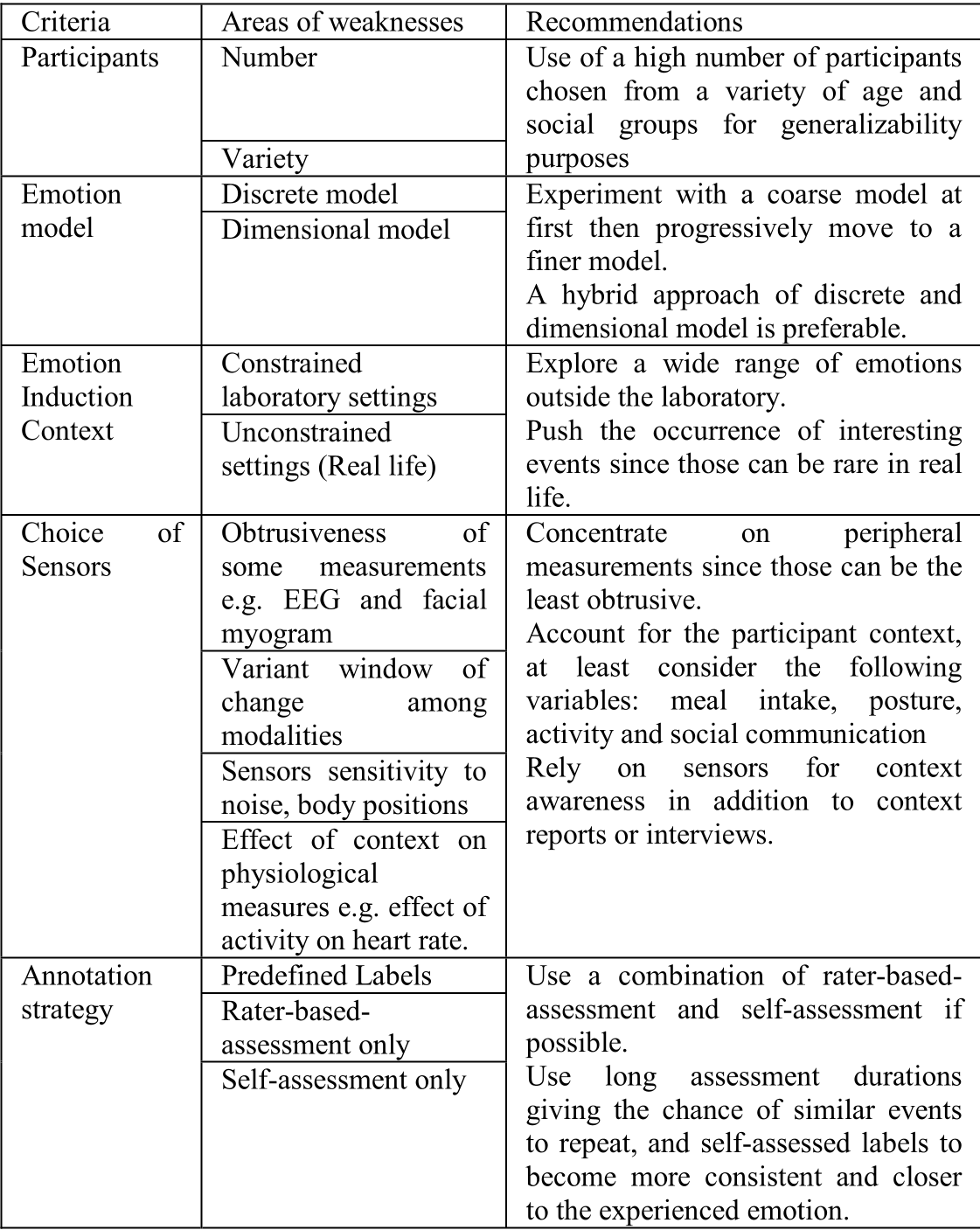
The authors conclude by outlining a blueprint for future studies:
- Naturalistic Settings: Move experiments from the lab to "semi-structured" real-life scenarios.
- Long-term Assessment: Duration is key. Similar events must repeat organically to allow for consistent self-annotation.
- Clinician Oversight: Self-assessment should be verified by clinical psychologists who review the daily logs to ensure nomenclature consistency.
Conclusion & Future Outlook
This survey serves as a wake-up call for the Affective Computing community. We cannot continue to rely on "toy" datasets recorded in controlled booths if we want to build AI that truly understands human experience. The future lies in unobtrusive, wearable, and context-aware systems that can distinguish between a heart racing from a sprint and a heart racing from a heartbreak.
Key Limitation noted by authors: Even with perfect sensors, privacy remains a hurdle, particularly when using audio (EAR) or video for rater assessment in the wild.