
Group Conformity: Beyond the Arithmetic of Social Pressure
Group Conformity in Social Networks
The paper introduces a "Group Conformity Model" for social network diffusion, extending the propositional opinion diffusion framework. It provides a sound and complete logical system to describe the influence relation () within networks of a fixed topology.
TL;DR
Social influence is often treated as a numbers game—if enough friends buy a product, you will too. However, this paper argues that social diffusion is governed by Group Conformity. By using monotonic Boolean functions and a new "Partition Axiom," the authors provide a complete logical framework that explains why we conform to specific social circles (like colleagues or family) independently of the total "pressure" from our entire network.
The Flaw in the Threshold Logic
Since the 1970s, the Threshold Model has dominated the study of social diffusion. It posits that an agent adopts a behavior if the sum of weights from their neighbors exceeds a threshold .
But as the authors point out, this leads to a logical paradox. Imagine you have two co-workers and two neighbors. The threshold model suggests that if two co-workers can influence you, and two neighbors can influence you, then it is mathematically inevitable that one co-worker and one neighbor should also be able to influence you (given certain weight distributions). In reality, social groups don't always "bleed" into each other this way. You might buy a luxury car because your "work group" does, or because your "neighbor group" does, but a split 50/50 pressure from both might not move the needle at all.
The Group Conformity Model
To fix this, the authors adapt the Propositional Opinion Diffusion model. Instead of a sum, each node is assigned a monotonic Boolean function. This function can be viewed as a disjunction of conjunctions:
In this view, and are distinct conformity groups. If group A is "convinced," you follow. If group B is "convinced," you follow. Crucially, if only one person from each group ( and ) is convinced, the logic remains "False," and you do not conform.
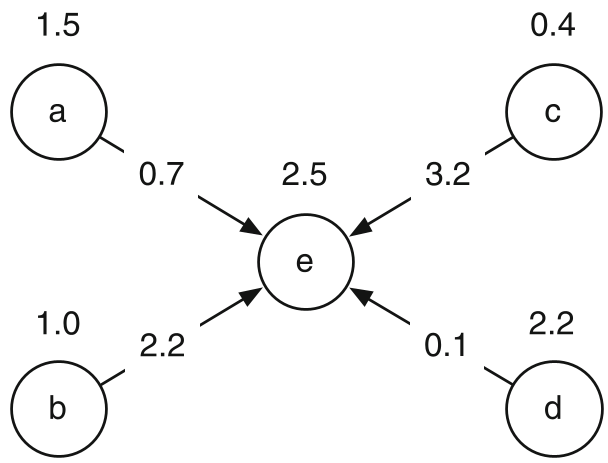 Fig 1: A traditional threshold network where influence is additive.
Methodology: The Architecture of Influence
The technical heart of the paper is the axiomatization of the influence relation (meaning: "If set is convinced, set will eventually be convinced").
The authors prove that for any fixed network topology, the influence relation is governed by the three Armstrong’s Axioms (Reflexivity, Augmentation, Transitivity) plus a powerful new addition:
The Partition Axiom
For any partition of the network into two sets and , if the "left" side () influences someone on the "right" side (), then there must be some specific individual in who is influenced solely by their immediate neighbors in .
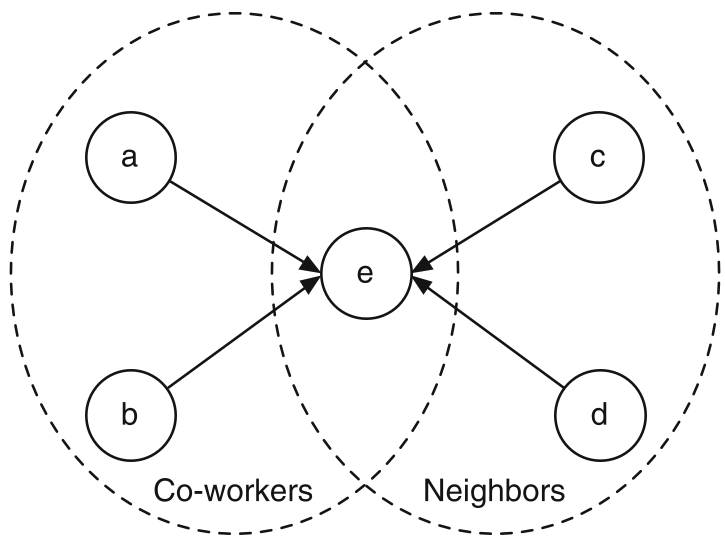 Fig 2: A network topology graph where edges represent "knowing" an agent, setting the stage for potential influence.
Formal Proofs and Soundness
The authors demonstrate the Soundness and Completeness of this system. They build a "canonical social network" from a maximal consistent set of formulas to prove that any statement not provable by their axioms can be refuted by a counter-example network.
One fascinating result is that for complete graphs (where everyone knows everyone), the Partition Axiom becomes a tautology. In these "perfect" societies, influence simplifies back down to the basic Armstrong Axioms used in database theory.
Experiments & Logical Results
The paper provides formal derivations to show how their logic behaves in specific structures.
- Soundness: Every provable property of influence is true in every group conformity social network.
- Completeness: Every property that is universally true across all such networks is provable via their four axioms.
- Decidability: Because there are only finitely many social network configurations for a given graph, a computer can determine if any given influence formula is true.
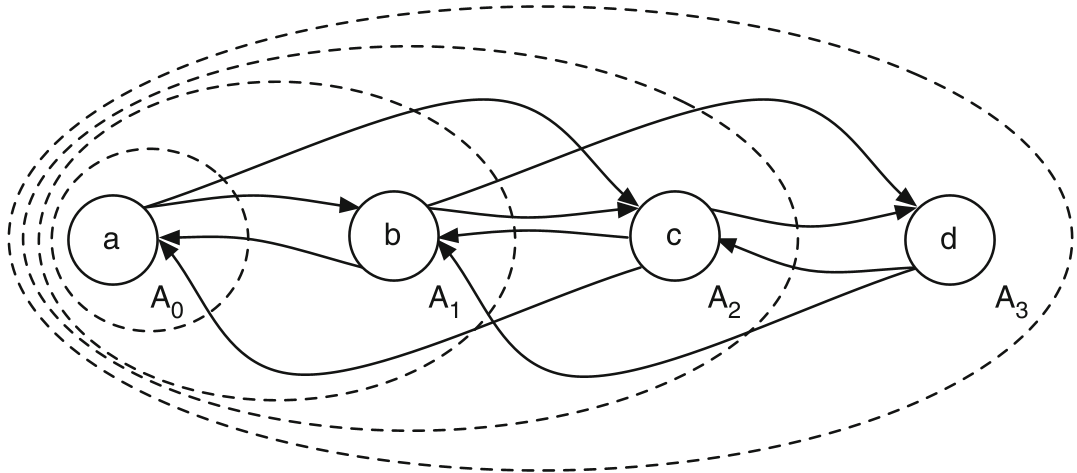 Fig 3: Visualization of stepwise diffusion () eventually reaching the stable closure .
Critical Insight & Conclusion
This research elevates social network analysis from simple "viral marketing" math to a more nuanced modal logic. It acknowledges that our identity is fragmented into different roles and reference groups.
Takeaway: If you want to influence a network, targeting a high "total weight" of users isn't enough; you must satisfy the specific internal "logical gates" of the groups within that network. The Partition Axiom gives us the formal tool to track how these logical gates trigger across any arbitrary network structure.