
Grouped Team Formation: Structuring Expert Collaboration with Optimal Communication
Grouped Team Formation in Social Networks
The paper introduces the "Grouped Team Formation" (GTF) problem, a task aimed at selecting a team of experts from a social network where the team structure is hierarchical. The authors propose the "Assignment and Pruning" (AP) algorithm, an exact method that minimizes communication costs between group members and leaders by formulating the subproblem as a classic assignment problem.
TL;DR
Building a team isn't just about gathering people with the right skills; it's about how they talk to each other. This paper moves beyond simple "flat" team models to propose the Grouped Team Formation (GTF) problem. By modeling teams with internal groups and leaders, and introducing the Assignment and Pruning (AP) algorithm, the authors provide a way to find the most efficient organizational structure while minimizing communication overhead.
The "Flat Team" Fallacy
In earlier social network research, team formation was treated as finding a subgraph where everyone could reach everyone else efficiently. However, real-world projects—whether in software engineering or academia—are rarely flat. They have groups (sub-teams) and leaders.
The core insight of this paper is that an expert in Group A doesn't need to talk to everyone in Group B; they primarily interact with their own group members and their group leader. The group leaders, in turn, coordinate with a project leader. Prior models that ignored this hierarchy resulted in "communication cost" metrics that didn't reflect how work actually gets done.
Methodology: The AP Algorithm
The authors tackle this NP-hard problem by splitting it into two challenges: selecting group leaders and assigning members to those leaders.
1. Cost Function Definition
The cost function is defined by two layers:
- Intra-group Cost: Shortest path distance between members and their group leader.
- Inter-group Cost: Shortest path distance between group leaders and the global project leader.
2. The Assignment Subproblem
Once leaders are chosen, the problem of filling the groups becomes a classic assignment problem. The authors map candidate experts to groups in a matrix and use the Auction Algorithm to find the optimal assignment quickly.
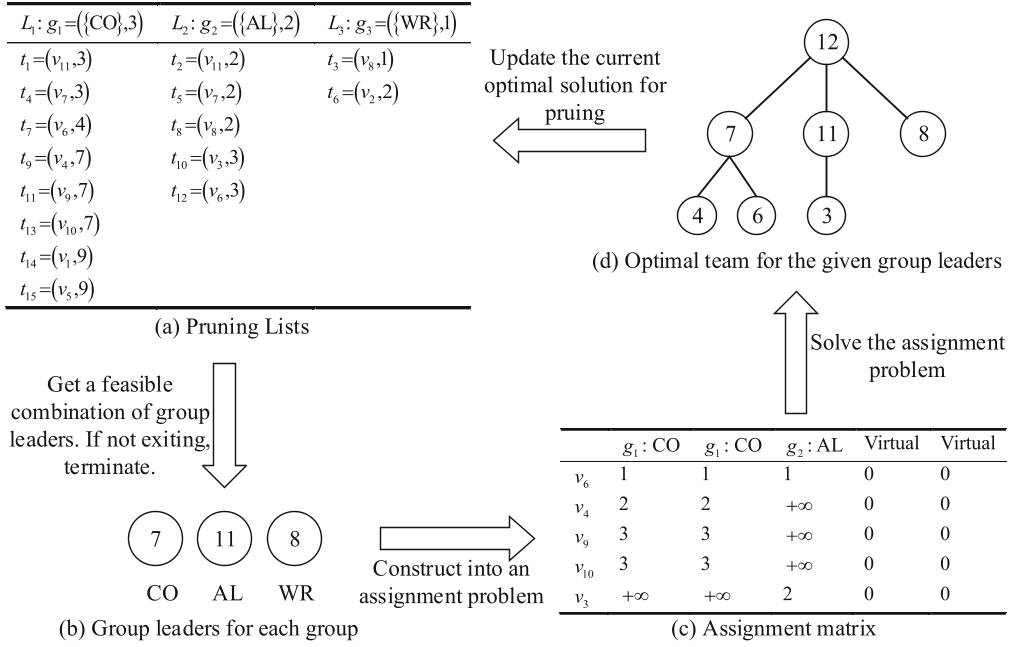 Figure 1: The AP algorithm framework involving pruning lists and the assignment matrix.
3. Pruning the Search Space
To avoid checking every possible combination of leaders (which is computationally explosive), the authors use Pruning Lists. By sorting candidate leaders by their "Expectation Cost" () and traversing them layer by layer, they can calculate a "Lower Bound." If a partial combination of leaders already exceeds the best cost found so far, the entire branch is discarded.
Experimental Validation
The researchers tested the AP algorithm on a network of 100 experts with 1,000 edges. Each expert was assigned specific skills, and the task required forming multiple specialized groups.
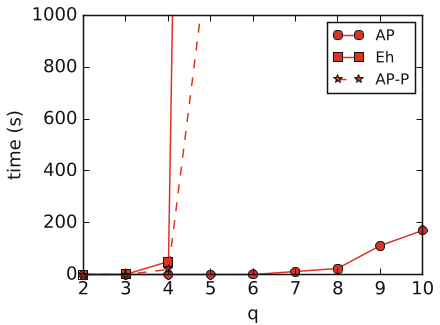 Figure 2: Performance comparison showing the efficiency gain of pruning.
Key Findings:
- Exhaustive Method (Eh): Becomes unusable almost instantly as the number of required experts () increases.
- AP without Pruning (AP-P): Performs better than exhaustive search but still grows exponentially.
- AP with Pruning: Maintains a much flatter growth curve, proving that the lower-bound estimation is highly effective at filtering out sub-optimal leaders.
Critical Insight & Future Outlook
The value of this work lies in its structural realism. By mathematically encoding the "Chain of Command," the GTF model provides a more accurate blueprint for organizational design than traditional connectivity-based models.
Limitations:
- The model assumes a fixed project leader (). In many scenarios, the project leader should also be a variable to optimize.
- The cost is solely based on shortest-path distance (communication history), ignoring the "capacity" of leaders who might be overwhelmed by too many members.
Takeaway for the Industry: For AI-driven talent management systems, this research suggests that we should stop looking for "cliques" and start looking for "trees." The next step is applying these grouped formation algorithms to large-scale datasets, such as GitHub collaboration networks or enterprise Slack graphs, to automate the creation of high-performance task forces.