
Master Architects of Plant Form: Decoding the Biochemistry of Growth Retardants
G<scp>ROWTH</scp> R<scp>ETARDANTS</scp>: Effects on Gibberellin Biosynthesis and Other Metabolic Pathways
This seminal review by Wilhelm Rademacher categorizes plant growth retardants into four distinct biochemical groups based on their inhibition of Gibberellin (GA) biosynthesis. It details how these synthetic compounds specifically target terpene cyclases, monooxygenases, and dioxygenases to reduce shoot elongation while maintaining plant productivity.
Executive Summary
TL;DR: This comprehensive review elucidates the biochemical "kill-switches" used to regulate plant height. By targeting specific enzymes in the Gibberellin (GA) biosynthetic pathway—cyclases, monooxygenases, and dioxygenases—growth retardants allow for the precision engineering of plant architecture without compromising productivity.
Academic Context: Wilhelm Rademacher provides a definitive structural and functional taxonomy of growth retardants. This work moves beyond agricultural application, positioning these chemicals as essential probes for studying hormone crosstalk, specifically between GAs, Abscisic Acid (ABA), and flavonoids.
The Metabolic Bottleneck: Why Retard Growth?
In intensive agriculture, excessive longitudinal growth is often a liability. Tall crops are prone to lodging (falling over) under wind and rain, while fruit trees devote too much energy to wood instead of fruit. The challenge for plant physiologists was to find a way to inhibit cell elongation and division without triggering a toxic response or stunting the developmental cycle.
The author identifies that the most effective intervention point is the Gibberellin pathway. GAs are the primary drivers of stem elongation; by creating a "GA deficiency" through synthetic chemistry, we can architect more robust, compact, and high-yielding plants.
Methodology: The Three Stages of Inhibition
The review breaks down GA biosynthesis into a three-act play, with different retardants acting as "interrupters" for each act.
1. The Early Blockers (Act I: Proplastids)
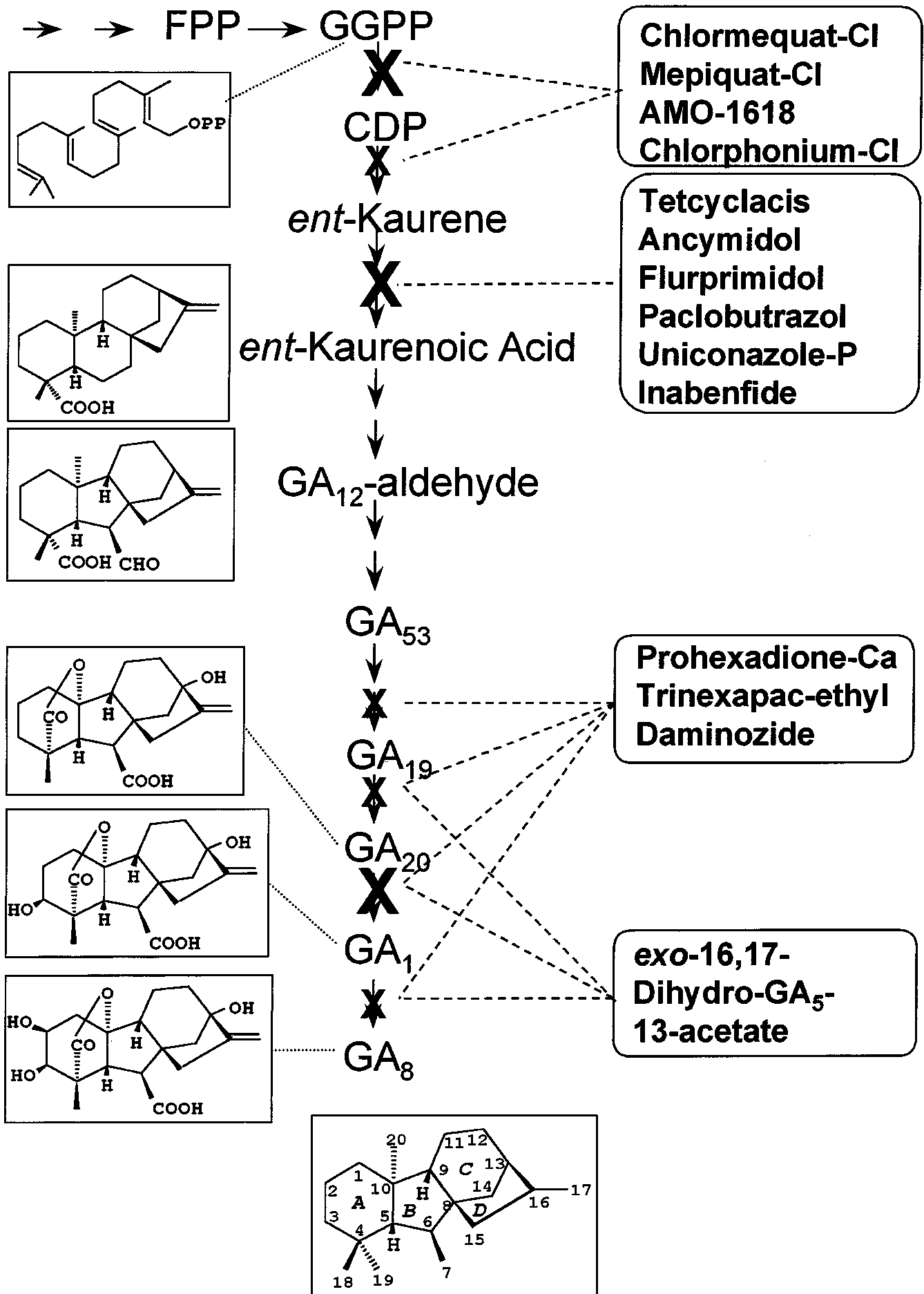
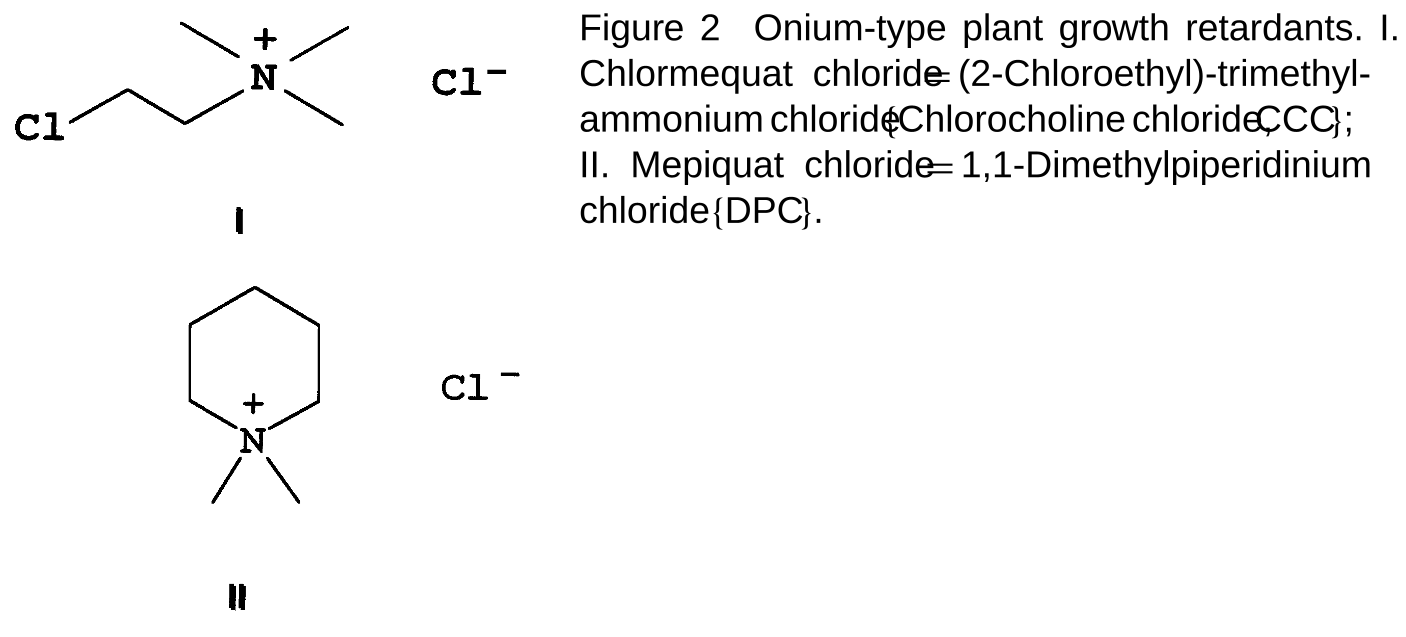
Onium compounds (e.g., Chlormequat chloride, MepiQuat-Cl) act early in the pathway. They inhibit the cyclization of Geranylgeranyl diphosphate (GGPP) into ent-kaurene.
- Insight: These compounds mimic cationic high-energy intermediates in the cyclization reaction, tricking the enzymes into a tight, non-productive binding state.
2. The P450 Disruptors (Act II: Endoplasmic Reticulum)
This group includes N-containing heterocycles like Paclobutrazol and Uniconazole. These are the "heavy hitters" of the industry.
- The Mechanism: They possess a lone electron pair on the nitrogen of their heterocyclic ring, which displaces oxygen at the protoheme iron site of cytochrome P450 monooxygenases.
- Stereospecificity: Rademacher highlights that the (2S, 3S) enantiomer is typically the potent growth retardant, while the (2R, 3R) form is often better as a fungicide (inhibiting sterol biosynthesis).
3. The 2-Oxoglutarate Mimics (Act III: Cytosol)
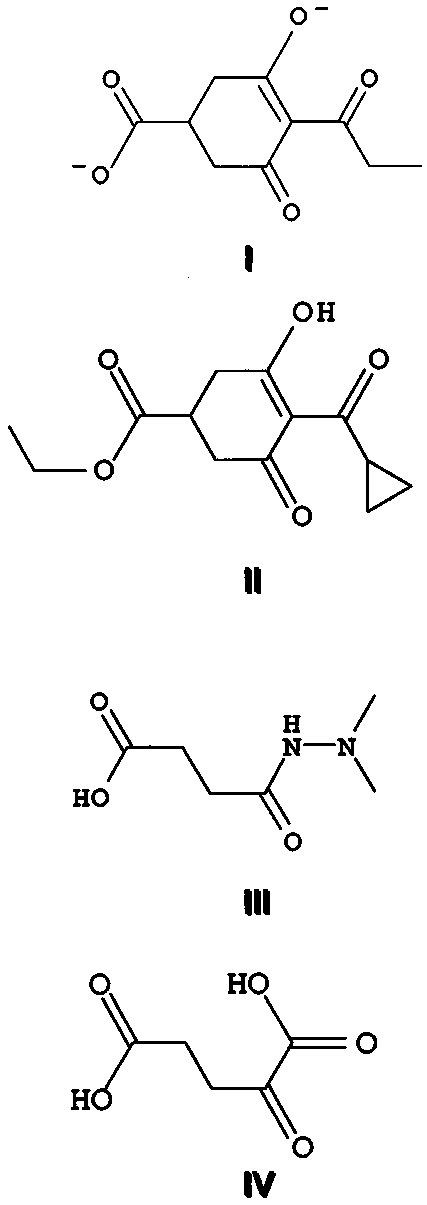
The most modern retardants, acylcyclohexanediones (e.g., Prohexadione-Ca), act at the very end of the GA pathway.
- The "Why": They are structural mimics of 2-oxoglutarate, the essential co-substrate for the dioxygenases that catalyze the final activation of GAs (e.g., converting GA20 to the highly active GA1).
Beyond Height: Side Effects as Strategic Benefits
One of the review's most profound insights is that growth retardants are rarely "pure." Because the biosynthetic pathways for GAs share precursors with other hormones, these chemicals have significant side effects that can be leveraged.
- Stress Resistance: Triazoles often increase Abscisic Acid (ABA) levels. By inhibiting the monooxygenase responsible for breaking down ABA, these retardants help plants close their stomata and conserve water during drought.
- Disease Defense: Prohexadione-Ca shifts the flow of carbon in the phenylpropanoid pathway. Instead of producing standard flavonoids, the plant produces luteoforol, a unique metabolite that provides physiological resistance against Fire Blight (Erwinia amylovora) in apples and pears.
Critical Analysis & Conclusion
Takeaway
The paper successfully demonstrates that plant growth regulation is not a blunt instrument but a highly specific modulation of enzyme kinetics. The transition from early Onium compounds to precise 2-oxoglutarate mimics represents a major leap in agricultural sustainability, reducing environmental persistence and increasing crop safety.
Limitations
- Species Sensitivity: Many retardants (like Mepiquat) are highly effective in cotton but virtually inert in other species. The review suggests this is due to species-specific metabolic rates or uptake barriers, but the exact molecular mechanisms for this "insensitivity" remain partially obscured.
- Fungal Divergence: Highlighting that fungal GA biosynthesis relies on monooxygenases rather than dioxygenases explains why some retardants fail in industrial GA production, yet this also limits our ability to use fungi as high-throughput screening models for new agricultural Chemicals.
Future Outlook
As we move toward a "Climate-Smart" agriculture, the role of these retardants in modulating biotic and abiotic stress will likely eclipse their use as mere height regulators. The next generation of "growth retardants" may be marketed primarily as drought-tolerance or disease-resistance priming agents.