
Guess the Score: Fostering Collective Intelligence through Serious Gaming
Guess the Score, fostering collective intelligence in the class
This paper introduces "Guess the Score" (GS), a serious game and online tool designed to cultivate Collective Intelligence (CI) in higher education. By gamifying the peer-assessment process, GS synchronizes individual social skills and group dynamics, achieving significant improvements in student engagement and academic performance.
TL;DR
"Guess the Score" (GS) is an innovative pedagogical tool that turns the mundane task of classroom grading into a competitive, collective intelligence exercise. By asking students to predict teacher assessments, the system fosters social skills and real-time collaboration, leading to higher engagement and better learning outcomes in both undergraduate and graduate settings.
Background: Moving Beyond Individualism
In the modern labor market, the ability to work intelligently as a group—Collective Intelligence (CI)—is often more valuable than solo performance. However, higher education remains largely stuck in an individualistic paradigm. While researchers like Malone at MIT have long asked how computers can connect people to act more intelligently, practical classroom tools have been scarce. The authors of this paper bridge that gap by applying Serious Games to the science of group dynamics.
The Problem: The Engagement and Social Skill Gap
Standard lectures often fail to develop "social intelligence," leaving students ill-equipped for collaborative Intellectual tasks. The authors identify a specific pain point: the lack of immediate, data-driven feedback loops that allow groups to see their "position" within a collective intellectual ecosystem. Without this visibility, students cannot adjust their behaviors to reach "shared and collaborative development."
Methodology: The "Guess the Score" Framework
The GS system isn't just a game; it is a structured environment based on the Task Circumplex framework (McGrath) and the Deming Circle (Iterative Improvement).
1. The Core Loop
- Presentation: A group presents their work (e.g., Intellectual Capital SWOT).
- The Guess: Every other student uses the GS tool to predict what score the teacher will give that presentation (on a scale of 1-6).
- Scoring: Students earn points based on their accuracy (e.g., +1 for an exact match, penalties for deviations).
- Reflection: The system immediately displays rankings and deviations, allowing for "Collective Intelligence Awareness."
2. The Model Architecture
The model operates across three domains: Execution, Assessment, and Improvement. It utilizes a Service Oriented Architecture (SOA) to provide real-time data to both teachers and students.
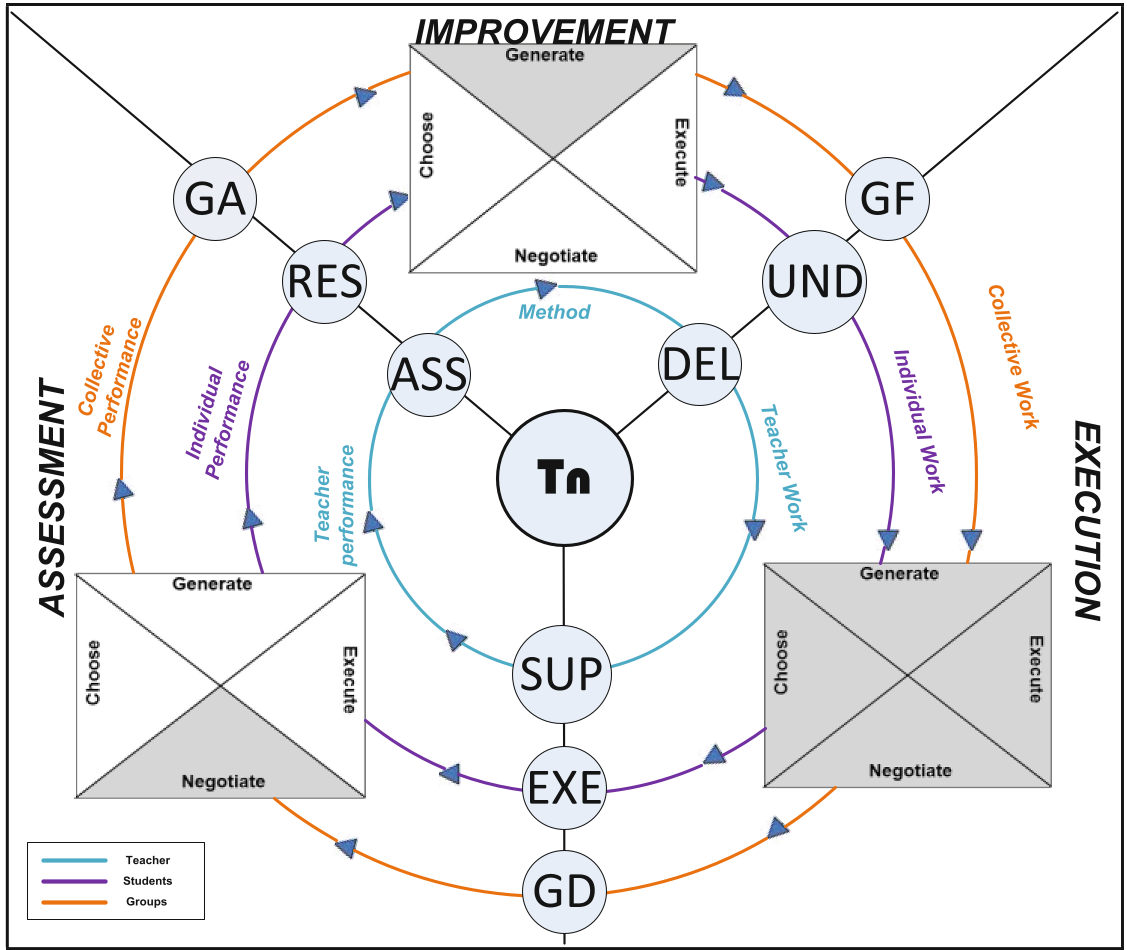 Figure 1: The proposed model for learning collective intelligence, showing the iterative cycles of execution and assessment.
Experiments and Key Findings
The study involved 80 pre- and postgraduate students. The tasks were designed to cover various quadrants of the McGrath Circumplex Model, including Intellective Tasks, Decision Making, and Generation of Ideas.
Results:
- Engagement: As shown in the visualizations, the gaming strategy significantly boosted student focus.
- Alignment: Over time, the "gap" between student ratings and teacher ratings closed. This suggests that students were not just guessing, but actually internalizing the rubrics and quality standards of the course.
- Real-time Insights: The tool provided immediate group dynamics visualization, allowing students to see their group’s performance relative to the class median.
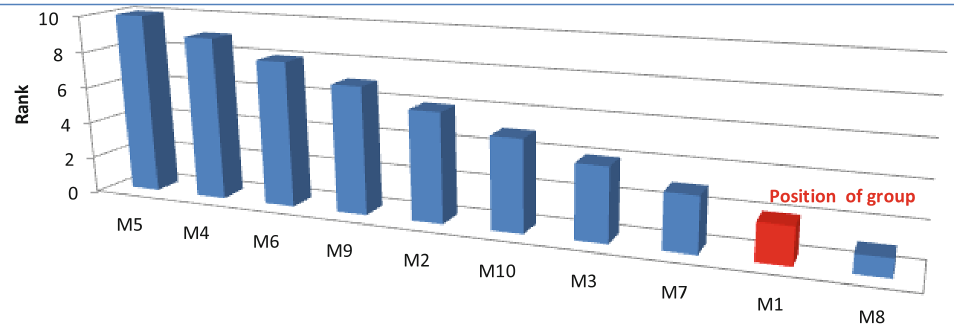 Figure 2: Real-time rankings showing individual positions in relation to the class/group and behavioral patterns through practice.
Critical Insight: Why This Works
The "magic" of GS lies in Calibration. By trying to "Guess the Score," students must engage in a high-level cognitive process: they must view the work through the teacher's lens while also considering how their peers might view it. This constant mental reshuffling builds what the authors call Social Intelligence, which is the bedrock of Collective Intelligence.
Conclusion & Future Work
The paper successfully demonstrates that serious games are not just for "fun"—they are essential tools for measuring and refining group behavior.
Takeaway for Educators: Integrating real-time, peer-assessment mini-games can turn a silent classroom into a vibrant, self-correcting intelligent system.
Limitations: The authors noted that the S.P.A.C.E. formula (used to determine student social profiles) had limited utility in this specific context, suggesting that future iterations might need more robust psychological profiling or larger datasets to refine how groups are formed.