
Putting GWIDO to Work: Crowdsourcing Design Intuition via Human Computation
18373_Putting GWIDO in use promoting the culture of participation in the redesign of an educational application.
This paper introduces GWIDO (Game With Interaction Design Objective), a socio-technical environment that utilizes human computation and Games With a Purpose (GWAP) to assist designers in interface redesign. By engaging a massive number of users to interpret visual elements via gaming, it enables evidence-based selection of icons and UI components, promoting a "culture of participation" in educational software design.
TL;DR
Designers often struggle to choose the "perfect" icon or visual element that resonates with a diverse audience. This paper presents GWIDO, an environment that transforms UI design into a Game With a Purpose (GWAP). By letting the "crowd" play games to interpret UI elements, designers gain massive, data-driven insights into how their choices are perceived, ensuring that educational applications are truly designed "for all."
The "Third Paradigm" Struggle
We are living in the "third paradigm" of Human-Computer Interaction (HCI). Technology has moved from the office to the pocket, becoming social, emotional, and ubiquitous. However, this shift creates a nightmare for designers: User diversity is now infinite.
How can a designer know if a specific icon for "Disciplines" or "Settings" makes sense to thousands of different students? Traditional focus groups are too small, and expert intuition is often biased. The authors identify a critical gap: the lack of mechanisms to involve a massive number of users in the early, proactive stages of the design process.
Methodology: Gaming the Design Cycle
The authors propose a collaborative cycle powered by Human Computation. Instead of asking users for formal feedback, they use the GWIDO environment to turn the validation process into a game.
1. The Designer's Role
Designers register "Concepts" (e.g., "Log out", "Help", "Settings") and upload multiple candidate images for each.
2. The Crowd's Role
Users play a GWAP where they associate images with concepts. This isn't work; it's a game of visual recognition and interpretation.
3. The Evidence Loop
GWIDO aggregates these "hits" and presents them to the designer as statistical distributions, showing which image achieved the highest consensus among specific user categories.
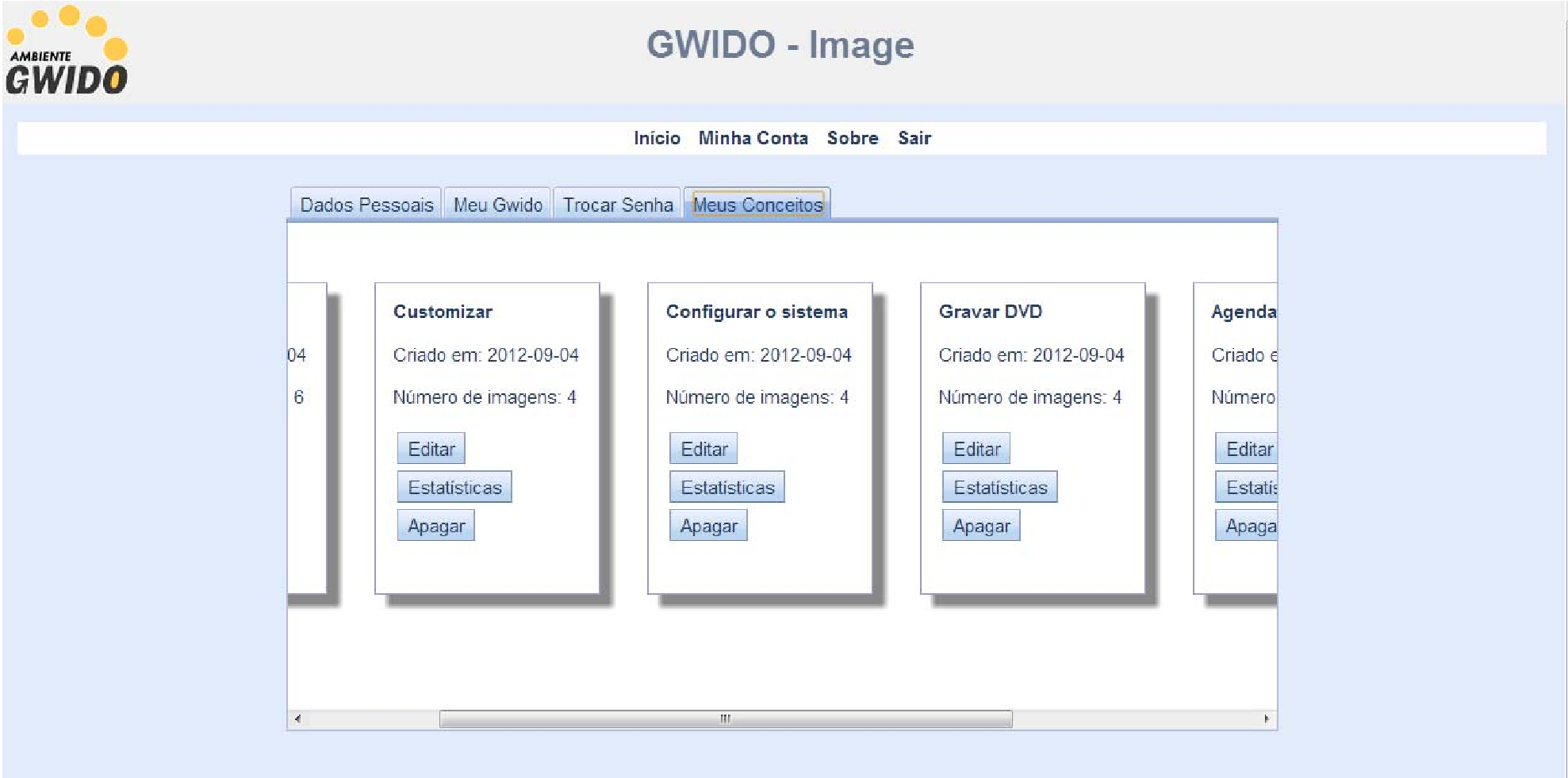 Figure: The process of registering concepts and images in the GWIDO environment.
Real-World Application: Redesigning E-Learning
The study involved 52 Computer Science students tasked with redesigning a legacy university e-learning system from 2003. This system was text-heavy and outdated (Figure 4 in the paper).
The student designers uploaded 26 unique concepts and dozens of candidate images. Over three weeks, the GWIDO environment collected thousands of interactions.
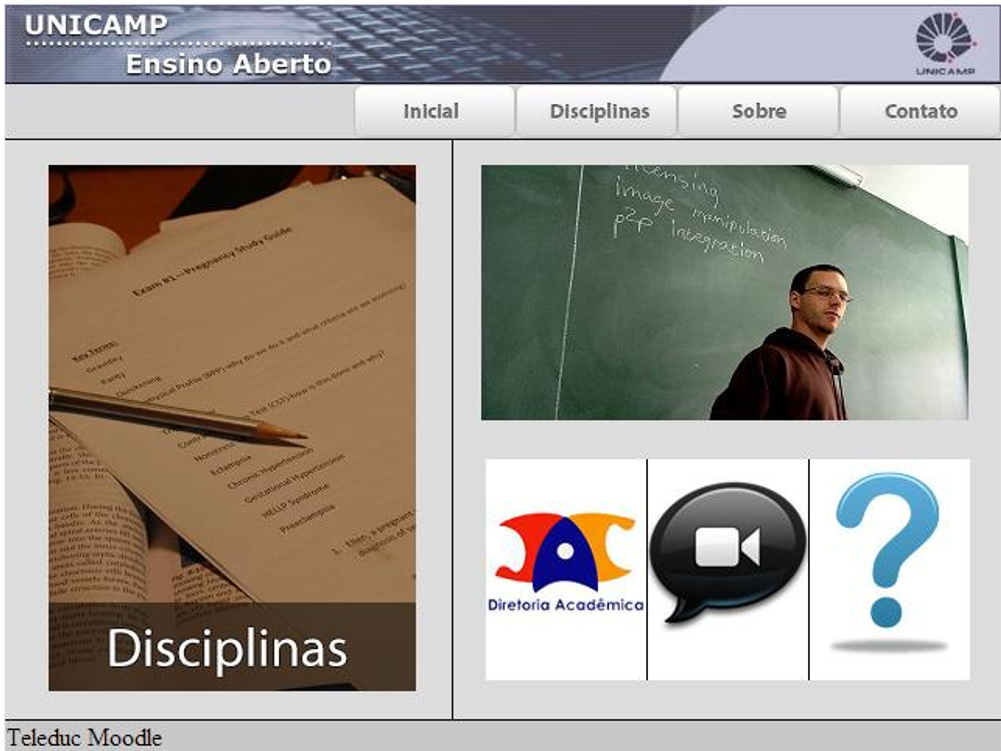 Figure: A proposed redesign utilizing images that achieved high consensus in the GWIDO game.
Key Experimental Insight: The "Verification Threshold"
The paper reveals a fascinating psychological nuance in data-driven design:
- When the crowd agreed with the designer: 65% of students felt 10–30 votes were sufficient to proceed.
- When the crowd disagreed: Designers were more skeptical, requiring 30–50+ votes before they were willing to abandon their personal preference in favor of the crowd's choice.
Deep Insight: Beyond Just Icons
The value of GWIDO isn't just in picking "prettier" icons; it's about Socially Responsible Design. By using a GWAP, designers can reach "non-homogeneous" audiences—people from different backgrounds, ages, and abilities—who would never participate in a formal usability lab.
Conclusion & Future Outlook
The GWIDO project demonstrates that the "culture of participation" is not just about social media; it's a methodology for building better software. While the study was limited to a university setting, the implications are vast. Imagine a world where every UI element in global apps like WhatsApp or Canvas is vetted by millions of players through micro-games before deployment.
Takeaway: Data-driven design usually refers to A/B testing after launch. GWIDO offers a way to perform "A/B/C/D testing" of the creative process before a single line of production code is written.