
Hail Management: Mastering the "White Plague" through Advanced Science and Policy
Hail: Mechanisms, monitoring, forecasting, damages, financial compensation systems, and prevention
2023-10-31
Summary
Problem
Method
Results
Takeaways
Abstract
This comprehensive review explores the multi-faceted nature of hail events, integrating physical mechanisms, advanced monitoring technologies, and socio-economic prevention strategies. It highlights the development of high-resolution forecasting models (e.g., WRF-HAILCAST) and physical-chemical prevention methods like anti-hail nets and cloud seeding to mitigate increasing global economic losses.
## Executive Summary
**TL;DR**: Hail remains one of the most destructive and unpredictable meteorological phenomena, causing billions in annual losses across agriculture, aviation, and infrastructure. This review synthesizes the current state of hail research, from the microphysics of ice formation to the macroeconomics of insurance systems and the engineering of prevention tools like anti-hail cannons and automated netting.
**Background**: Amidst the shifting climate, hail is no longer a static threat. While some regions see fewer events, others face "super hailstorms" with increased kinetic energy. This work positions itself as a critical bridge between atmospheric physics and practical disaster management.
## The Challenge: The "Sudden and Localized" Nightmare
The primary difficulty in hail research is its scale. Unlike hurricanes or heatwaves, hailstorms are micro-scale events that can devastate a single vineyard while leaving the adjacent one untouched.
- **Data Scarcity**: Ground-based sensors (hailpads) are often too sparse.
- **Radar Limitations**: Single-polarization radar struggles to differentiate between heavy rain and damaging hail.
- **Climate Complexity**: Climate change is altering moisture levels and vertical wind shear, making historical patterns less reliable for future risk mapping.
## Methodology: From Atmospheric Instability to Numerical Prediction
The paper details the "perfect storm" conditions required for hail: high atmospheric instability, high liquid moisture, and significant vertical wind shear.
### The Physics of Formation
Hail stones grow in cumulonimbus clouds where updrafts keep ice pellets suspended, allowing them to collect supercooled water. The review highlights the **WRF-HAILCAST** model, a 1D growth model integrated into the Weather Research and Forecasting framework, which allows scientists to simulate the size of hailstones reaching the ground.
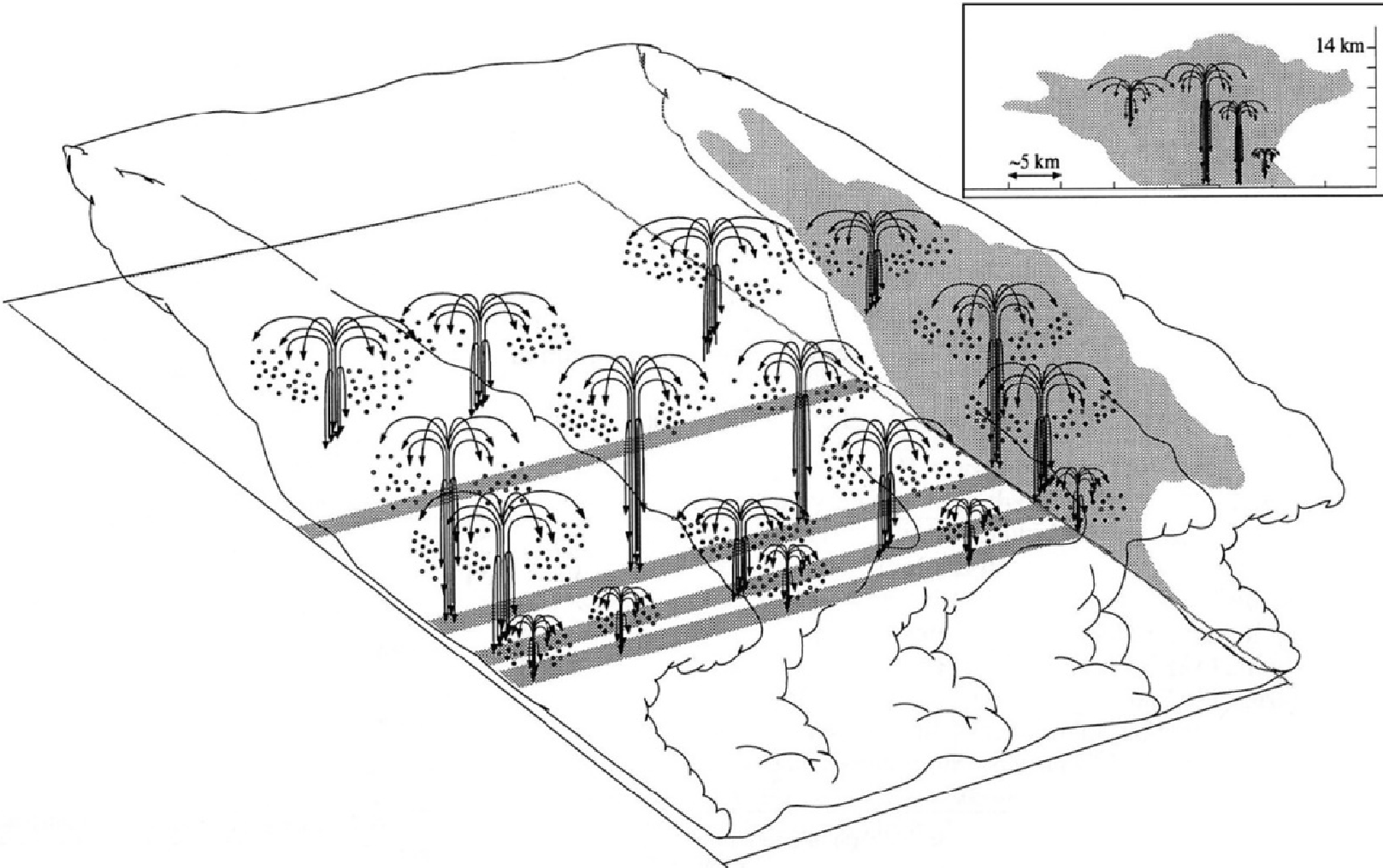
*Figure: Conceptual model of hail particle fountains in a multicellular storm.*
## Quantifying Damage: The NOAA Scale and Beyond
The damage isn't just about size; it's about energy. The review references the NOAA 11-category scale, ranging from **H0 (Pea-sized, no damage)** to **H10 (Softball-sized, fatal injury risk)**.
### Impact on Industry
- **Agriculture**: Crop damage is the largest loss category. The paper includes a detailed matrix of damage types, from "stem lodging" in field crops to "fruit cracking" in horticulture.
- **Renewable Energy**: Photovoltaic (PV) panels are increasingly vulnerable. Hail >3 cm can cause invisible microcracks, while 6 cm stones result in visible destruction of over 42% of cells.
- **Property**: Roof type matters. Data indicates that wood and metal roofs see the highest claim severity compared to tile.
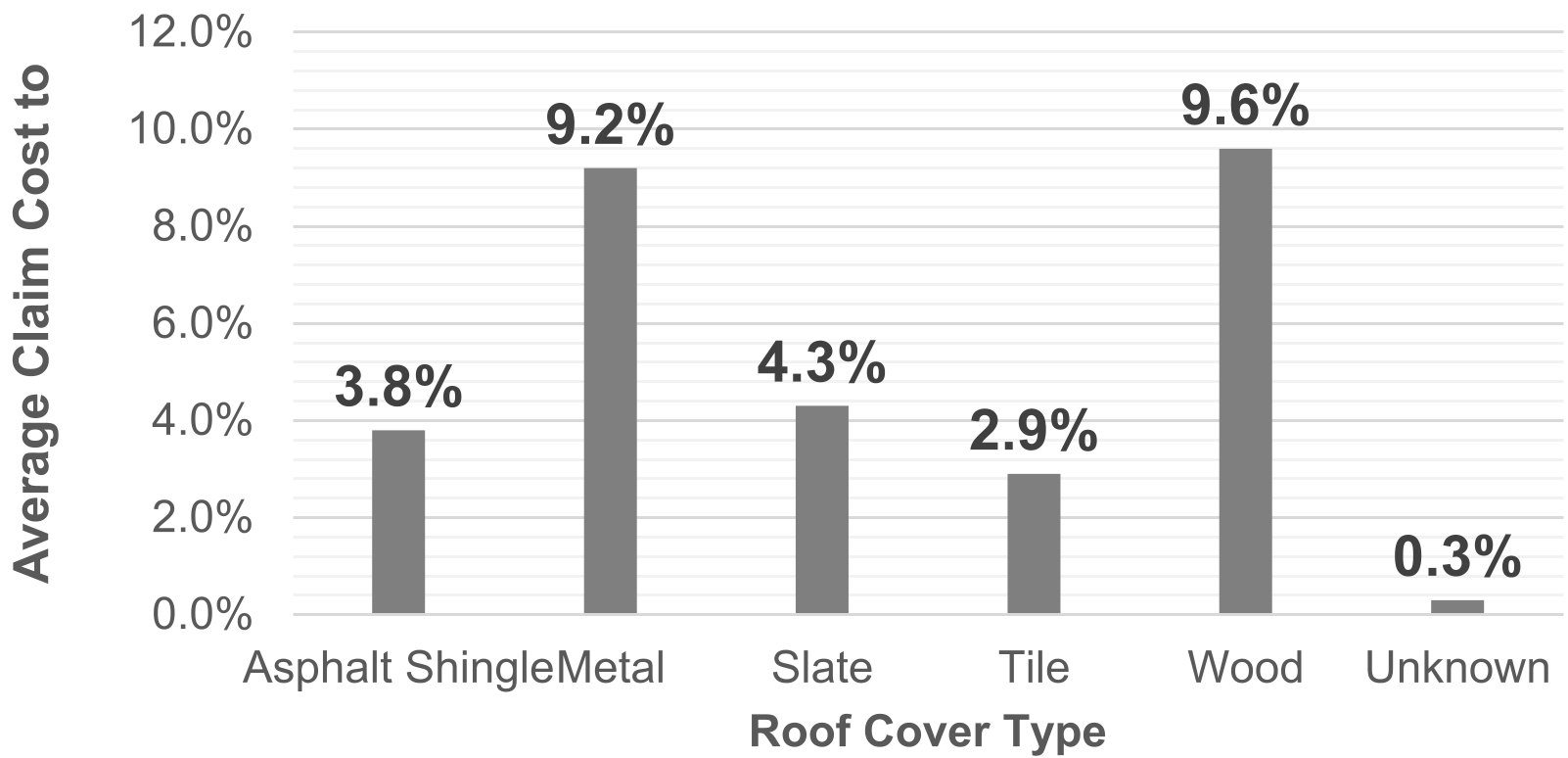
*Figure: Average roof-claim severity normalized by coverage limit.*
## Prevention and Suppression: A Multi-Pronged Approach
The review categorizes prevention into physical and chemical methods:
1. **Anti-Hail Nets**: High durability and effective for stones <2.5 cm.
2. **Anti-Hail Cannons**: These generate shock waves (up to 120 dB) to disrupt the freezing process. They must be activated 20 minutes before a storm to be effective.
3. **Cloud Seeding**: Using Silver Iodide (AgI) to increase the number of "embryos" in a cloud, forcing the moisture to distribute over many small stones rather than a few large, destructive ones.
*Figure: Modern anti-hail cannon used in agricultural areas.*
## Deep Insight & Conclusion
The real value of this review lies in its call for **multidisciplinary integration**. We cannot solve the hail problem through meteorology alone; we need:
- **Biogeochemical research** to understand the secondary fungal infections that follow hail damage.
- **Economic policy reform** to standardize agricultural insurance across borders.
- **AI and Machine Learning** to process dual-polarization radar data for "very-short-term" (15-minute) warnings.
**Conclusion**: As climate change continues to fuel atmospheric instability, the "White Plague" will likely intensify. This paper provides the foundational roadmap for building resilient agricultural and urban systems against one of nature's most localized yet violent threats.