
Beyond the Pen: Decoding Gender via Deep Learning and the HEBIU Dataset
Handwriting-Based Gender Classification Using End-to-End Deep Neural Networks
The paper introduces an end-to-end deep learning approach for gender classification based on offline handwriting images. It utilizes a custom-designed Convolutional Neural Network (CNN) and presents the new HEBIU dataset containing 810 Hebrew and English handwriting samples to achieve state-of-the-art results compared to human examiners.
TL;DR
Is gender hidden in the strokes of a pen? While humans struggle to tell the difference, deep learning is proving remarkably adept at it. This paper introduces an efficient CNN-based architecture that achieves nearly 80% accuracy in classifying the gender of a writer from offline handwriting samples. By introducing the HEBIU dataset (Hebrew-English Bar-Ilan University), the researchers demonstrate that machines can generalize features across different scripts and significantly outperform human intuition.
Background & Motivation: The Limits of Graphology
For decades, handwriting analysis was the domain of "graphologists" and forensic experts who looked for specific geometric markers—slant, pressure, and loops. In the computer science realm, early SOTA methods relied on Manual Feature Extraction (e.g., Histogram of Oriented Gradients or Local Binary Patterns).
The authors identified two major roadblocks:
- Complexity & Subjectivity: Manual features often miss subtle, non-linear patterns that define "masculine" or "feminine" writing.
- Dataset Scarcity: Most research was confined to a few datasets like IAM (English) or KHATT (Arabic).
The research intuition was simple: If we treat handwriting as a raw visual texture, can a Convolutional Neural Network (CNN) "learn" the latent features of gender without human guidance?
Methodology: The Patch-Based CNN Approach
The authors didn't just feed the whole page into the network. Instead, they used a Patch Aggregation strategy.
1. Data Processing
They collected 810 samples from 405 participants in both Hebrew and English. Each page was scanned and broken down into 200 random 400x400 patches (downscaled to 100x100 for efficiency). This acted as a massive form of data augmentation.
2. Architecture
The proposed CNN is intentionally "lightweight" to ensure efficiency:
- Convolutional Layers: Four layers with 3x3 filters (64 and 128 filters).
- Regularization: Aggressive Dropout (0.4 to 0.6) to prevent overfitting on the specific handwriting of individuals.
- Activation: ReLU with an Adadelta optimizer.
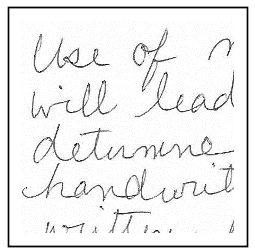 Figure 1: Examples of Square and Rectangular patches used for training.
3. Aggregate Decision Making
Instead of classifying the page once, the model classifies 200 patches and uses Majority Voting or Average Softmax to reach a final verdict. This effectively filters out "noisy" or "empty" patches.
Experimental Performance: AI vs. Human
The results across different language settings provide fascinating insights into how the model generalizes.
| Setting | Accuracy (Avg) |
|---|---|
| Intra-Language (EN-EN) | 75.26% |
| Inter-Language (HE-EN) | 75.65% |
| Mixed-Language (Tested on EN) | 79.34% |
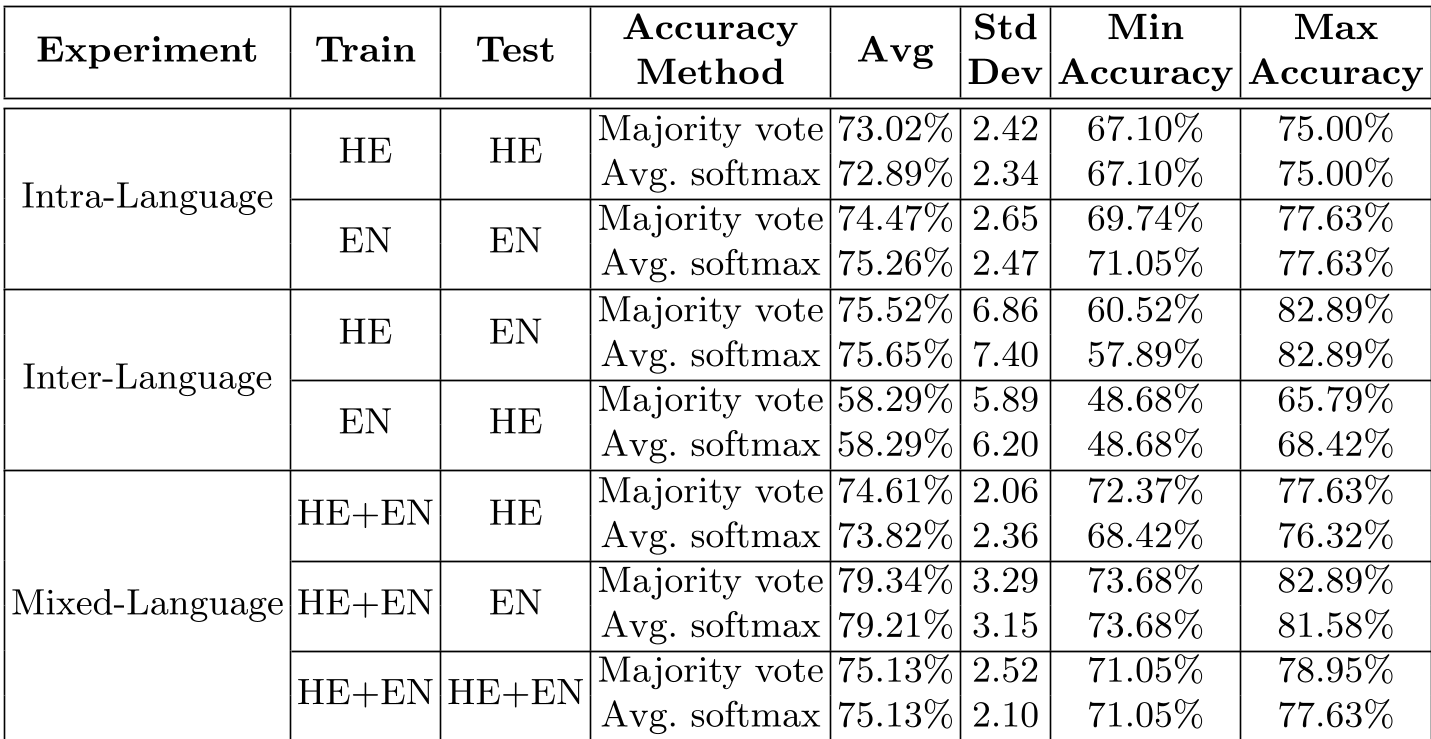 Figure 2: Comprehensive performance metrics across various language combinations.
The "Human Gap"
Perhaps the most striking result is the comparison with humans. The researchers developed a mobile app to test 300 human participants. Humans achieved only 63-66% accuracy. The CNN's ~79% accuracy demonstrates that there are high-dimensional textural patterns in handwriting that are invisible to the human eye but decodable by deep neural networks.
Critical Analysis & Insights
One curious finding was the Inter-language Anomaly: Training on Hebrew and testing on English worked well (75.65%), but training on English and testing on Hebrew performed poorly (58.29%).
The authors suggest that since English is a second language for the participants (Israelis), their English handwriting might be "less natural" or "less descriptive" of their gendered habits compared to their native Hebrew script. This highlights a crucial factor in graphology: Script Fluency.
Limitations
- Demographic Bias: The dataset is localized to Israel; results might differ across different cultures or education systems.
- Simplicity: While efficient, the CNN does not account for global context (page layout, margins), which human graphologists often consider.
Conclusion
This study confirms that gender classification via handwriting is better approached as a Computer Vision task rather than a traditional forensic one. The HEBIU dataset provides a valuable resource for future multi-lingual research. Moving forward, applying these techniques to detect age, handedness, or even psychological traits could open new doors in forensic science and personalized AI.
Takeaway: Your handwriting contains more biometric data than you think—and AI is getting better at reading it than your peers are.