
Happier Together: Can Facebook Make Wellness Exercises More Effective?
Happier Together: Integrating a Wellness Application into a Social Network Site
This paper presents a case study on "3GT," a Facebook-integrated application implementing the "Three Good Things" positive psychology exercise. The study achieves adherence rates comparable to or better than standalone wellness interventions (with 29% of initial sign-ups becoming active users) by leveraging existing social ties and routine platform engagement.
TL;DR
Researchers from the University of Michigan explored whether embedding the "Three Good Things" (3GT) positive psychology exercise into Facebook could solve the chronic problem of low user adherence in digital health interventions. By building a dedicated 3GT application, they found that leveraging existing social networks leads to better engagement than standalone sites, provided that users are given strict control over who sees their reflections.
Problem & Motivation: The Adherence Abyss
Digital wellness interventions—from fitness trackers to mood journals—face a common enemy: user abandonment. Open-access standalone websites often see adherence rates drop to a staggering 1%. The authors hypothesize that the friction of visiting a new site and the lack of social accountability are the primary culprits.
By moving the intervention to Facebook, the researchers aimed to:
- Reduce Friction: Integrate therapy into a site users already visit daily.
- Leverage Social Capital: Tap into existing relationships (strong and weak ties) for support rather than forcing users to build a new community of strangers.
However, this poses a major "Audience" challenge: Is a entry about a minor personal win too mundane—or too intimate—to share with 500 Facebook acquaintances?
Methodology: Designing 3GT for the Social Graph
The team developed the 3GT application, which prompted users to record three positive events daily and—crucially—the reason why they happened.
Key Architectural Features:
- Structured Reflection: Unlike generic Facebook posts, 3GT forced a distinction between the "Good Thing" (public/private) and the "Reason" (strictly private), maintaining the psychological integrity of the exercise.
- Privacy Granularity: Users could choose to post to their Newsfeed (visible to all), their 3GT Profile (visible only to friends who visit the app), or keep it Private.
- Social Scaffolding: Features included the ability to "like/comment" on friends' wins and a "nudge" system for friends who hadn't posted in two days.
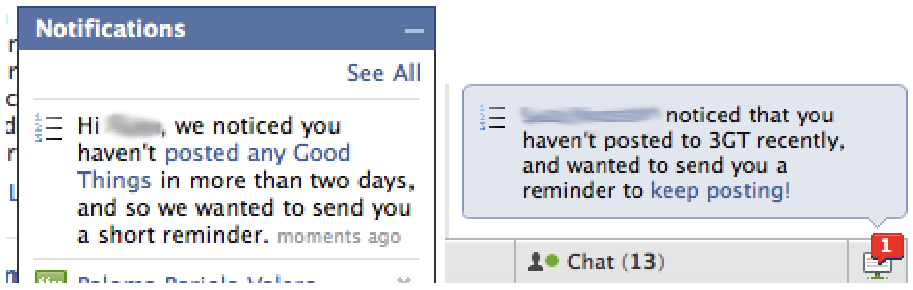 Fig 1: System-generated and User-to-user notifications integrated into the Facebook UI.
Experiments & Results: Structure vs. Chaos
The study followed 190 participants over several months. The data revealed a clear "Social Paradox."
1. Structure Matters
Compared to unstructured Facebook "wellness groups" where users just list items on a wall, 3GT users were twice as active (0.83 vs. 0.40 posts per day). Furthermore, the application's UI successfully nudged users to record the reason for their happiness in 80% of cases, whereas the unstructured groups recorded reasons 0% of the time.
2. The Fear of "Feed Clutter"
A critical insight was the participants' reluctance to share. Even in the "Public by Default" group, users manually changed settings to hide their entries.
- Internal Audience: Users wanted to share with friends who were also doing the exercise.
- External Audience: They were terrified of "cluttering" or "spamming" the feeds of friends who weren't in the program, a phenomenon the authors call "avoiding the wince."
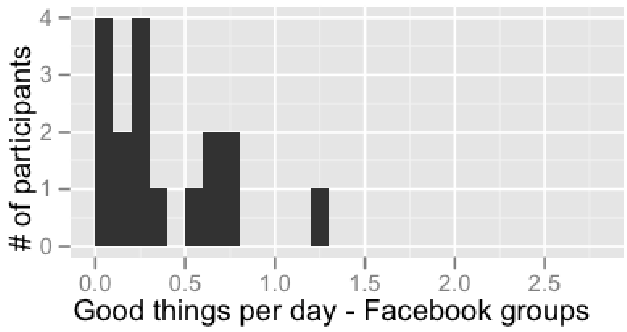 Fig 2: Distribution of privacy choices between "Public Default" and "Private Default" groups.
Critical Analysis & Conclusion
The Takeaway: Integrating wellness into social networks is a viable and powerful strategy to boost adherence. However, the "Social" part of social software is a double-edged sword. Success depends not on broadcast sharing, but on interstitial spaces—smaller, semi-private circles where users feel safe being "boring" or "intimate."
Limitations & Future Work
- Reminders were too subtle: The "polite" Facebook notifications were ignored by many. Future designs might need "louder" (though potentially more annoying) prompts.
- Demographics: The active user base was 87% female, suggesting the current design or platform choice might have a gender bias in its appeal.
- The Workplace Barrier: Users noted that "online" interventions made recording workplace wins difficult due to NDAs, suggesting a need for better "context-aware" privacy filters.
Ultimately, Happier Together proves that we don't need new communities for mental health; we need better ways to navigate the ones we already have.