
HA-EM: Why "Hardness" is the Missing Piece in Social Sensing Truth Discovery
Hardness-Aware Truth Discovery in Social Sensing Applications
This paper introduces the Hardness-Aware Expectation-Maximization (HA-EM) framework, a principled truth discovery approach for social sensing. It focuses on binary claim classification by modeling the varying "hardness" of reports, achieving superior performance in identifying correct information from unvetted Twitter feeds.
TL;DR
Social sensing (using humans as sensors) often struggles with "the noise of the crowd." While traditional models treat every tweet or report as equally easy to make, this paper argues that some truths are harder to report than others. By introducing the Hardness-Aware Expectation-Maximization (HA-EM) framework, the authors utilize the difficulty of a claim to significantly boost the accuracy of identifying real-world events during crises.
Background: Not All Claims are Created Equal
In the chaos of events like the 2015 Paris Attacks or the Oregon Shootings, social media is flooded with data. Current Truth Discovery (TD) systems attempt to figure out who is reliable and which claims are true. However, they hit a wall because they treat a first-hand account of a shooter (High Hardness) the same as a retweet of a prayer or a news link (Low Hardness).
The core Insight here is that a source's reliability is task-dependent. A user might be excellent at sharing news links but terrible at providing accurate eye-witness accounts. If we don't account for the "Hardness" of the claim, our reliability scores for these sources become skewed.
Methodology: The HA-EM Framework
The researchers formulated this as a Maximum Likelihood Estimation (MLE) problem. They introduced a latent variable for "Hardness" () into the probability matrix.
The Two-Step Logic (EM Algorithm):
- E-Step (Expectation): Based on current source reliability estimates, calculate the probability that a claim is true, given its identified hardness level.
- M-Step (Maximization): Update the source reliability and the prior probability of claims being true to maximize the likelihood of the observed sensing matrix.
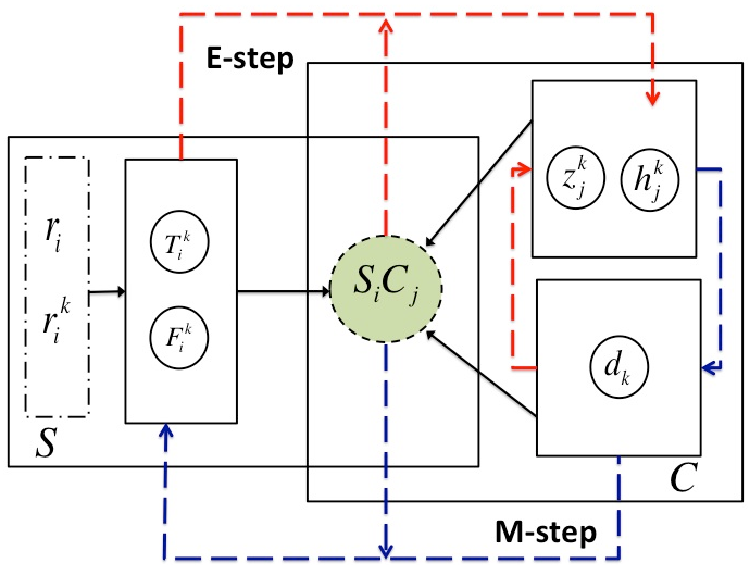 Figure 1: The mathematical iteration of the E and M steps that allow the model to converge on the truth.
The model classifies claims into "Easy" (e.g., containing multiple URLs/Retweets) and "Hard" (original, concrete observations). Even with this relatively simple heuristic for hardness, the mathematical framework extracts significantly more signal from the noise.
Experimental Results: Breaking the SOTA
The HA-EM scheme was tested against traditional baselines like Voting, TruthFinder, and Regular EM.
Key Findings:
- Baltimore Riots: Accuracy surged by 31% compared to the best baseline.
- Recall Improvement: The most dramatic gain was in Recall (up to 49%). This is because HA-EM successfully identified "Hard" truths—specific reports from the scene—that simpler models dismissed because they weren't being widely "voted" on or repeated.
- Newsworthiness: When compared against 10 major media-verified events, HA-EM identified nearly all of them, while other models missed critical events like the burning of a CVS pharmacy or specific mayoral defenses.
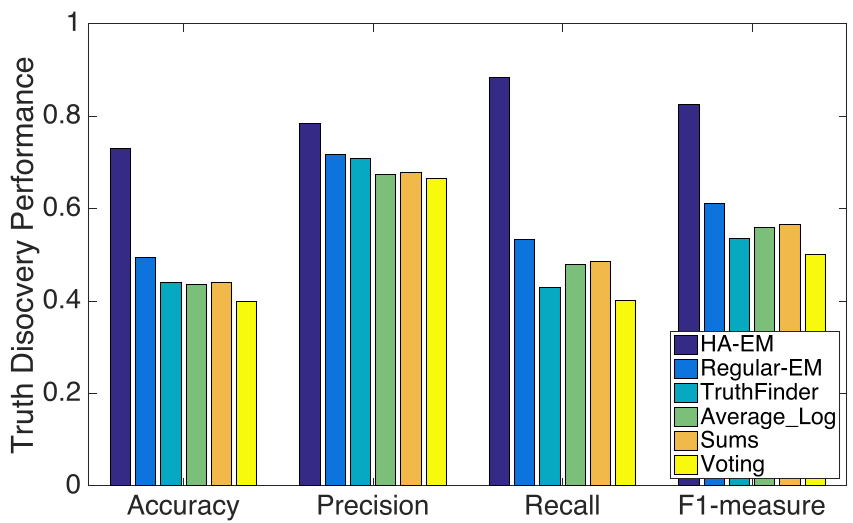 Figure 2: Performance metrics on the Baltimore Riots trace showing the clear dominance of the Hardness-Aware approach.
Critical Insight & Conclusion
The "Wisdom of the Crowd" often fails in high-stakes, fast-moving situations because the "crowd" tends to gravitate toward easy-to-digest, easy-to-share information. By mathematically weighting the difficulty of making a claim, HA-EM gives a louder voice to the credible few who are actually at the front lines.
Limitations and Future Path
While a breakthrough, the paper acknowledges:
- Source Dependency: It assumes users report independently, which isn't always true in social media "echo chambers."
- Heuristic Hardness: The current method uses URL presence to determine hardness. Future iterations could use Deep Learning (NLP) to better categorize the complexity of human language.
In conclusion, this work provides a rigorous analytical foundation for the next generation of crisis management tools, ensuring that in the middle of a disaster, the "hard truths" are not lost in a sea of easy noise.