
Harnessing the Crowd: A Holistic Blueprint for Saving Endangered Languages
Harnessing Collective Intelligence to Preserve and Learn Endangered Languages
This paper introduces a holistic crowd-sourced framework to revitalize endangered languages by leveraging the three pillars of collective intelligence: cooperation, coordination, and cognition. It details the design and implementation of two mobile applications, "Save Lingo" and "Learn Lingo," specifically validated through New Zealand's native te reo Māori language.
TL;DR
With one language disappearing every two weeks, traditional expert-led documentation is too slow to stem the tide. This paper proposes a transition to Collective Intelligence, introducing the "Save Lingo" and "Learn Lingo" ecosystem. By leveraging mobile technology and community-driven curation, the authors provide a scalable framework to capture, curate, and teach endangered languages like te reo Māori.
Background: The Crisis of Linguistic Diversity
Linguists estimate that 90% of the world’s 7,105 languages could face extinction by the end of this century. The loss is not just about words; it is the death of cultural identity and unique intellectual wealth. Moving beyond the "red zone" of traditional, expert-only curation, this research positions itself as a ubiquitous, crowd-sourced solution for the digital age.
The Core Challenge: Why Current Apps Fail
Most modern language apps (e.g., Duolingo) are built for "Mainstream" languages with massive existing datasets. For endangered languages, the data simply doesn't exist in a digital-ready format. The authors identify a critical gap: existing systems focus on learning but ignore the preservation and curation phases required to build the learning material in the first place.
Methodology: The Five-Stage Life Cycle
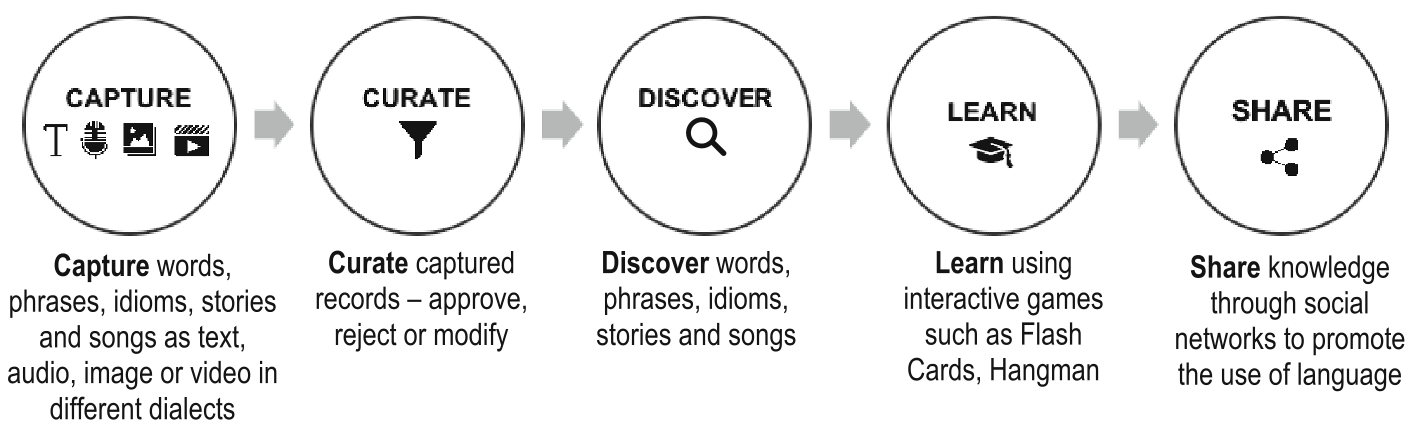
The authors define a holistic approach to language revitalization through five distinct stages:
- Capture: Community members record audio, video, and text in various dialects.
- Curate: Language experts and elders filter and approve the captured content.
- Discover: The wider community accesses a dynamic repository of linguistic knowledge.
- Learn: Users engage with the language through gamified modules.
- Share: Dissemination via social media to promote daily usage.
Technical Architecture: Save Lingo & Learn Lingo
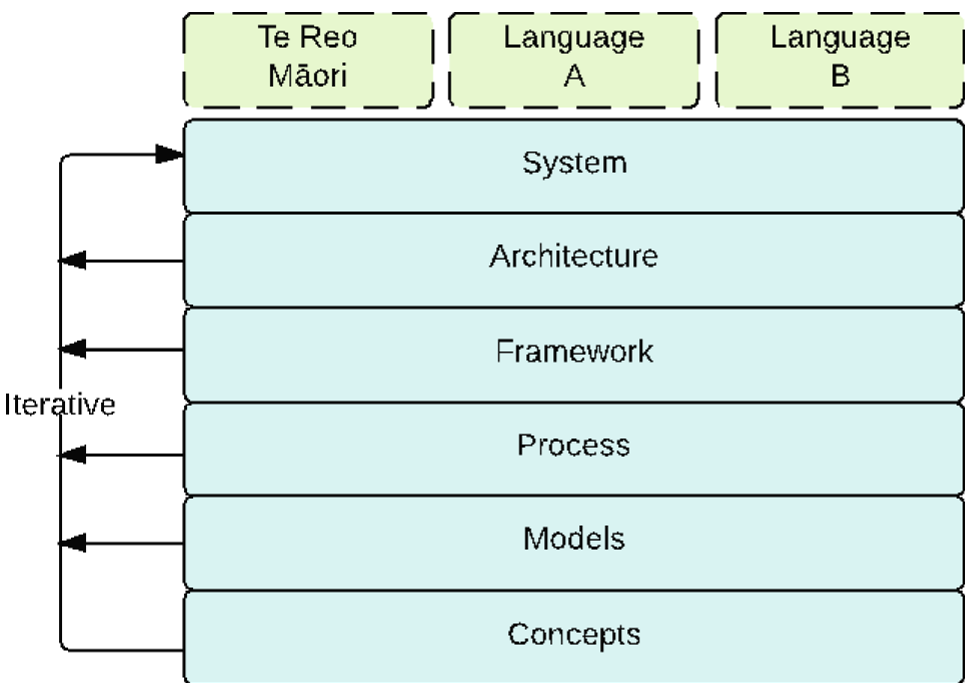
The beauty of the proposed framework lies in its modularity. Roughly 90% of the system architecture is language-agnostic. The UI and content can be swapped to support any dialect.
Save Lingo (The Preservation Engine)
This app acts as the "Social Knowledge Management" hub. Unlike existing dictionaries, it allows for the ubiquitous capture of idioms, songs, and stories in real-time.
Learn Lingo (The Educational Engine)
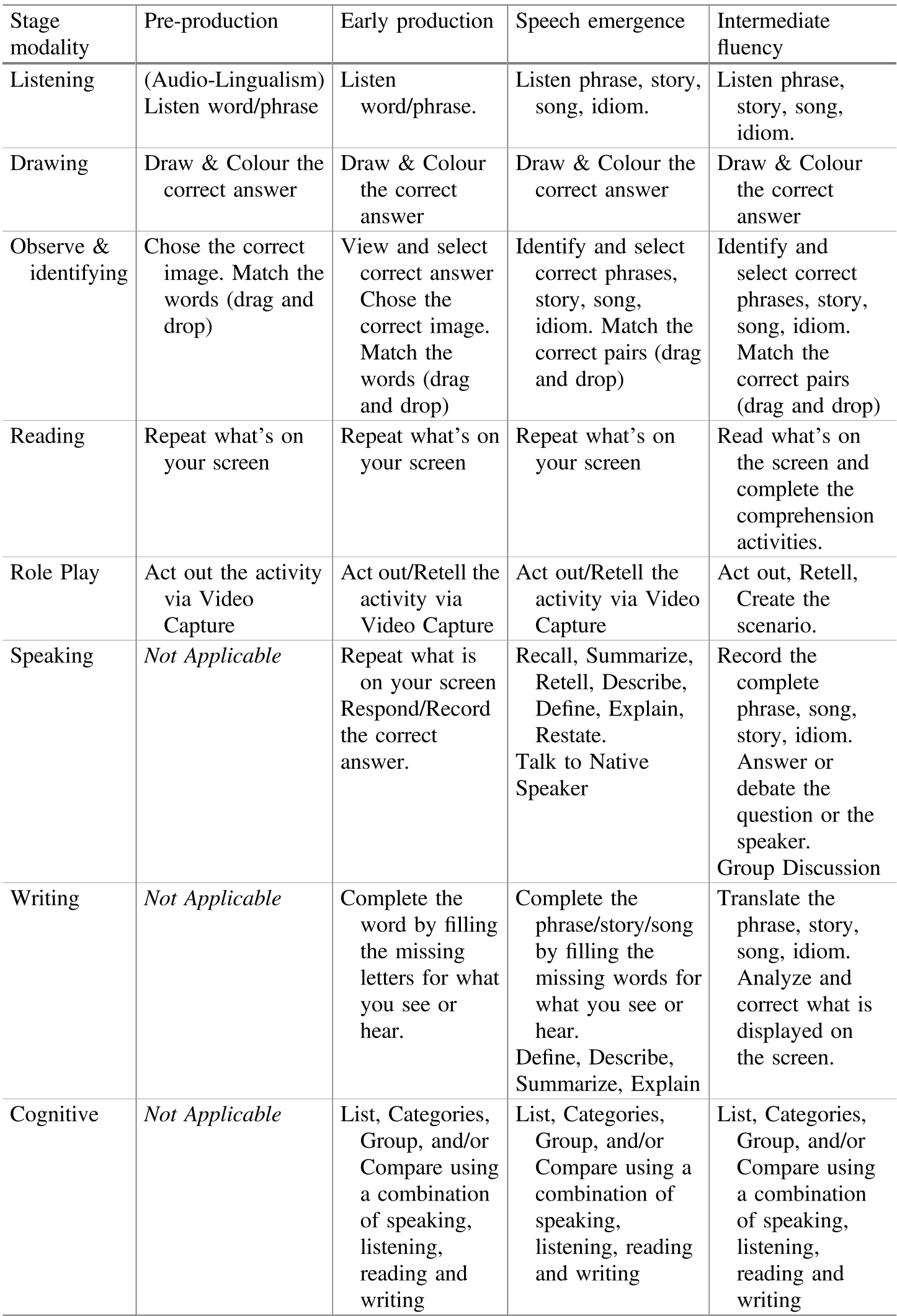
The "Learn Lingo" component utilizes the curated data from "Save Lingo" to populate learning tools. The paper maps learning activities to "Acquisition Stages," moving from simple listening (Pre-production) to complex debate and role-play (Intermediate fluency).
Deep Insight: Why This Works
The fundamental innovation here is the Cognitive loop. By making the community the "curator," the language remains a living entity. The use of games like Hangman and Flashcards simplifies the barrier to entry, while the underlying collective intelligence ensures that the vocabulary being taught is authentic and culturally relevant, rather than a sterile translation of a mainstream language.
Critical Analysis & Conclusion
Takeaway
This framework moves language preservation from the museum to the mobile phone. It proves that technology, often blamed for cultural homogenization, can be the very tool that protects diversity when designed through the lens of collective intelligence.
Limitations
While the "Save Lingo" framework is robust, its success is heavily dependent on the active participation of the community. In scenarios where a language has very few remaining speakers, the "crowd" might be too small to sustain the curation process without significant external support.
Future Outlook
The integration of AI for automated speech recognition (ASR) in indigenous dialects could further accelerate the "Capture" phase, allowing the system to scale even faster for the thousands of languages currently on the brink of silence.