
The hBracelet: Redefining Telepresence through Multimodal Upper-Limb Haptics
5150_The hBracelet A Wearable Haptic Device for the Distributed Mechanotactile Stimulation of the Upper Limb.
The paper introduces the hBracelet, a novel wearable haptic device for the upper limb that provides distributed mechanotactile stimulation. By integrating two independently actuated belts and a linear motor, it delivers multimodal cues—squeeze (normal), shear (tangential), and longitudinal stretch—simultaneously to improve telepresence in remote robotic interaction.
TL;DR
The hBracelet is a wearable device that transforms the user's arm into a high-fidelity interface for remote touch. By combining four servo motors and a linear actuator, it delivers three distinct types of "skin language"—squeezing, twisting (shear), and stretching—allowing users to "feel" the weight and torque of objects handled by a remote robot.
Context: Beyond the "Buzz" of Vibrotactiles
In the world of haptics, most wearables are "buzzers" (vibrotactile). While useful for notifications, they lack the spatial and directional nuance required for sensitive tasks like tele-surgery or complex assembly. The challenge lies in "mechanotactile" feedback—physically stretching and pressing the skin to mimic real forces. The hBracelet aims to bridge this gap by providing distributed stimuli across the forearm, allowing for a more natural mapping of robotic data to human sensation.
Methodology: The Mechanical "Skin-Stretcher"
The core innovation of the hBracelet lies in its ability to decouple different force vectors using a relatively simple mechanical arrangement.
1. The Architecture
The device consists of two symmetrical 3D-printed frames. Each frame houses two Dynamixel actuators that move a TPU (thermoplastic polyurethane) belt.
- Normal Force (Squeeze): When pulleys spin in opposite directions, the belt tightens or loosens against the skin.
- Tangential Force (Shear): When pulleys spin in the same direction, the belt "slides" across the skin, creating shear.
- Longitudinal Force: A linear actuator changes the distance between the two belts, stretching the skin along the arm.
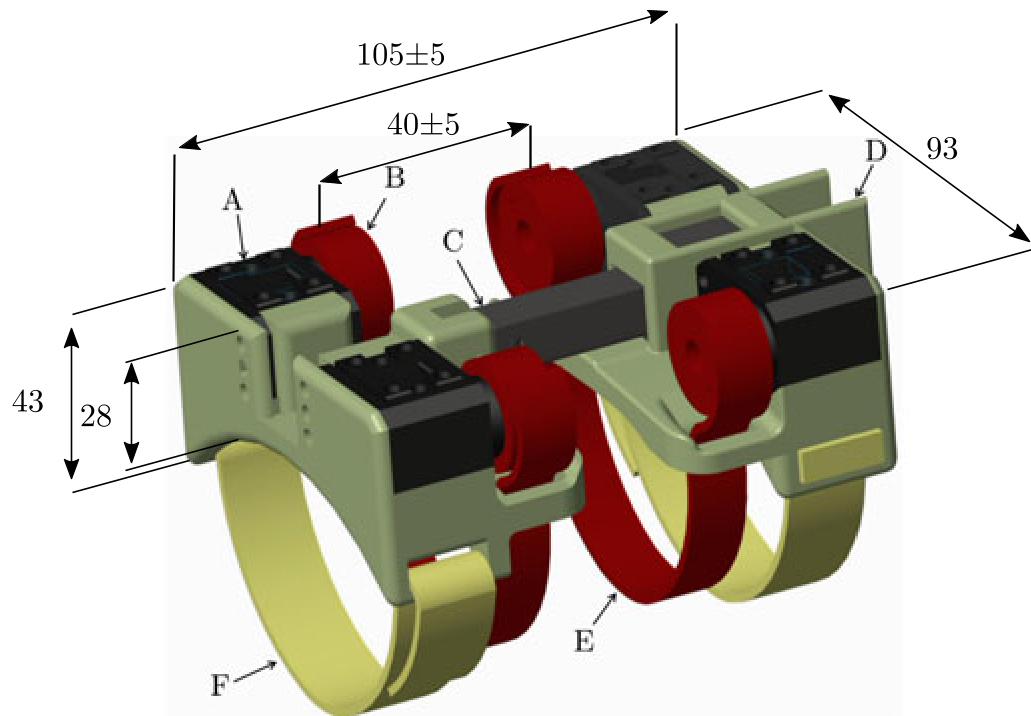 Figure 1: CAD model and dimensions of the hBracelet. (A) Servos, (B) Pulleys, (C) Linear Actuator, (E) TPU Belt.
2. Multi-Force Control
By adjusting the tensions ( through ) and the linear force (), the device can generate complex sensations like "wringing" (opposite shear) or "coherent shear." The researchers used a linear mapping matrix to translate these motor outputs into physiological sensations.
Experimental Results: Feeling the Remote World
The authors tested the hBracelet in a "blind" teleoperation task. Subjects controlled a Sawyer robot to grasp, lift, and pour a box of spheres without seeing them.
Key Findings:
- Intuitive Mapping: Gripping force was mapped to "squeeze," object weight to "longitudinal stretch," and torque (from pouring) to "shear."
- High Precision: Users could sense exactly when an object left the table or when the spheres began to pour out, despite having no visual feedback.
- Preference for Coherence: 90% of subjects found "coherent shear" (both belts moving in the same direction) much more intuitive for sensing torque than "opposite shear" (wringing).
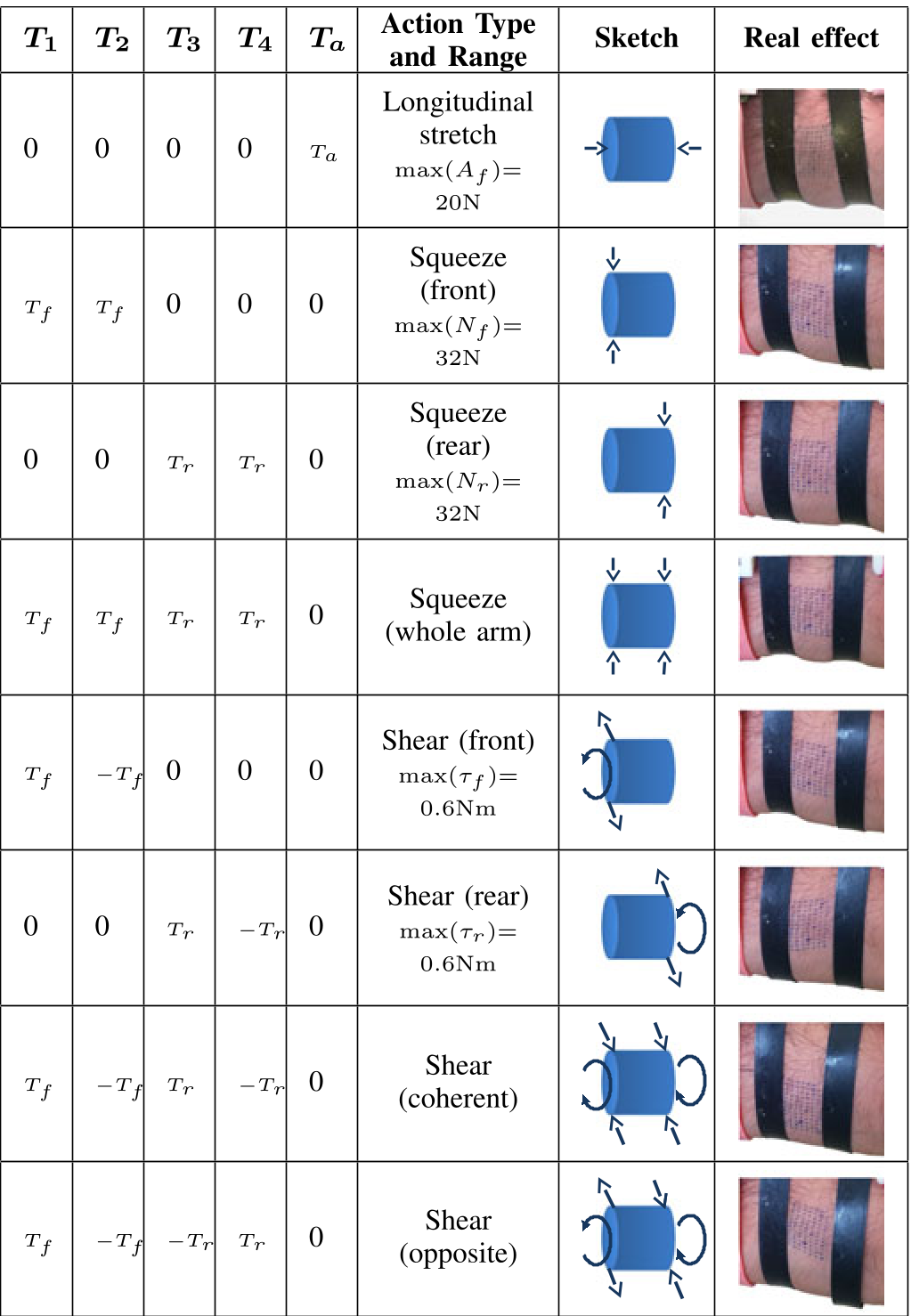 Table 1: The various haptic feedback modalities the hBracelet can provide and their real-world effects.
Performance Visualization
Data from the experiment shows a tight correlation between the robot's sensors and the user's actions. As the robot's gripping force flattened (indicating a solid grasp), users recognized the plateau and immediately moved to the next task (lifting).
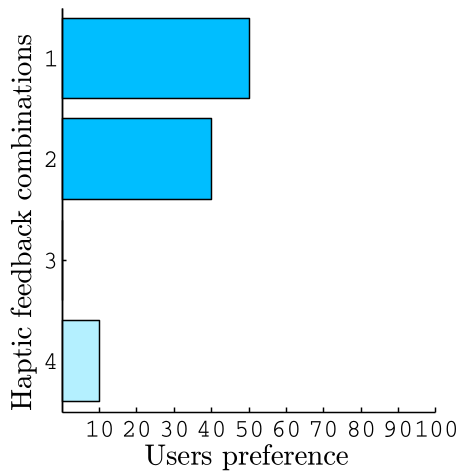 Figure 2: Real-time data showing how subjects used haptic cues to navigate tasks like gripping, lifting, and pouring.
Critical Insight: Why This Matters
The hBracelet proves that we don't need a full mechanical glove to convey complex force information. By utilizing the forearm—a region with significant surface area and decent mechanoreceptor density—the authors have created a "dashboard" for the skin.
Limitations & Future Work:
- Ergonomics: At 306g, the device is currently a bit bulky. Future iterations could use smaller, high-torque micro-actuators to reduce weight.
- The Comfort Gap: With a rating of 6.8/10, there is still room to improve the interface between the rigid 3D-printed parts and the soft human tissue.
Conclusion
The hBracelet is a significant step toward "immersive teleoperation." By mastering the distribution of mechanotactile cues, it allows humans to inhabit robotic bodies more effectively, turning remote manipulation into a truly tactile experience.