
Facebook as a Time Capsule: Quantifying "History from Below" through Informetrics
HCI Research and History: Special Interests Groups on Facebook as Historical Sources
2017-01-01
Summary
Problem
Method
Results
Takeaways
Abstract
This paper investigates whether Social Network Services (SNSs), specifically Facebook, serve as viable sources for "microhistory" or "history from below." By applying informetrics and statistical analysis to a German local history group ("Kerpener und Ex-Kerpener"), the study establishes a quantitative framework to distinguish historically relevant content from daily social media noise.
## TL;DR
Is Facebook just a pit of gossip and cat videos, or a goldmine for future historians? This research argues the latter. By treating Facebook interactions (likes, shares, comments) as modern-day scientific citations, the study develops a methodology to filter "historically relevant" micro-narratives from the chaos of social media, focusing on a local German community case study.
## The Problem: The Noise of the Masses
Traditional history is often written by winners or institutions. **Microhistory** (or "history from below") seeks to capture the lives of average citizens. While Facebook provides a platform for these voices, it presents a massive technical challenge: **Information Overload**.
For a historian, 26,000 comments on a single small-town group is unmanageable. Furthermore, how do you distinguish a historically significant photo of a 1950s storefront from a temporary warning about a lost dog or a local burglary? The author argues that we need a quantitative "sieve" to separate the wheat from the chaff.
## Methodology: Applying Informetrics to Social Media
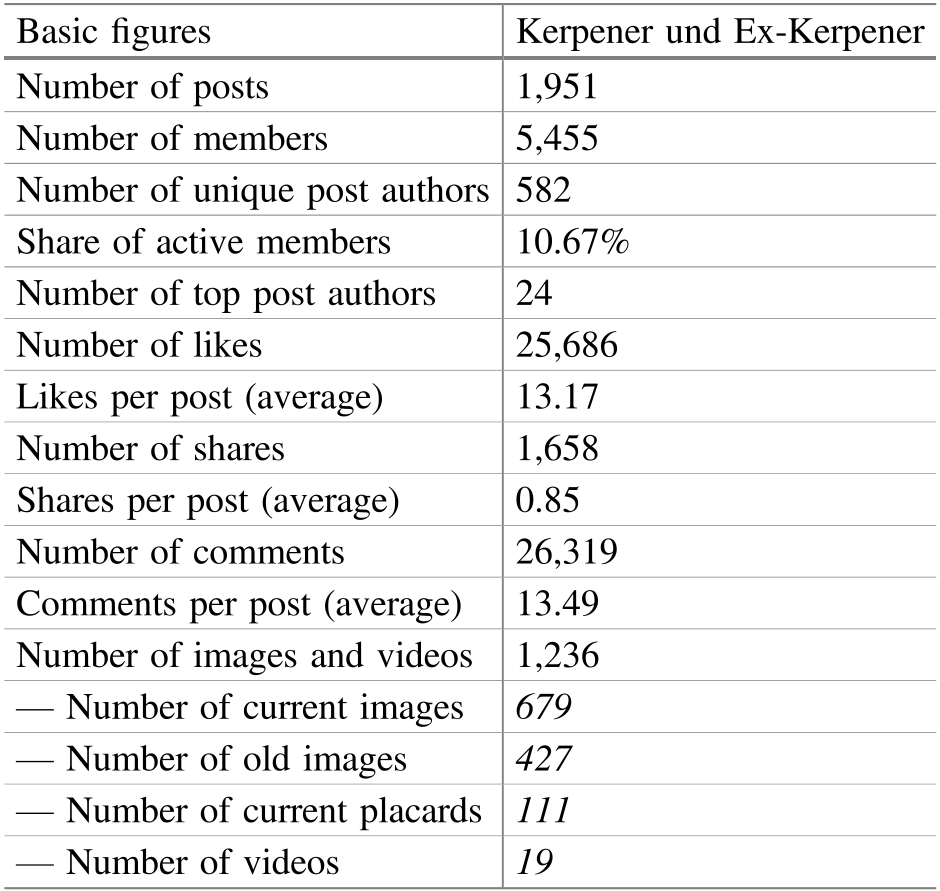
The study analyzed 1,951 wall posts from the Facebook group *Kerpener und Ex-Kerpener* from the year 2014. The core insight is the application of **Informetrics**—a field usually reserved for measuring scientific citations—to social interactions.
### The Analytic Framework
The researcher intellectualy coded the posts into nine categories, including:
* **Old Impressions**: Historical photos/videos.
* **Current Impressions**: Contemporary sights.
* **Caution**: Warnings (e.g., burglaries).
* **Private/Request**: Personal help or questions.
### Human-Computer Interaction Logic
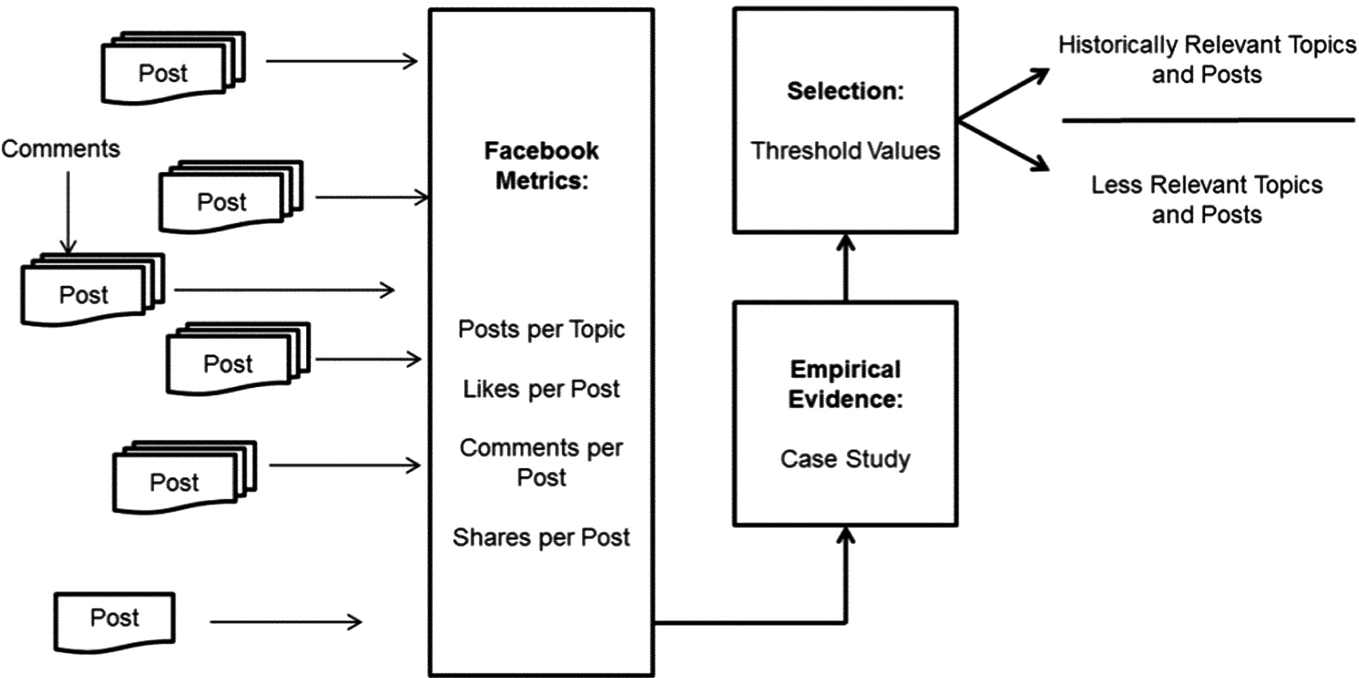
The study maps digital actions to cognitive effort:
* **Likes/Shares**: Low cognitive effort (one click).
* **Comments**: High cognitive effort (elaborate thought).
## Key Results & Insights
The findings reveal a fascinating "Digital Pareto Principle." Only **10.67%** of members were active, and a mere **24 authors** produced half of all content.
### Multimedia vs. Text
* **Images/Videos** are "Like Magnets": They received nearly **4x** the likes of text posts. Users react emotionally to visual stimuli with a simple "Like."
* **Text posts** are "Discussion Starters": They provoked **2x** more comments, suggesting that text-heavy posts are better at facilitating community dialogue.
### The "Share" Red Herring
One of the most significant findings is the role of the "Share" button. The most shared posts were almost entirely related to **current, ephemeral events** (hit-and-run drivers, lost pets, burglaries). As a rule of thumb, **the higher the share count, the lower the long-term historical relevance.**
| Rank | Likes | Kind of Post | Historical Value? |
| :--- | :--- | :--- | :--- |
| 1 | 640 | Current Impression | High (Infrastructure fail) |
| 2 | 338 | News | High (Local celebrity) |
| 3 | 275 | Old Impression | Very High (Town archive) |
## Critical Analysis: A Blueprint for Digital Archives
The study concludes with a set of "Decision Criteria" for historians. If a post has a **moderate number of comments** and a **high number of likes** on an image, it is a high-value historical source. Conversely, viral "caution" posts can be safely ignored by future archivists.
### Limitations
The study relies heavily on manual "intellectual coding," which is difficult to scale to global groups with millions of posts. Furthermore, "lurkers" (quiet consumers) represent 90% of the population; their lack of interaction means their historical perspectives remain invisible even in this model.
## Future Outlook
This work lays the groundwork for **automated digital archiving**. By calibrating these metrics, we can build tools that automatically flag social media content for preservation in local archives, ensuring that the "history of the common person" isn't lost when Facebook eventually disappears or changes its API. It bridges the gap between HCI research and the preservation of cultural heritage.