
HCloud: Transforming Preventive Healthcare through Scalable Cloud Analytics
HCloud: A novel application-oriented cloud platform for preventive healthcare
This paper introduces HCloud, an application-oriented cloud platform designed for preventive healthcare. It integrates multi-modal physiological signal processing (ECG, PPG, HBP) with a scalable architecture, achieving automated analysis and early warning mechanisms for chronic diseases.
TL;DR
As chronic diseases become more prevalent, the need for proactive health monitoring has outpaced traditional medical infrastructure. HCloud is a specialized cloud platform that moves beyond simple data storage to provide automated, real-time physiological signal analysis. By leveraging a decoupled architecture and NoSQL databases, it supports thousands of concurrent users and provides critical health warnings within seconds.
Motivation: The "Sub-Health" Crisis and Resource Imbalance
In many developing regions, medical resources are heavily concentrated in urban centers, leaving rural areas underserved. Simultaneously, "sub-health" states—conditions between wellness and illness—affect a massive portion of the population (up to 70% in some urban surveys).
The authors identified two major technical gaps in existing solutions:
- Storage Bottlenecks: Distributed file systems are optimized for large files, but physiological signals (like blood pressure values) are often "small and trivial," leading to metadata overhead.
- Passive Management: Most systems act as digital filing cabinets (EHR management) rather than active diagnostic tools.
Methodology: A Decoupled, Application-Oriented Architecture
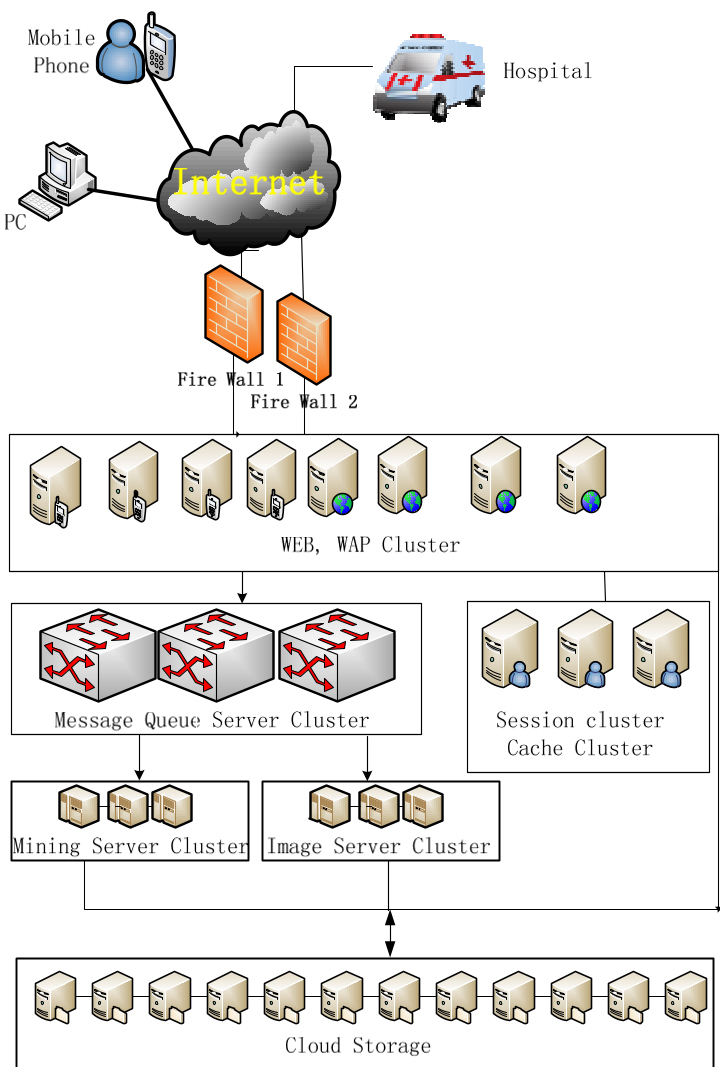
HCloud addresses these issues by adopting a Service-Oriented Architecture (SOA) designed for high concurrency. The platform is divided into five functional domains:
- Web/WAP Cluster: Manages user requests through load balancing.
- Message Queue Middleware: Essential for reducing coupling between front-end data collection and back-end analysis.
- Mining Server Cluster: This is the "brain," running algorithms for ECG (Atrial Premature Beats detection), PPG (Vascular function), and HBP analysis.
- NoSQL Cloud Storage: Unlike traditional SQL, the use of NoSQL facilitates horizontal expansion and handled semi-structured health documents more efficiently.
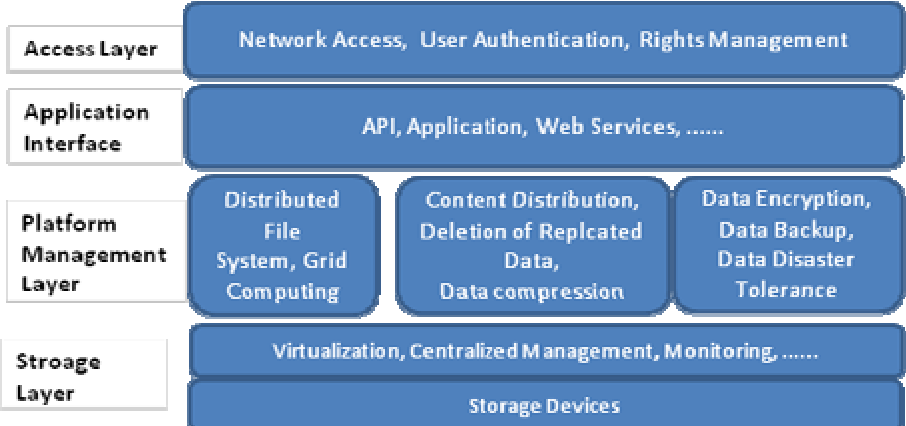
The storage layer is particularly sophisticated, employing a four-layer concept model (Storage, Management, Interface, Access) that integrates NoSQL with distributed file systems like HDFS or GlusterFS.
Multi-Modal Diagnostic Capabilities
HCloud doesn't just store data; it translates raw signals into clinical insights:
- ECG Analysis: Detects arrhythmias and myocardial ischemia. It provides physicians with complex indices like SDANN and HRV (Heart Rate Variability).
- PPG (Photoplethysmography): Evaluates heart pumping capability and peripheral resistance, assisting in the diagnosis of arteriosclerosis.
- HBP (High Blood Pressure): Monitors systolic and diastolic trends to combat the "invisible killer."
Experimental Validation
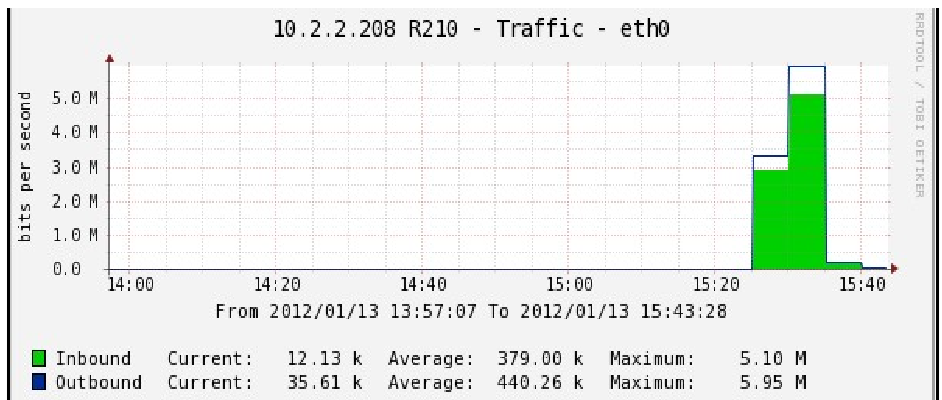
The platform underwent rigorous stress testing using Tsung to simulate real-world high-traffic scenarios.
- Data Upload Efficiency: With 100 concurrent users uploading 2-minute long ECG/PPG records, the system maintained 30,000 concurrent connections, handling 158,780 requests with near-zero failure (only 1 failed request).
- Web Response: In browsing scenarios, the platform handled over 500,000 requests, demonstrating a robust capability for medical data visualization.
Critical Insight & Conclusion
HCloud represents a significant step towards democratizing healthcare. By moving the "computational heavy lifting" of signal processing to the cloud, the platform allows for high-quality preventive care even for users with low-power mobile devices or limited access to specialists.
Future Directions: While HCloud is robust, the authors acknowledge that integrating more diverse analysis algorithms and enhancing the security of private healthcare data (via advanced cloud encryption) will be the next major frontier for the platform.