
Healthcare Anomaly Detection: Bridging the Gap with Synthetic Training
Healthcare and anomaly detection: using machine learning to predict anomalies in heart rate data
This paper evaluates five machine learning algorithms—Random Forests (RF), Local Outlier Factor (LOF), Isolation Forests (IF), SVM, and k-NN—for anomaly detection in heart rate data. Using a mix of supervised and unsupervised approaches, the study demonstrates that models trained on synthetic data can effectively generalize to real-world physiological signals from the MIT-BIH database.
TL;DR
To combat "alarm fatigue" in healthcare, researchers tested five ML models to detect heart rate anomalies. By training on simulated data and testing on real-world ECG signals, the study found that Local Outlier Factor (LOF) and Random Forests are highly effective at flagging dangerous physiological deviations, even when the system starts with zero labeled real-world data.
Problem & Motivation: The Alarm Fatigue Crisis
In modern ICUs and wards, healthcare workers are bombarded by auditory alarms, many of which are false positives triggered by sensor noise or benign fluctuations. This leads to Alarm Fatigue—a dangerous desensitization that causes critical events to be missed.
The challenge is twofold:
- Lack of Labels: Real-world heart rate data rarely comes "pre-labeled" as anomalous or normal.
- Definition Ambiguity: What constitutes an anomaly? A heart rate of 110 bpm might be a medical emergency for a resting patient but perfectly normal for someone starting a workout.
Methodology: From Simulation to Reality
The authors bypassed the "lack of labels" problem by creating a synthetic training environment. They generated 10,000 heart rate samples and injected anomalies based on a clinical rule-of-thumb: any value outside the 60–100 bpm range is an outlier.
The Feature Set
The models didn't just look at the raw heart rate (HR); they used "Feature Engineering" to understand context:
- Delta HR: Current HR minus the previous value.
- Moving Average Deviation: HR difference from the average of the last 5 readings.
- Clustering: K-means features to group similar physiological states.
Model Architecture Comparison
The study pitted unsupervised models (which find patterns on their own) against supervised models (which learn from the 60-100 bpm rule):
- Supervised: Random Forests (RF), SVM, k-Nearest Neighbors (k-NN).
- Unsupervised: Local Outlier Factor (LOF), Isolation Forests (IF).
Experiments & Results: Which Model Wins?
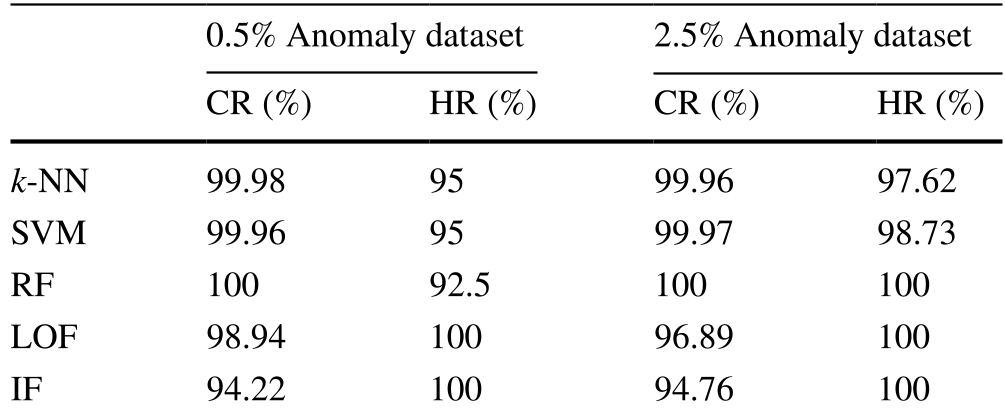
On simulated data, Random Forests achieved near-perfect scores (100% Hit Rate). However, the real test was the MIT-BIH Database, containing actual patient ECG data.
Key Findings:
- LOF is the MVP: The Local Outlier Factor (unsupervised) proved most promising for real-world use. It was "conservative," meaning it didn't cry wolf too often, but it accurately flagged major spikes and drops.
- Isolation Forests (IF) were over-sensitive: While IF detected every anomaly (100% hit rate), it had a high false-alarm rate, potentially contributing to the very "alarm fatigue" the study aimed to solve.
- The Power of Simulation: The models generalized surprisingly well. Training on "fake" data with hard rules allowed the models to identify complex patterns in "real" noisy data.
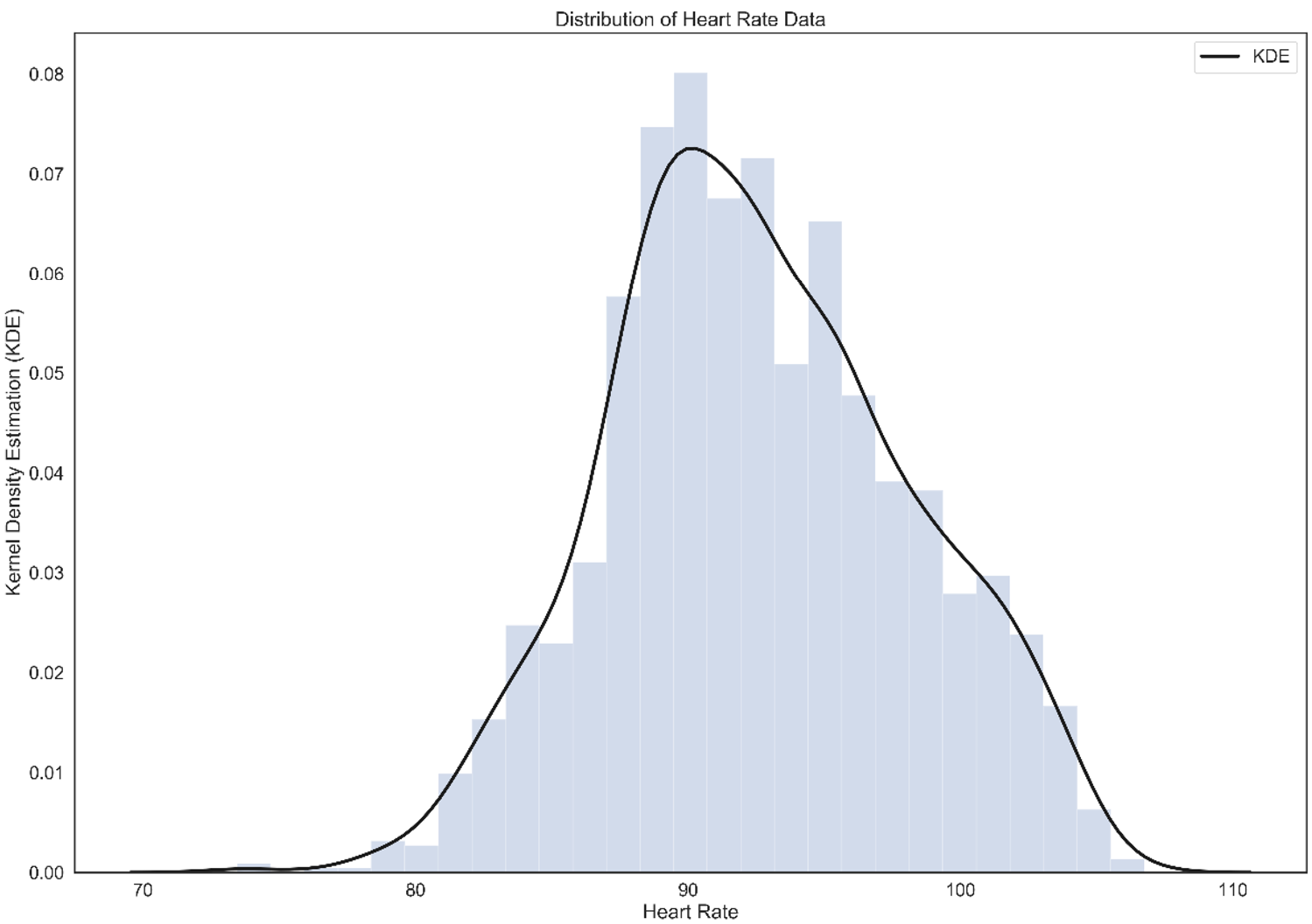 Above: The LOF model flagging anomalies (red X) in real patient data after being trained on synthetic samples.
Critical Insight: The Future of Clinical Alerts
This research proves that we don't need millions of hand-labeled medical records to build a functioning smart-alert system. By using Simulated Data to "cold-start" the algorithm, hospitals can deploy monitoring systems that learn a patient's baseline immediately.
Limitations: The study relied on a static 60-100 bpm rule. Future iterations must consider contextual anomalies—for instance, a heart rate of 90 bpm is "normal" generally, but "anomalous" if the patient is deep in sleep.
Conclusion: For developers in the MedTech space, density-based unsupervised learning (LOF) combined with heuristic-based synthetic training offers a robust path toward reducing healthcare worker burnout and improving patient safety.