
Breaking the Monolith: Architecting Healthcare Portals in a Multi-PaaS World
8741_Considerations for Healthcare Applications in a Platform as a Service Environment.
The paper explores the transition of healthcare software development to Platform as a Service (PaaS) environments, specifically proposing a multi-cloud hybrid architecture. It introduces a clinical portal for neurosurgeons that integrates Salesforce.com for user management with Amazon S3/EC2 for heavy medical data processing.
TL;DR
The healthcare sector is undergoing a tectonic shift from traditional software development to Platform as a Service (PaaS). However, a single cloud provider is rarely enough. This paper presents a hybrid architecture that combines Salesforce and AWS to create a specialized portal for neurosurgeons, bridging the gap between social collaboration and high-performance medical data processing.
Background & Motivation: The Illusion of the "Simple" Cloud
At first glance, PaaS/SaaS models offer a "perfect world" where developers no longer worry about databases, operating systems, or hardware scaling. However, healthcare introduces a layer of complexity that standard cloud environments aren't always built to handle natively:
- Regulatory Friction: Absolute requirements for HIPAA and FDA compliance.
- Data Gravity: The sheer size of medical imaging (DICOM sequences) often hits the "governor limits" of CRM-focused platforms like Salesforce.
- Vendor Lock-in: Once a healthcare system is committed to a platform's metadata and logic, migration becomes nearly impossible.
The authors' key insight is that specialization is unavoidable. Instead of forcing one platform to do everything, architects must connect the unique strengths of multiple providers.
Methodology: The Hybrid Service Architecture
To build a collaboration portal for neurosurgeons, the authors designed a three-tier integration strategy:
1. The Strategy of "Multiple Platforms"
The system utilizes Salesforce.com as the core engagement layer. Salesforce excels at user management, permission sets, and "Social Network" style interactions. However, because it struggles with large-scale image sequences, the heavy lifting is offloaded.
2. High-Performance Offloading
Amazon S3 is used for the storage of medical images, while Amazon EC2 provides the compute power for processing these sequences. This ensures that the user interface remains responsive even when handling gigabytes of patient data.
3. The Integration Bridge
In this specific case study, Microsoft Silverlight acts as the glue. It lives within the Force.com environment but communicates directly with AWS via SOAP messages. This allows for a seamless UI that displays Amazon-hosted medical data within a Salesforce-managed portal.
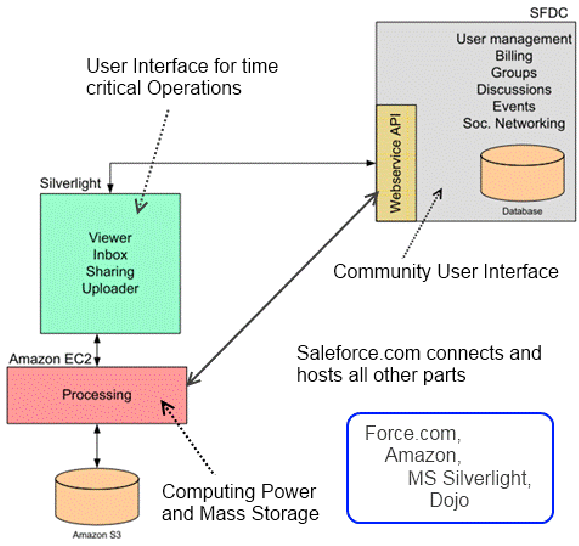 Fig 2. The Multi-Cloud Architecture: Salesforce for identity, AWS for storage/processing.
Case Study: A Social Network for Surgeons
The application functions similarly to a social network but with a clinical focus. Doctors (specifically neurosurgeons) can exchange professional experiences and review cases.
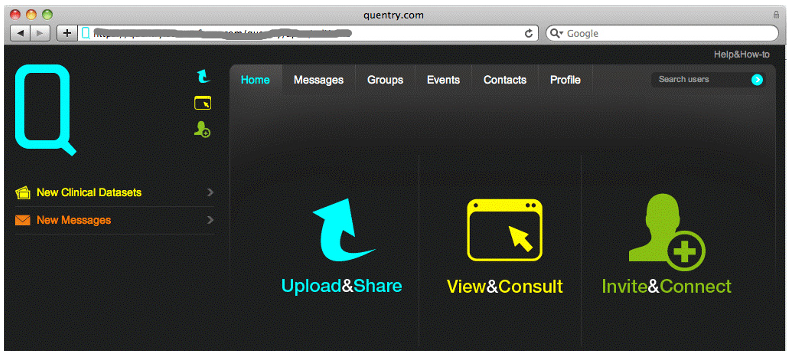 Fig 1. Conceptual UI for the neurosurgeon portal.
Key Advantages of this Approach:
- Scalability: AWS handles the spikes in data storage without affecting the CRM performance.
- Security: By leveraging Salesforce's existing user hierarchy, the system ensures that only authorized medical professionals access sensitive case data.
- Speed to Market: Using pre-existing PaaS components significantly reduces the time that would otherwise be spent on "ground-up" infrastructure development.
Critical Analysis & Future Outlook
While the paper successfully demonstrates a working hybrid model, there are notable considerations for modern readers:
- Legacy Integration: The use of Microsoft Silverlight and SOAP reflects the era of the paper. Modern equivalents would likely use HTML5/WebAssembly and RESTful APIs or GraphQL for better performance and mobile compatibility.
- Data Privacy: Using multiple platforms increases the "attack surface." Architects must ensure that data in transit between Salesforce and AWS is encrypted and that identity federation (like SAML or OIDC) is robust.
Conclusion: The core takeaway remains highly relevant: Modern healthcare IT is an orchestration task. The future of medical software lies not in building the perfect platform, but in the intelligent integration of specialized cloud services to meet the "Highest Security Standards" mentioned by the authors.