
Healthcare Energy Management: A Digital Twin Approach to Clinical Power Demand
12317_Healthcare Energy Management A Digital Approach.
This paper introduces a digital twin-inspired "Cyber Physical Hospital" model to predict energy consumption by mapping clinical and administrative business processes to power demand. Leveraging Monte Carlo simulations and AI-based linear regression, the authors developed a single predictive objective function that achieves 98% accuracy in forecasting hospital energy utilization.
Executive Summary
TL;DR: This research transforms hospital energy management from a "building-centric" view to an "activity-centric" one. By modeling a 600-bed hospital through its business processes (from blood tests to MRI scans), the authors developed an AI-driven predictive function that identifies the true drivers of power consumption with 98% accuracy.
Background Positioning: This work bridges the gap between Business Process Management (BPM) and Energy Engineering. It positions itself as a critical tool for "Cyber-Physical" infrastructure, particularly relevant for hospitals in energy-constrained regions like Africa or those aiming for Net-Zero emissions.
Problem & Motivation: Why Hospital Energy is a "Black Box"
Most commercial buildings follow predictable diurnal cycles. Hospitals, however, are "energy-intensive organisms" where power demand is driven by life-critical activities. Prior work often focused on retrofitting insulation or lighting, but these "passive" measures ignore the dynamic complexity of:
- Variable Peak Demands: Unforeseen surges (e.g., pandemics or natural disasters).
- High-Tech Zones: Specialized equipment like MRIs and CT scanners that consume vast amounts of power compared to standard office hardware.
- Interdependency: A single patient admission triggers a chain of events (imaging, lab tests, HVAC adjustment) that all consume energy.
Methodology: Mapping Business Processes to Watts
The core innovation lies in the Cyber Physical Hospital model. Instead of just looking at the meter, the authors look at the flow of work.
The 3-Step Modeling Flow:
- Business Process Simulation: Mapping workflows (e.g., Admission Diagnosis Surgery).
- Monte Carlo Simulation: Introducing "noise" and randomness to simulate the real-world uncertainty of patient counts and diagnostic outcomes across 4,500 iterations.
- AI Feature Selection: Using Python-based linear regression to identify the 14 "Significant Variables" from an initial set of 56.
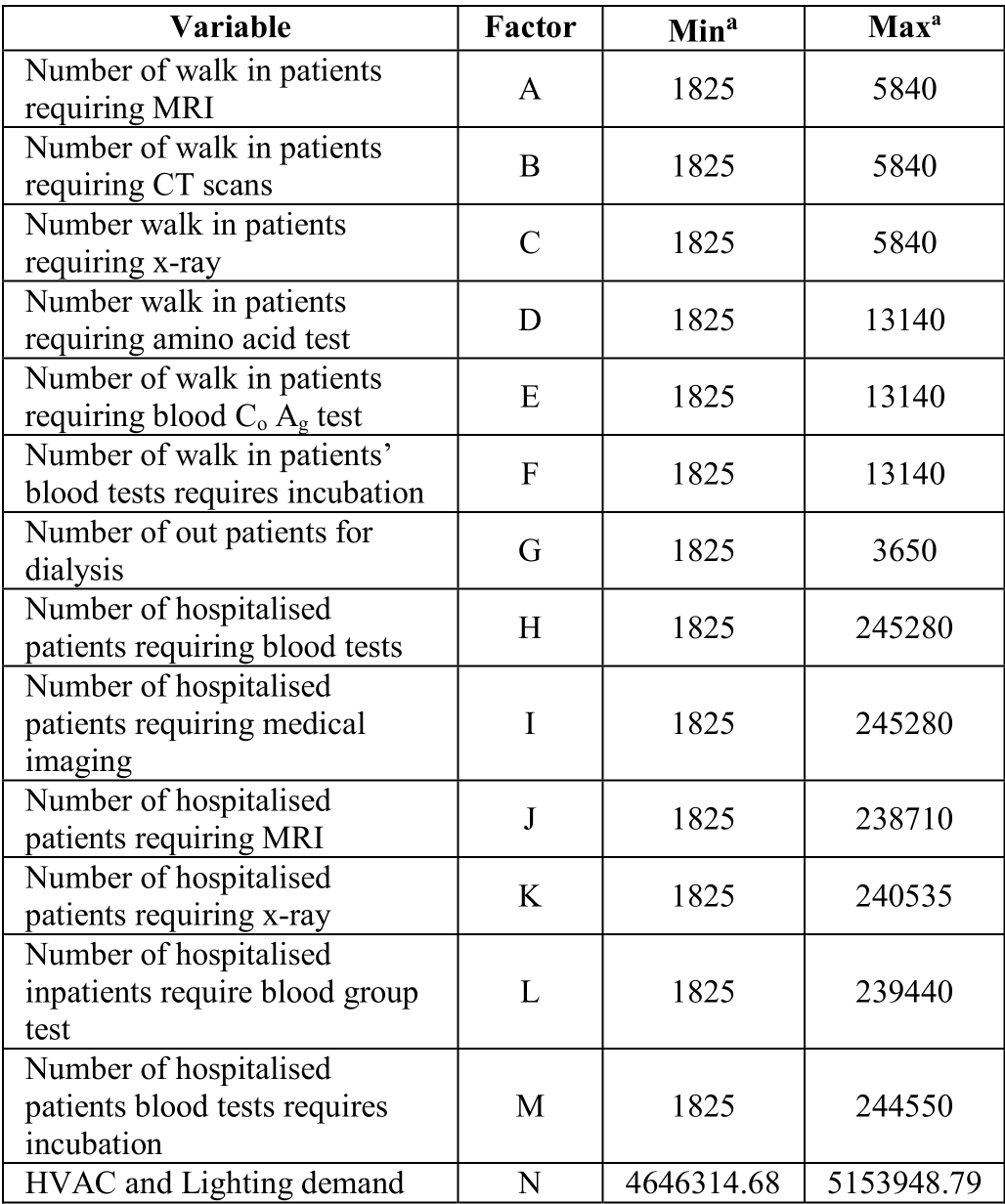 Table 1: The 14 critical variables identified, largely dominated by medical imaging (MRI, CT scans) and inpatient diagnostics.
The resulting Objective Function (Equation 1) provides a mathematical blueprint for energy consumption, where is a sum ofweighted activities plus the baseline HVAC/Lighting load ().
Experiments & Results: The "Crowding" Effect
The model was tested against five scenarios, ranging from seasonal HVAC changes to maximum pandemic-level occupancy.
Key Findings:
- Occupancy is King: An increase in occupancy (walk-in and hospitalized) was the most significant driver, pushing demand up by 38% at maximum capacity.
- The HVAC Paradox: While HVAC is the largest single energy consumer, its relative impact status decreases as the hospital fills up. As more specialized equipment is activated for patients, the medical equipment load begins to rival the environmental control systems.
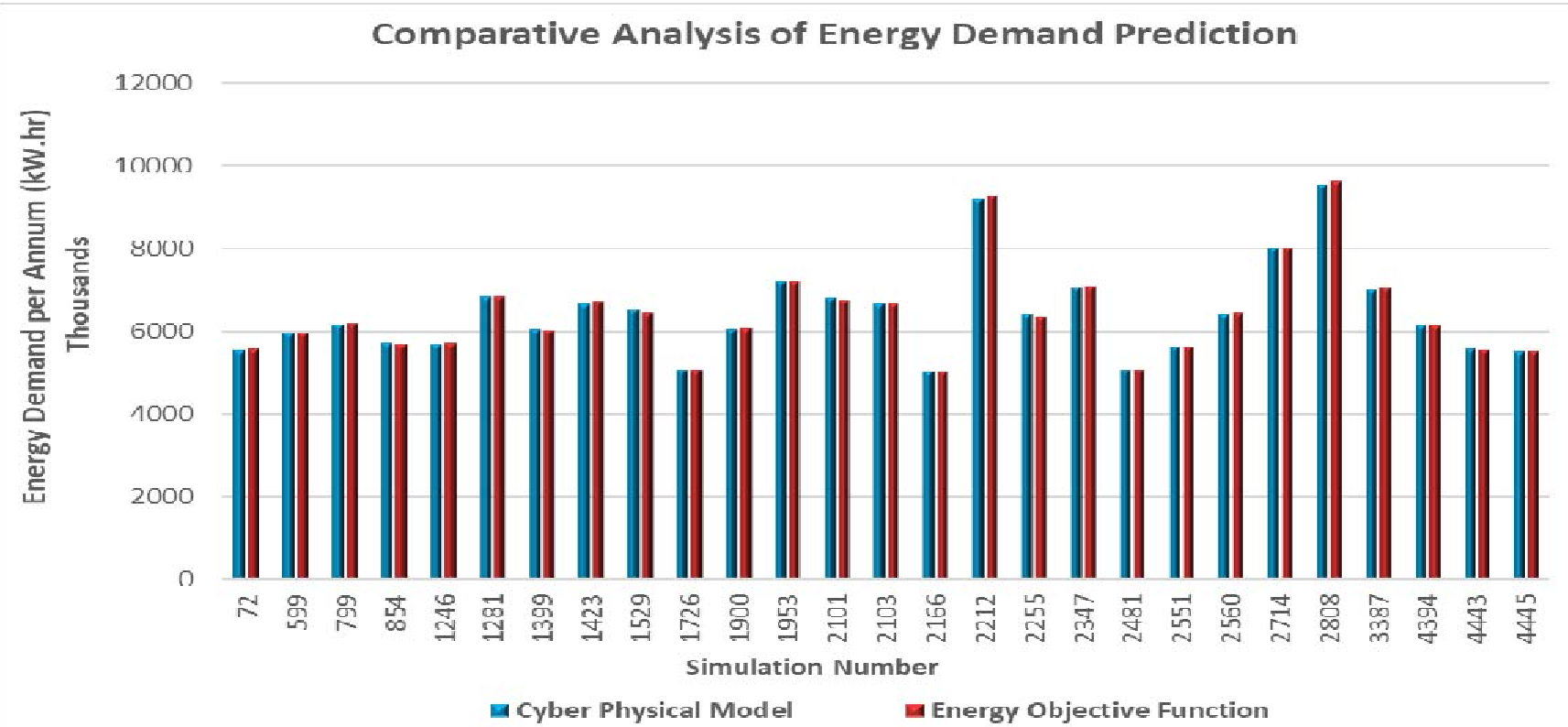 Figure 2: The high correlation between predicted energy (Equation 1) and simulated data, demonstrating the model's robustness.
Critical Insight & Conclusion
Takeaway
This paper proves that healthcare energy management is an operational challenge, not just a facilities one. By predicting energy utilization based on clinical activity, hospital administrators can:
- Identify "Minimum Critical Energy" needs for backup systems during power outages.
- Optimize the migration to renewable energy by understanding exactly when peak medical demands occur.
Limitations & Future Work
The model currently utilizes Linear Regression, which assumes a linear relationship between patient volume and power. Future research could explore Non-linear Deep Learning models (like LSTMs) to better capture temporal patterns or the "startup spikes" of heavy medical machinery. Additionally, integrating real-time IoT sensor data would elevate this from a predictive model to a live Digital Twin.