
Facing Your Health: A Data-Driven Framework for BMI Prediction via Facial Contours
A Framework for Healthcare Everywhere: BMI Prediction Using Kinect and Data Mining Techniques on Mobiles
This paper introduces a mobile-based health monitoring framework that predicts Body Mass Index (BMI) solely from facial snapshots. By utilizing Kinect's depth sensing and Decision Tree algorithms, the system extracts geometric facial features to categorize users into weight groups, achieving a non-invasive "Healthcare Everywhere" paradigm.
TL;DR
Is your face a mirror of your physical health? This research presents a system that predicts your Body Mass Index (BMI) simply by analyzing a snapshot of your face. By combining Kinect’s depth-sensing technology with Data Mining (Decision Trees), the framework identifies specific facial curves—particularly around the cheeks—that correlate with body weight, reaching conclusions that align perfectly with human intuition.
The Problem: The Inconvenience of Scales and Tapes
Calculating BMI—the ratio of weight to the square of height—is the global standard for assessing whether an individual is underweight, healthy, or obese. However, the process is inherently "analog." It requires scales, height rods, and conscious effort. For patients with disabilities or those in remote areas, this "simple" calculation becomes a barrier to consistent health monitoring.
While previous studies in psychology suggested that facial features like the width-to-height ratio (WHR) relate to BMI, computer vision faces three major technical hurdles:
- Depth Perception: Standard 2D cameras lose 3D contour data.
- Normalization: Variations in camera distance and head tilt skew measurements.
- Pose Sensitivity: Captured data is often unusable if the user isn't looking directly at the camera.
Methodology: From Depth Sensors to Decision Trees
The authors proposed a two-stage system: Recognition and Prediction.
1. Hardened Data Acquisition
To solve the precision problem, the system uses the Microsoft Kinect. Unlike standard webcams, Kinect uses an IR (Infrared) emitter and depth sensor. This allows the system to track 100 specific points on the facial outline regardless of ambient lighting.
To ensure data quality, the system calculates the ratio of distances between the eyes and the cheek curve. If the ratio suggests a tilted face, the system rejects the frame, ensuring only frontal-face data is used for the model.
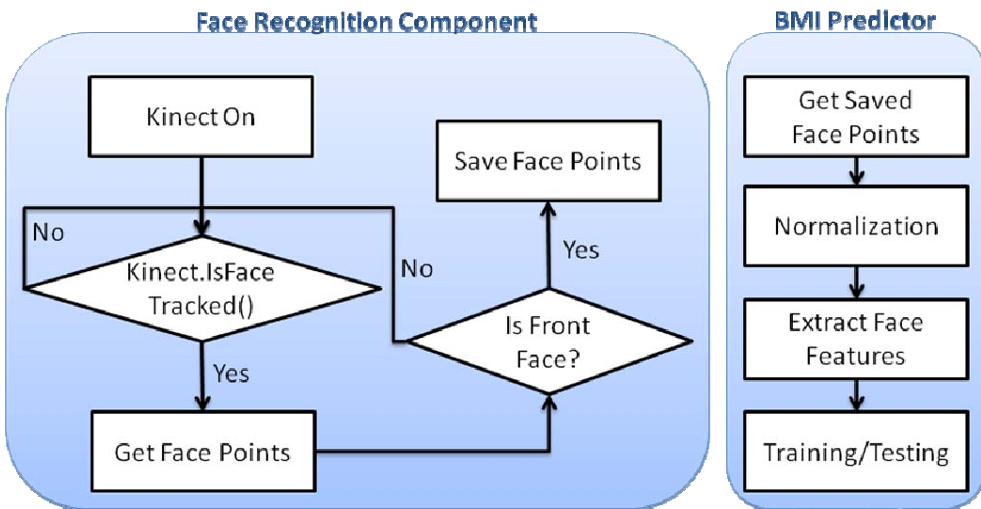 Figure 1: The dual-phase system architecture integrating Kinect tracking and Data Mining.
2. Feature Extraction and Normalization
Before prediction, the face is "normalized":
- Scaling: All faces are resized so the distance between pupil points is uniform.
- Rotation: The face is rotated around the nose point to ensure a horizontal eye line.
Instead of relying on a single ratio, the researchers calculated a massive set of geometric features:
- Dist: Point-to-point distances.
- Slope: The angle between points.
- SlopeRatio: The rate of change in curvature along the jawline.
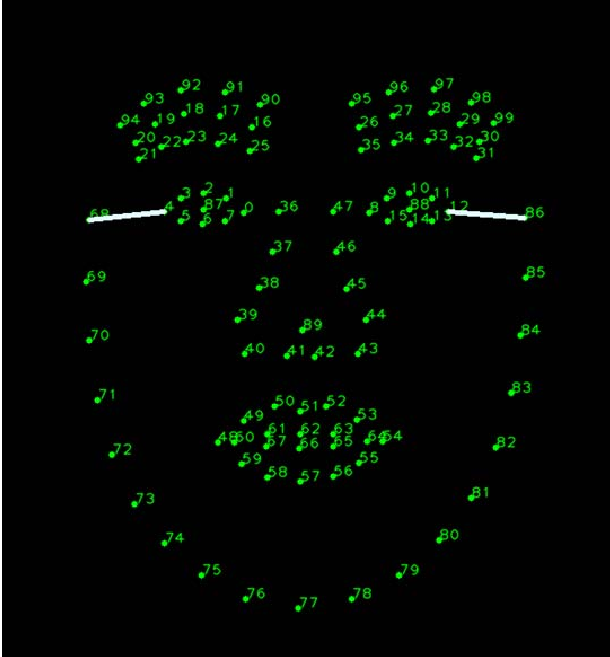 Figure 2: The 100-point landmark system used to define facial curves.
Experiments: Validating Intuition
The researchers tested the system on 50 volunteers. Using Decision Trees (Gini and Information Gain), they aimed not just for accuracy, but for interpretability. They wanted to see if the machine's "logic" matched how humans judge weight.
Key Findings:
- SlopeRatio is King: The "SlopeRatio" (the change in angle along the facial edge) was the most accurate predictor. This suggests that the curvature of the face is more important than absolute distance.
- The "Cheek" Rule: Visualizing the decision tree revealed that the points around the lower cheeks and jaw are the most informative features for BMI categorization.
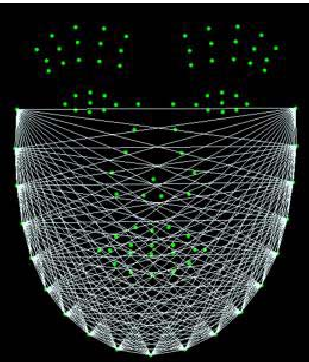 Figure 5: Precision results showing that SlopeRatio and Slope features outperform simple Distance features.
Conclusion and Future Outlook
This work bridges the gap between human perception and automated health monitoring. By proving that facial contours are statistically significant indicators of BMI, it opens the door for mobile-first healthcare.
Limitations: The current study was limited to a specific age group (18-22) and 50 participants. Future Work: Expanding the dataset to include diverse age groups, ethnicities, and genders will be critical. As mobile devices begin to incorporate LiDAR and depth sensors (similar to Kinect), this "Healthcare Everywhere" framework could become a standard feature in every smartphone health app.