
Beyond Retrospective Audits: Data Mining the Path to Higher Healthcare Quality
Analysis of healthcare quality indicator using data mining and decision support system
This study develops a data-driven framework for Continuous Quality Improvement (CQI) by applying the CHAID decision tree algorithm to analyze inpatient mortality among 8,405 patients. The authors integrated these data mining insights into a custom Decision Support System (DSS) to monitor healthcare quality indicators and guide clinical interventions.
TL;DR
In a landmark effort to modernize hospital management, this study demonstrates how the CHAID decision tree algorithm can parse massive patient databases to identify the root causes of inpatient mortality. By embedding these findings into a Decision Support System (DSS), the researchers provide a blueprint for moving from manual chart audits to automated, continuous quality improvement (CQI).
Background: The Shift from QA to CQI
For decades, healthcare quality was synonymous with "Quality Assurance" (QA)—a retrospective look at what went wrong. However, inspired by industrial giants like Deming and Juran, the medical field is shifting toward Continuous Quality Improvement (CQI). The challenge? Most hospitals lack the tools to turn raw data into the "Plan-Do-Check-Act" (PDCA) cycle. This paper bridges that gap using data mining to find the "Why" behind patient outcomes.
Methodology: The CHAID Approach
The researchers analyzed 8,405 patients using the CHAID (Chi-squared Automatic Interaction Detection) algorithm. Unlike standard regression, CHAID excels at uncovering non-linear relationships and segmenting populations into distinct risk groups.
The Core Framework
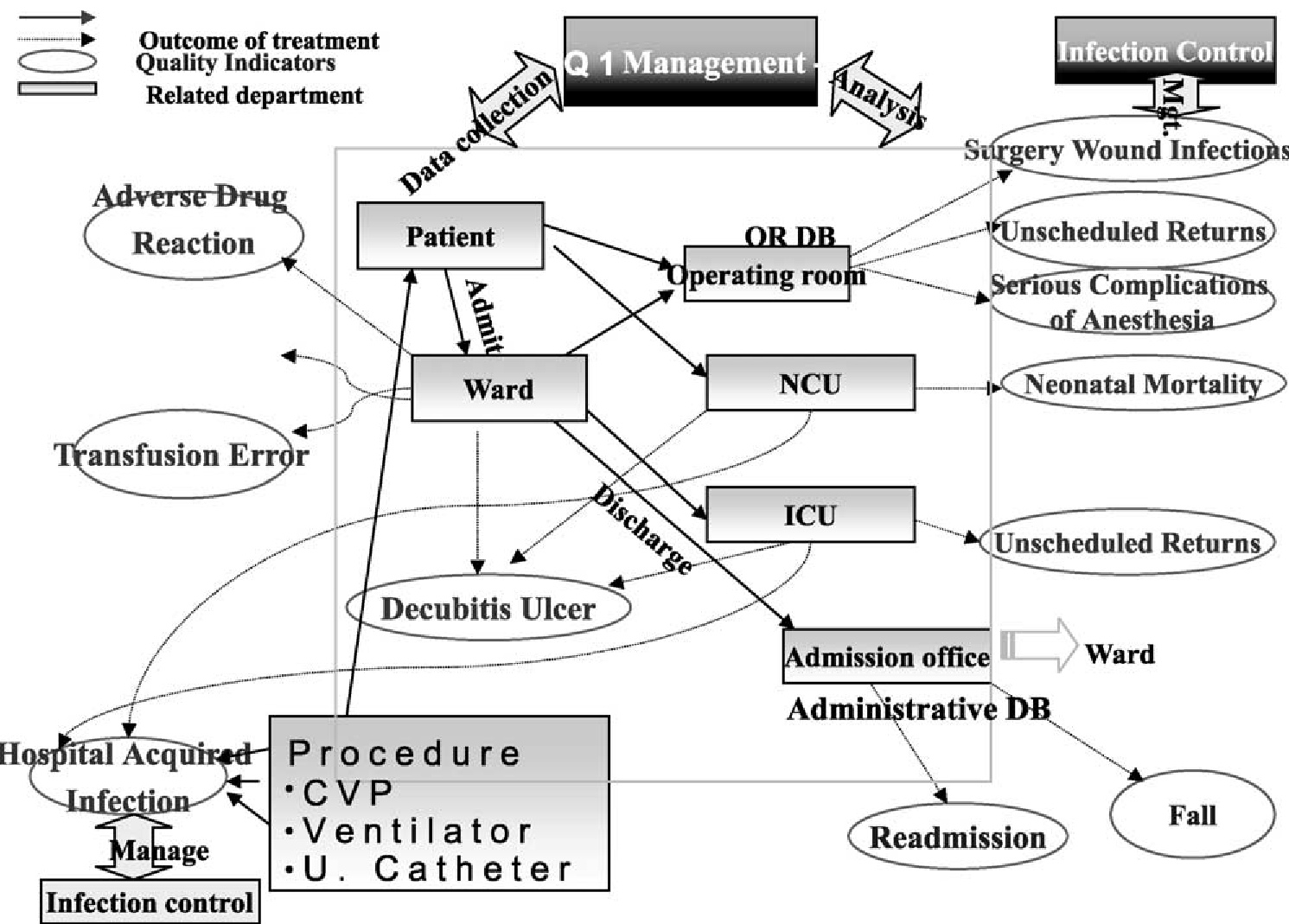
The system flow moves from a Data Warehouse (containing discharge summaries) through a Data Mining Engine (CHAID), finally manifesting as a Decision Support System that clinicians can use.
Deep Dive: What Drives Inpatient Mortality?
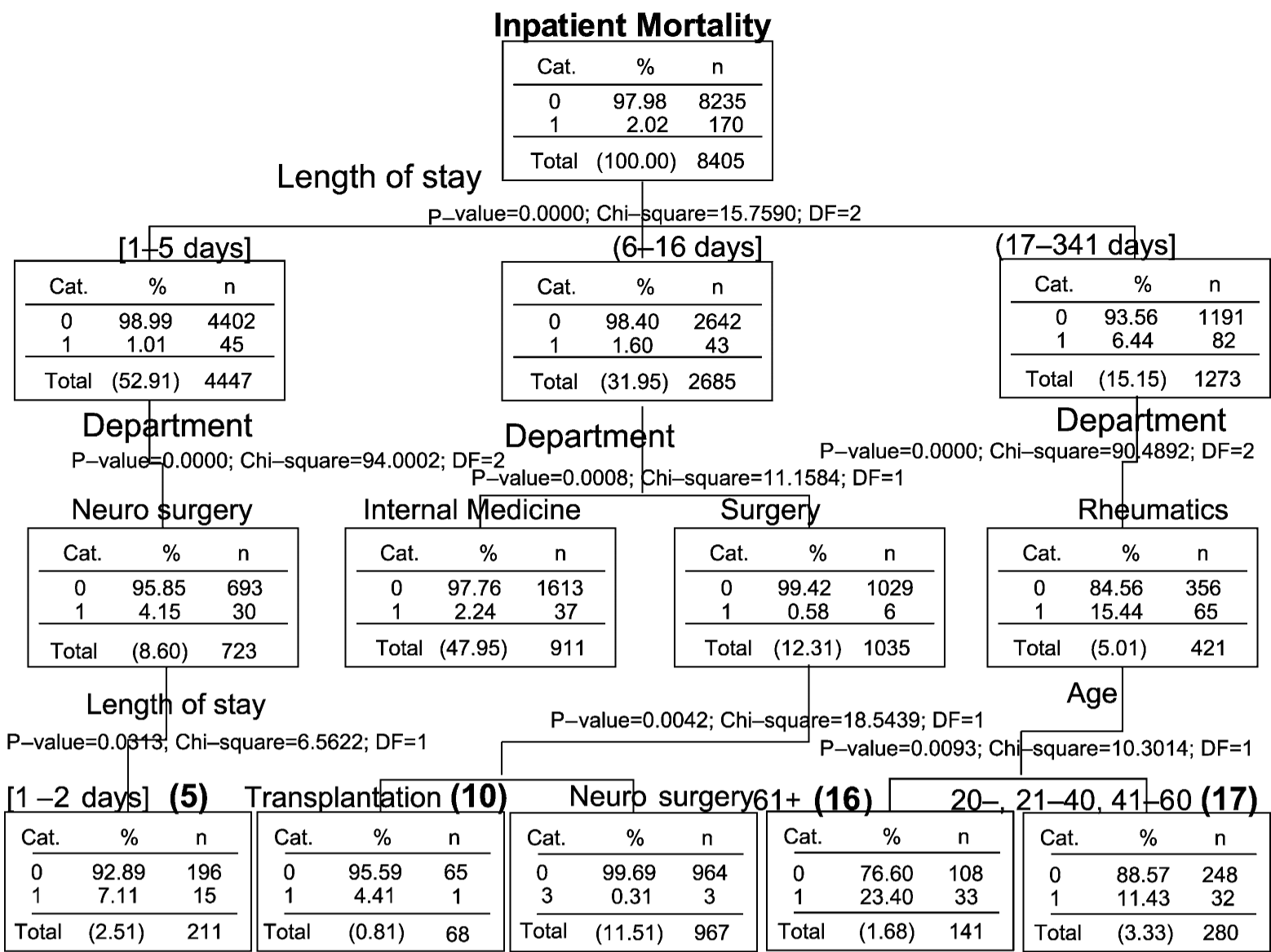
The decision tree analysis revealed that the single most influential factor in mortality was Length of Stay (LOS).
- The 16-Day Threshold: Patients staying longer than 16 days faced a mortality rate of 6.4%, drastically higher than those with shorter stays.
- High-Risk Profiles: One specifically identified "if-then" rule showed that elderly patients (Age > 61) in the Rheumatics Medicine department with long stays had a mortality probability of 23.4%.
Results & The "Gains Chart" Insight
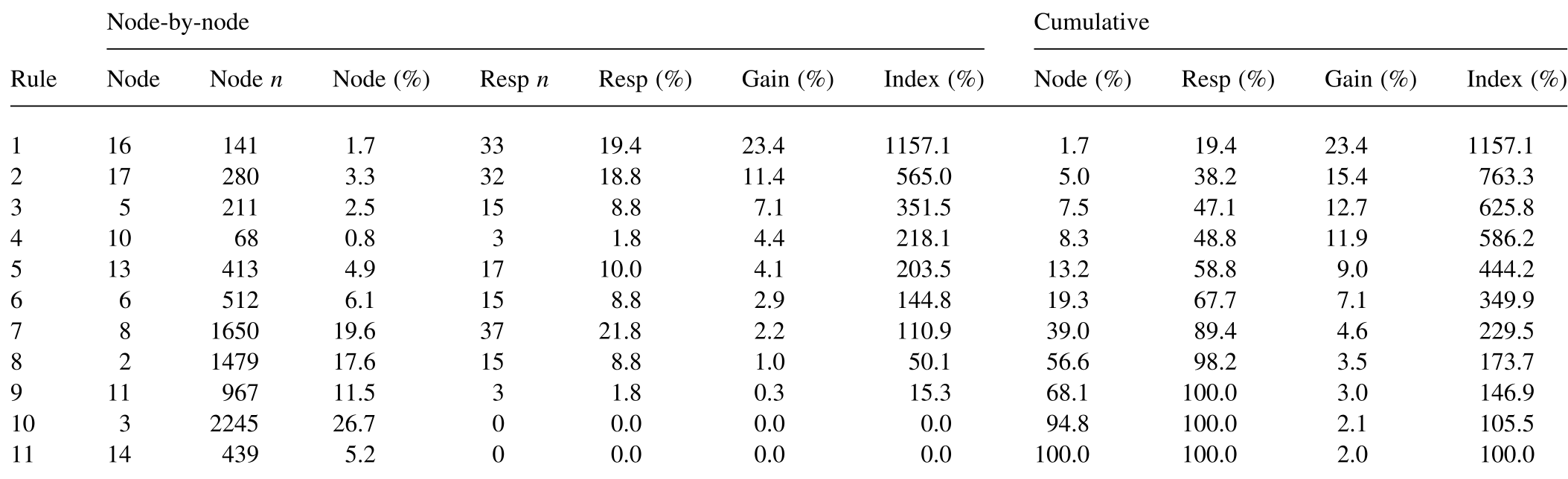
One of the most powerful contributions of this work is the Gains Chart. It allows hospital administrators to prioritize interventions. By focusing on just the top 5% of high-risk segments identified by the algorithm, the hospital could theoretically address 38.2% of all mortality cases. This "Pareto-like" efficiency is crucial for resource-strapped medical departments.
Critical Analysis: From Theory to Bedside
While the study provides a robust mathematical foundation for quality monitoring, it faces two primary hurdles:
- Retrospective Bias: The data used was from past discharges. For true CQI, this must be "concurrent"—happening while the patient is still in the bed.
- System Integration: As the authors note, the DSS must be deeply integrated into the Order Communication System (OCS) to provide real-time alerts to physicians.
Conclusion
This paper serves as a foundational text for Medical Informatics. It proves that "quality" isn't a vague aspiration but a metric that can be modeled, predicted, and improved through disciplined data mining. For future healthcare leaders, the message is clear: the data to save lives already exists in your servers; you just need the right algorithms to find it.