
Scaling Healthcare: A Fog-Based Cyber-Physical Framework for the Developing World
A framework for healthcare support in the rural and low income areas of the developing world
This paper introduces a fog-based Cyber-Healthcare framework designed for rural and low-income areas, utilizing low-cost IoT devices and Machine Learning for automated patient triage. The system achieves high-precision patient condition recognition, with the Deep Neural Network (DNN) model reaching a SOTA accuracy of 99.86%.
Executive Summary
TL;DR: This research tackles the critical shortage of medical expertise in rural and low-income regions by proposing a decentralized Cyber-Healthcare framework. By leveraging Fog Computing (local processing) and Deep Learning, the system automates patient "Triage"—the process of prioritizing patients based on the severity of their condition—with an impressive 99.86% accuracy.
Context: This work moves beyond theoretical CPHS models by implementing a functional pipeline using affordable hardware (like the Raspberry Pi), positioning it as a practical "leapfrog" technology for public health sectors in Africa and similar regions.
The "Artificial Scarcity" of Healthcare
In many developing nations, the doctor-to-patient ratio stalls far below the WHO recommendation of 1:1000. This is exacerbated by "rural reluctance," where medical staff prefer urban centers. Existing digital solutions often fail because they rely on robust, high-speed internet and expensive cloud servers.
The authors identify a massive need for a system that can:
- Digitize manual clinical data capture.
- Operate locally when connectivity is sparse.
- Prioritize patients automatically so that overburdened nurses can focus on the most critical cases first.
Methodology: Bringing the Cloud to the Edge
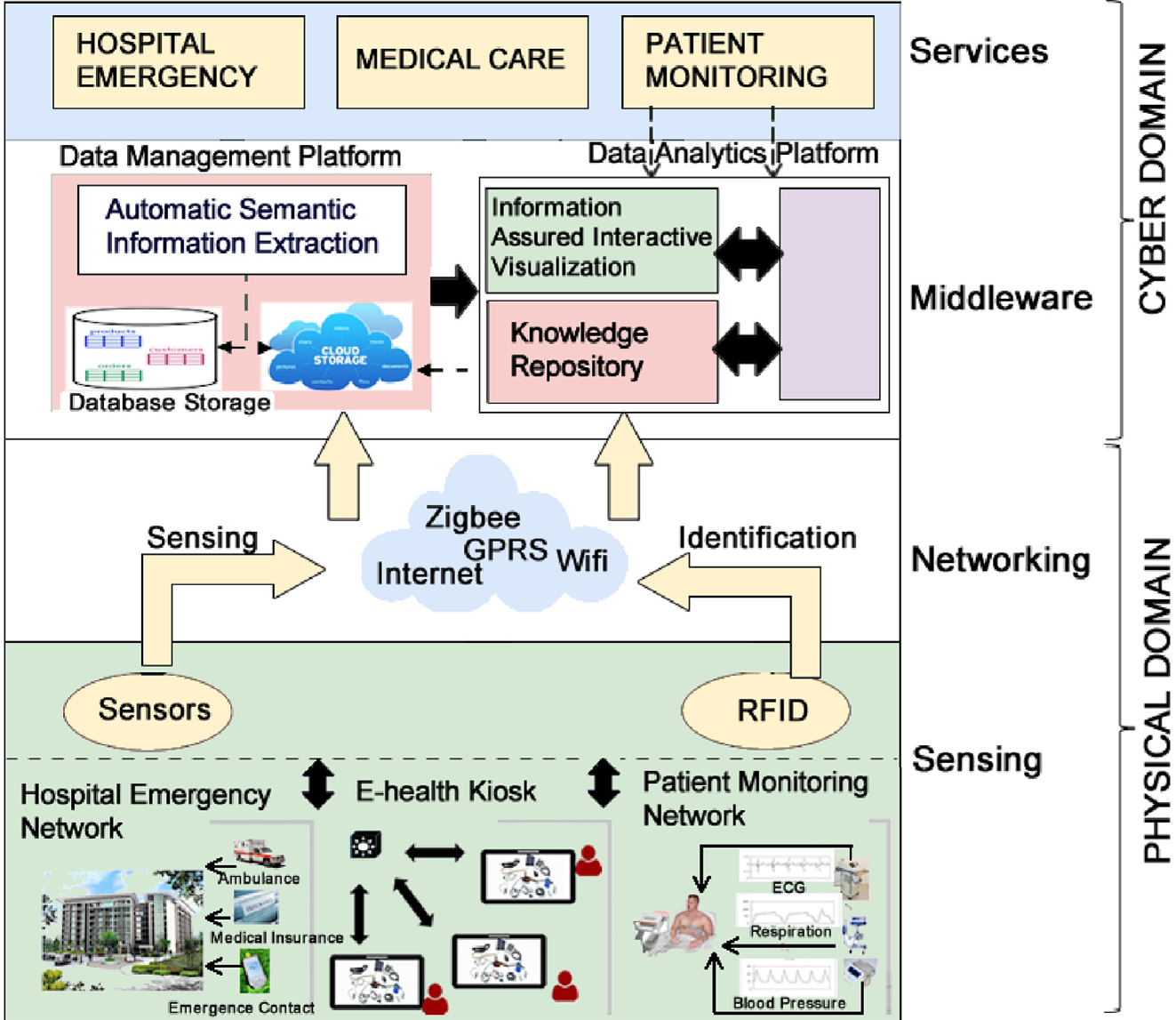
The heart of the proposal is a four-layer architecture that integrates the Internet of Things (IoT) with Fog Computing.
1. The Multi-Layer Architecture
- Sensing Layer: Captures vital signs (Blood Pressure, Pulse, SpO2).
- Networking Layer: Uses flexible protocols (WiFi, ZigBee, or even Drone-based data muling).
- Middleware (Fog) Layer: This is the "brain" at the edge. Instead of sending raw data to a distant server, devices like the Raspberry Pi store and preprocess it locally.
- Application Layer: Where doctors and researchers access analyzed insights.
2. Intelligent Triage
Unlike traditional triage systems (like SATS) that rely on human observation, this framework uses Machine Learning. It maps quantitative vital signs into four priority zones: Normal (N), Low (L), Medium (M), and High (H).
Performance Benchmarks
The authors conducted a dual-evaluation: hardware efficiency and algorithmic accuracy.
Hardware: Raspberry Pi vs. Alix Board
Performance tests showed that while the Alix board had slightly faster write speeds in certain configurations, the Raspberry Pi was the clear winner for rural deployment due to its significantly lower price point (103) and lower power draw (3.5W).
Algorithms: The Power of Deep Learning
The study compared four models: Deep Neural Network (DNN), Single Neural Network (SNN), Multivariate Linear Regression (MLiR), and Multivariate Logistic Regression (MLoR).
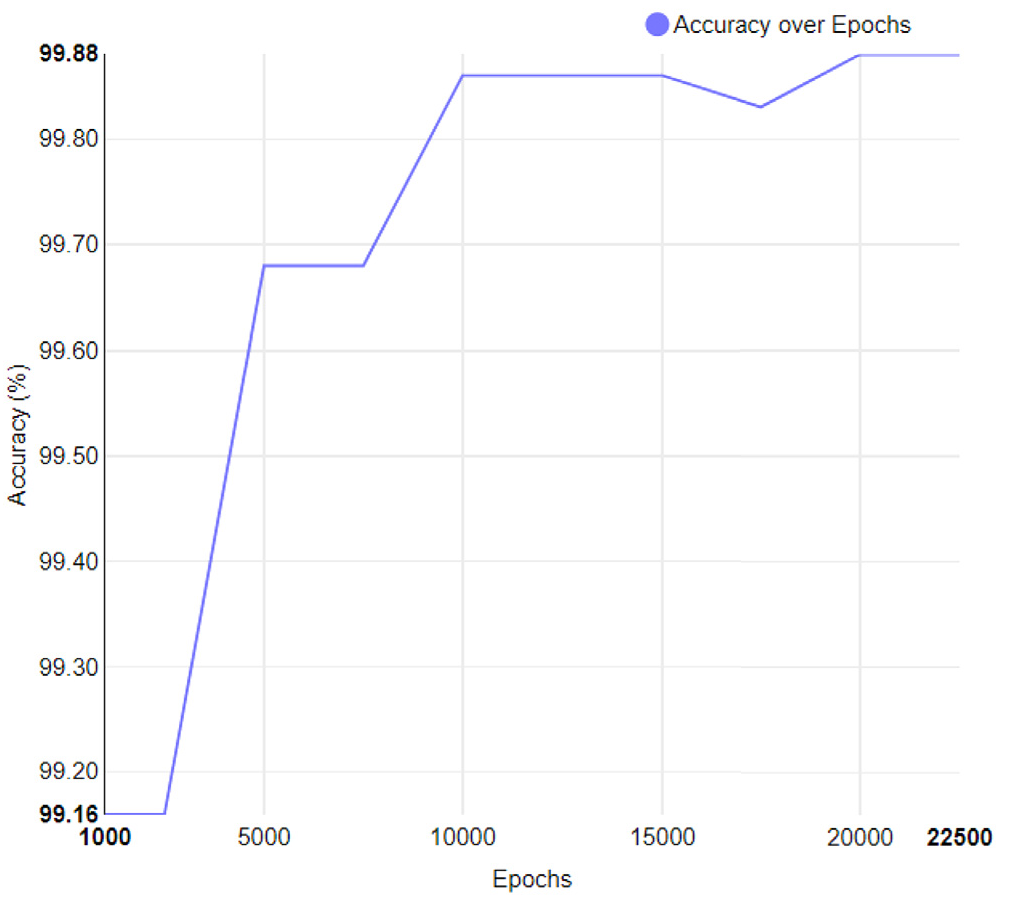
- DNN Winner: The DNN achieved a near-perfect 99.86% accuracy.
- Trade-off: While DNN is the most accurate, it requires more training time (~7.4 minutes) compared to Linear Regression (~0.12 seconds). However, in a medical triage context, accuracy is far more critical than training speed.
Deep Insight: Why This Matters
The breakthrough here isn't just the use of AI—it's the localization of AI. By running these models on Fog nodes (micro-clouds), the system eliminates the "latency" and "dependency" of traditional cloud computing.
Takeaway for the Future: This framework proves that we don't need million-dollar infrastructures to save lives. By combining $35 computers with sophisticated neural networks, we can provide high-level diagnostic support to pharmacies and rural clinics that currently have no access to doctors.
Limitations: While quantitative data (vital signs) is powerful, its predictive power may still need to be combined with qualitative human medical intuition for complex cases. Future research will focus on optimizing the number of hidden layers in these networks to balance speed and accuracy even further.
Editor's Note: This research represents a significant step toward "democratizing" healthcare through the strategic use of IoT and Edge Intelligence.