
Deciphering Healthcare Intelligence: Why Data Noise (MRR) is the True Ceiling of Machine Learning
Healthcare Text Classification System and its Performance Evaluation: A Source of Better Intelligence by Characterizing Healthcare Text
The paper introduces a novel machine learning-based healthcare text classification system and a new metric called the Misrepresentation Ratio (MRR). By analyzing five datasets (including TwitterA and SMS) across five classifiers, the study achieves a peak accuracy of 97.83% and an overall mean accuracy of 89%, establishing a direct correlation between input data noise and classification performance.
TL;DR
In the world of healthcare AI, social media is a goldmine of disease surveillance data, but it is notoriously "noisy." This paper introduces a groundbreaking metric called the Misrepresentation Ratio (MRR) to quantify this noise. By testing across five datasets and five classifiers, the authors demonstrate that the quality of your input data (characterized by MRR) predicts your model’s success more accurately than the choice of algorithm alone.
The "Loudness" of Data: The Core Motivation
Most researchers treat text classification as a pure architectural challenge: "If my accuracy is low, I need a bigger model." However, the authors of this study argue that in healthcare—where slang, typos, and jargon (unstructured data) are rampant—the real bottleneck is Text Perturbation.
Previous SOTA (State Of The Art) methods failed to build a mathematical bridge between the "messiness" of the input and the final performance. The authors' insight: If we can quantify exactly how "misrepresented" the data is, we can predict the performance of the ML system and choose the right classifier for the job.
Methodology: The MRR Framework
The centerpiece of this research is the Misrepresentation Ratio (MRR %). Mathematically, it is defined as:
Where represents "Important terms" (informative, non-stopwords) and represents "Total terms."
The ML Engine
The study doesn't just look at one model; it employs a "plug-and-play" architecture to test the universality of their findings.
- 5 Datasets: From high-noise (TwitterA) to structured news (Reuters R8).
- 5 Classifiers: SVM, MLP (Neural Networks), AdaBoost, SGD, and Decision Trees.
- 5 Protocols: Ranging from K2 (50/50 split) to Jack Knife (Leave-one-out).
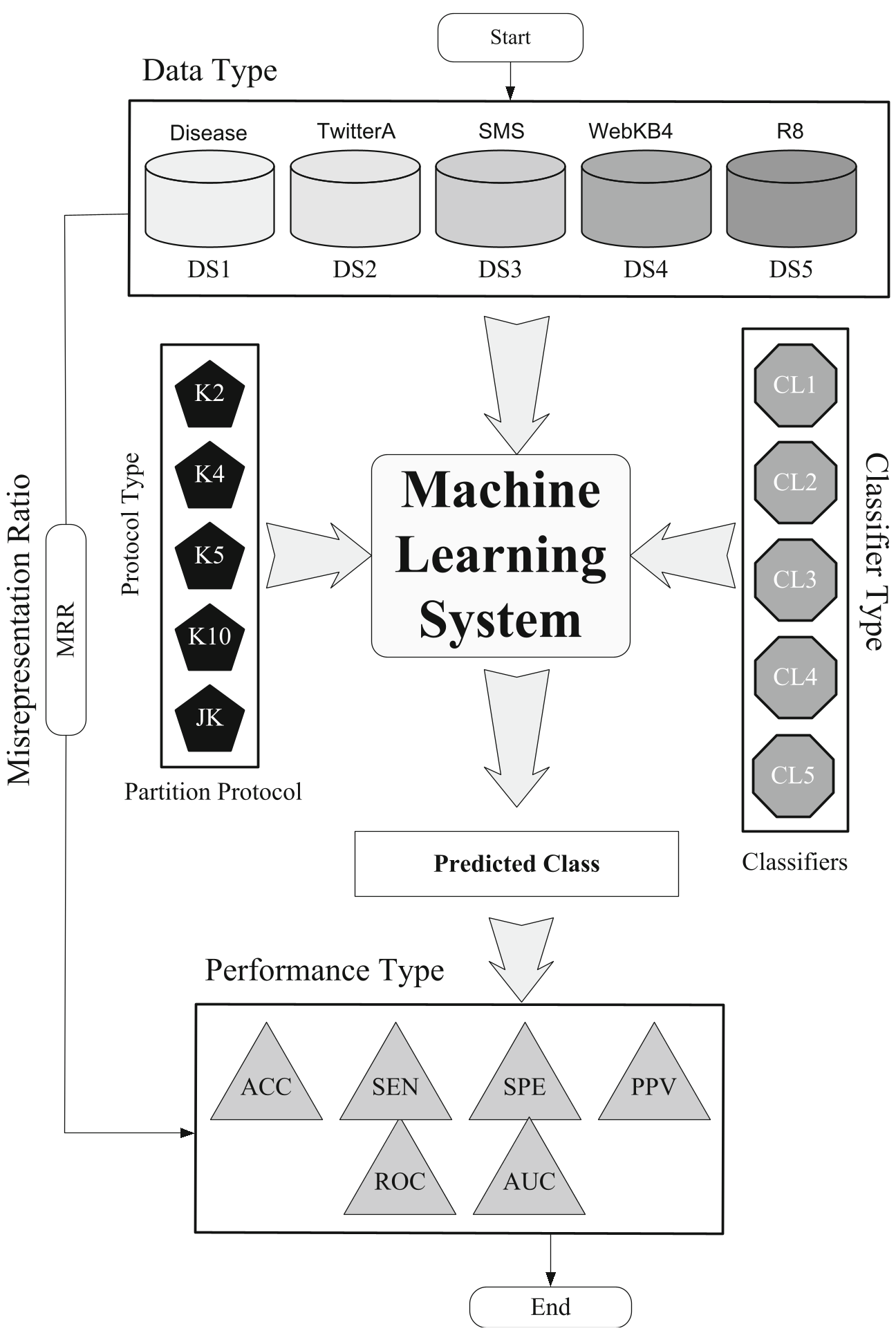 Figure 1: The workflow linking MRR to performance evaluation via the ML paradigm.
Key Results: Quality Over Quantity
The results validated their hypothesis with striking consistency. As the MRR decreased (meaning the data became more "informative" and less "noisy"), every performance metric spiked.
- The Gold Medalist: The Multi-Layer Perceptron (MLP) was the most resilient. It achieved an accuracy of 91.84%, outperforming previous benchmarks by 6%.
- The MRR Inverse Law:
- TwitterA (71.04% MRR) -> ~70% Accuracy.
- SMS (61.19% MRR) -> ~97.8% Accuracy.
- Learning Efficiency: The system generalized effectively using only 55% of the available data, suggesting that after a certain point, adding more noisy data provides diminishing returns.
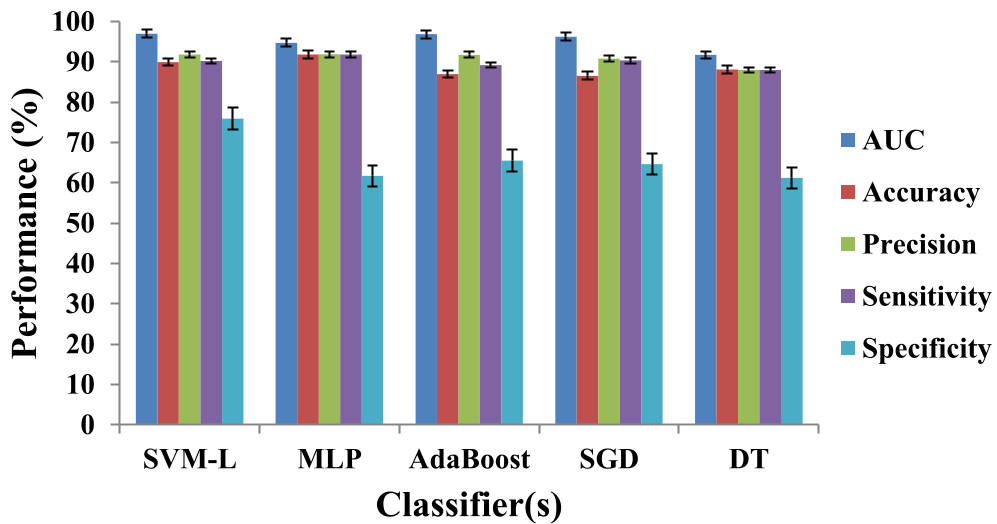 Figure 2: The direct inverse relationship between MRR and Classification Accuracy.
Academic Insight: Reliability and Stability
While many papers stop at "accuracy," this study performs a deep dive into Reliability and Stability Indices. They achieved a reliability index of 93%, and their stability analysis showed the system remains within a 2% tolerance band once the dataset size exceeds approximately 2,458 instances. This provides a clear blueprint for engineers on how much data is "enough" for a stable rollout.
Conclusion and Future Horizons
This paper is a pivotal reminder that garbage in, garbage out is not just an idiom; it is a measurable mathematical reality in NLP. By characterizing data through MRR, the authors have provided a new "Intelligence" for healthcare surveillance.
Limitations: The study primarily uses Bag-of-Words (BOW). Future work should explore how advanced embeddings like BERT or GPT-based representations affect the MRR threshold.
Final Takeaway: If you are building a disease surveillance tool, start by measuring your MRR. It’s the best way to know if your model is actually learning or just drowning in the noise.