
HealthSCOPE: Revolutionizing Healthcare Cost Prediction with Distributed Machine Learning
HealthSCOPE: An Interactive Distributed Data Mining Framework for Scalable Prediction of Healthcare Costs
HealthSCOPE is an interactive, distributed data mining framework designed to predict individual and population-level healthcare costs using insurance claims data. Built on Apache Spark and Microsoft Azure, it utilizes regression trees and PMML-encoded models to provide scalable, high-performance cost forecasting for Accountable Care Organizations (ACOs) and insurers.
TL;DR
HealthSCOPE (Healthcare Scalable COst Prediction Engine) is a sophisticated framework designed to tackle the skyrocketing costs of US healthcare by providing precise, scalable future cost estimates. By moving beyond simple linear regression to distributed Regression Trees powered by Apache Spark and Microsoft Azure, it allows insurers and healthcare providers to visualize cost drivers and simulate the financial impact of medical interventions in real-time.
Context & Motivation: The Accountability Crisis
With US healthcare spending reaching nearly 18% of GDP, the shift toward Accountable Care Organizations (ACOs) necessitates tools that can accurately predict financial risk. Traditional methods fail because:
- Linearity Constraints: Standard regression cannot capture the complex, non-linear interactions between diverse comorbidities.
- Scalability Issues: Rule-based systems are expensive to scale and require manual domain expertise that doesn't adapt to "Big Data" volumes.
- Lack of Interactivity: Most models are "black boxes" that don't allow providers to see how managing a specific condition (like diabetes or ulcers) would actually change the bottom line.
Methodology: The Architecture of Scale
The core innovation of HealthSCOPE lies in its three-tier architecture, designed for high availability and modularity.
1. The Distributed Cost Prediction Engine (CPE)
At the heart of the system is a Big Data Stack powered by Spark. This allows the framework to process hundreds of thousands of records (such as the Washington State Inpatient Database) in parallel.
2. Model Bank & PMML
Unlike static systems, HealthSCOPE uses a Model Bank where various algorithms (Linear Regression, Regression Trees, and potentially SVMs) are stored. These models are exported using Predictive Model Markup Language (PMML), ensuring they can be trained in one environment (like R or Spark) and deployed seamlessly into the ADAPA scoring engine on Azure.
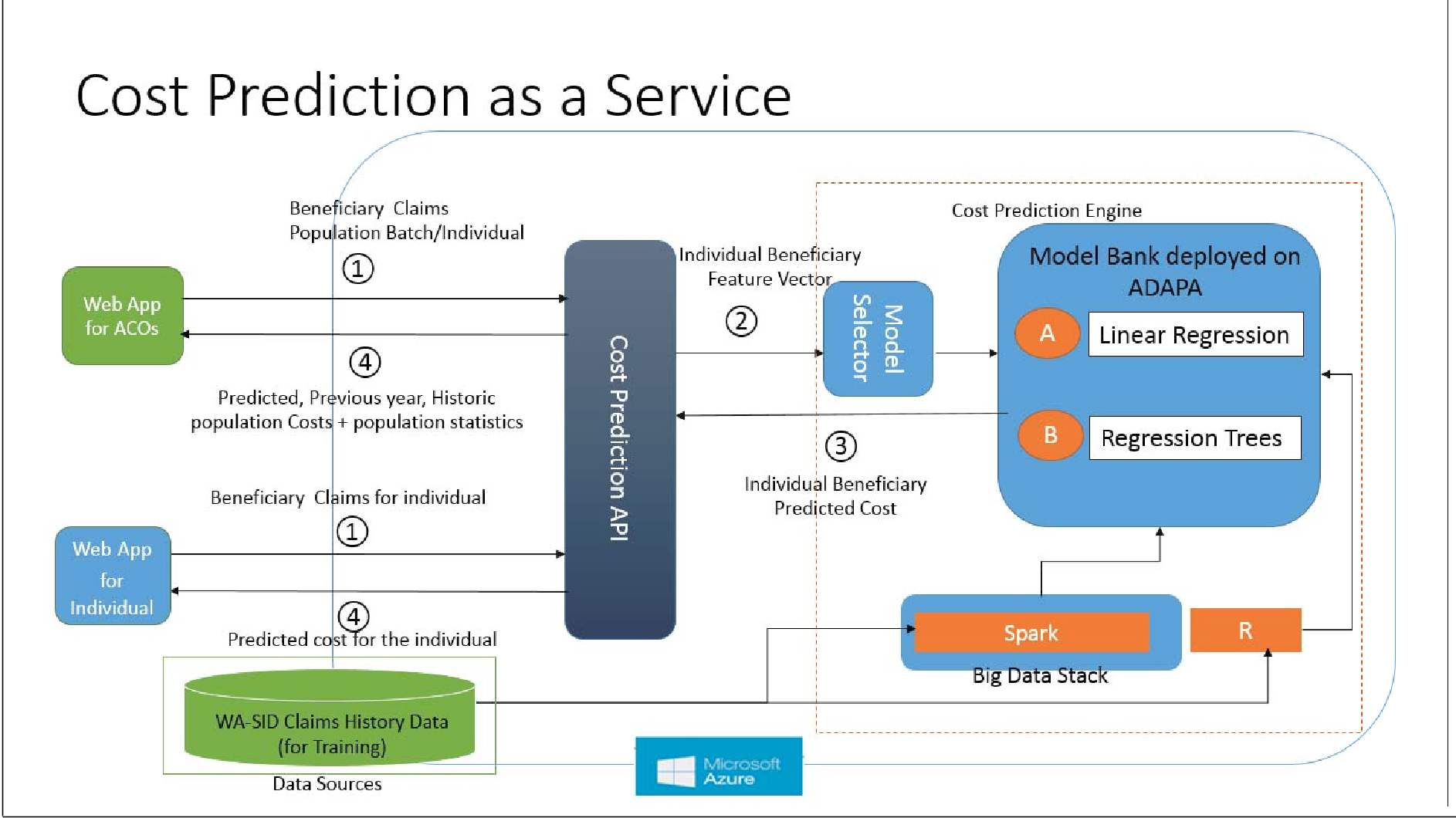 Fig 1: The HealthSCOPE pipeline, from CSV upload via REST API to distributed scoring on Azure.
Experiments and Insights
The authors validated HealthSCOPE using the State Inpatient Database (SID) for Washington, covering over 480,000 beneficiaries.
Key Findings:
- Non-Linear Superiority: The Regression Tree models consistently showed lower prediction errors (MSE/MAE) than the industry-standard linear regression.
- Actionable Analytics: The UI provides a "Beneficiary Level View" where a user can uncheck a specific condition to see a re-calculated prediction. For example, managing a peptic ulcer was shown to reduce a specific patient's predicted cost by 13%.
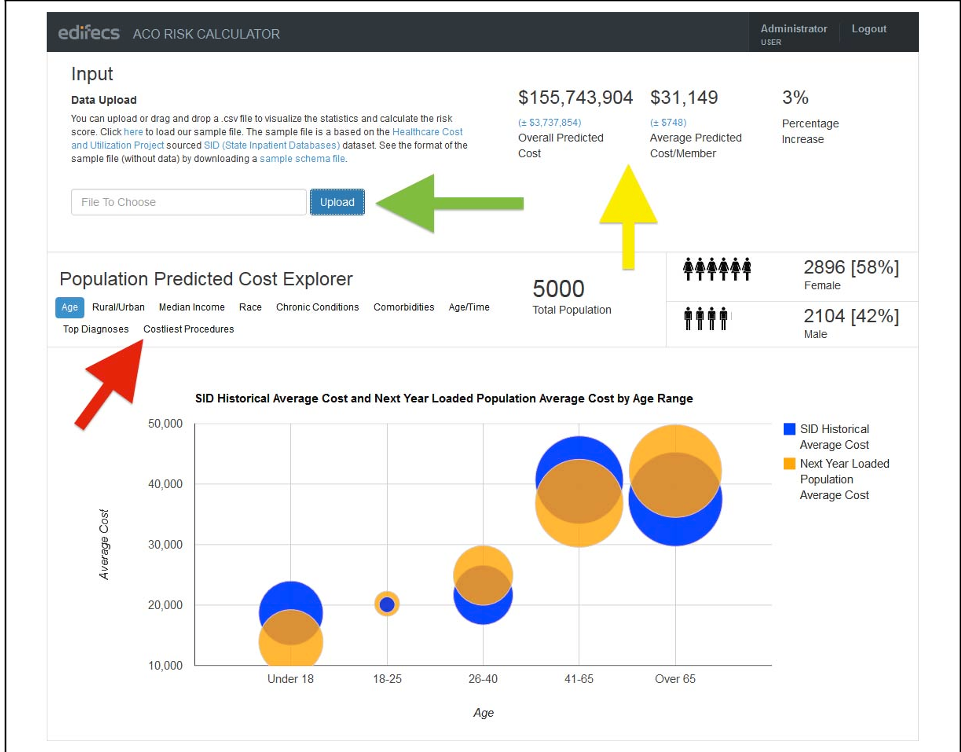 Fig 2: Population-level visualization comparing historical vs. predicted costs across age groups.
Critical Analysis & Conclusion
HealthSCOPE moves the needle from "descriptive" to "prescriptive" analytics. By identifying high-risk individuals and the specific factors driving their costs, ACOs can transition from reactive care to proactive population health management.
Limitations & Future Work:
- Data Scope: The current model focuses primarily on inpatient claims. Adding pharmacy and outpatient data would provide a more holistic cost view.
- Algorithm Evolution: While Regression Trees are a leap forward, the authors aim to incorporate more advanced techniques like Weighted KNN and Naive Bayes to further refine accuracy in heterogeneous populations.
Ultimately, HealthSCOPE serves as a blueprint for how cloud-native, distributed computing can turn massive, messy healthcare data into a strategic asset for economic sustainability in medicine.