
HED-ID: Solving the Mystery of Why Strong Emotions Sometimes Fade Faster
HED-ID: An Affective Adaptation Model Explaining the Intensity-Duration Relationship of Emotion
The paper introduces HED-ID (Human Emotion Dynamics—Intensity and Duration), a quantitative computational model of affective adaptation. It formalizes how emotion intensity and duration are governed by three parameters: self-relevance, explanation level, and explanatory ease, achieving a SOTA explanation for non-intuitive emotional phenomena like the Region-β Paradox.
TL;DR
Why does a minor slight sometimes bother us for days, while a major crisis triggers a "psychological immune system" that helps us bounce back? This paper presents HED-ID, a computational model that uses three simple algebraic equations to explain the complex tug-of-war between how much an event matters to us (Self-Relevance) and how well we understand it (Explanation Level).
Background: The Intensity-Duration Paradox
In classical psychology, we often assume a linear relationship: the harder you hit, the longer the resonance. However, human emotion is rarely that simple. The Region-β Paradox suggests that intense distress often triggers active coping mechanisms that allow for faster recovery compared to mild annoyances that fly under the radar.
Existing models like AREA (Attention, Reaction, Explanation, Adaptation) provided the intuition but lacked the mathematical "teeth" to be used in AI or to explain why two equally happy events might result in one person being joyful for an hour and another for a week.
Methodology: The Three Pillars of HED-ID
The researchers break down the emotional experience into three specific parameters that define the interaction between a stimulus and a human:
- Self-Relevance (SR): How much does this event impact your goals or well-being?
- Explanation Level (EL): How much of the "why" and "how" do you already understand?
- Explanatory Ease (EE): How easy is it to fit this event into your existing world-view?
The Governing Equations
The magic of HED-ID lies in its simplicity. It models the Intensity () as: And the Rate of Adaptation () as:
This structure reveals a profound insight: Intensity itself fuels adaptation. Because depends on , a high-intensity emotion provides more "cognitive fuel" to power the explanation process, potentially ending the emotional episode sooner.
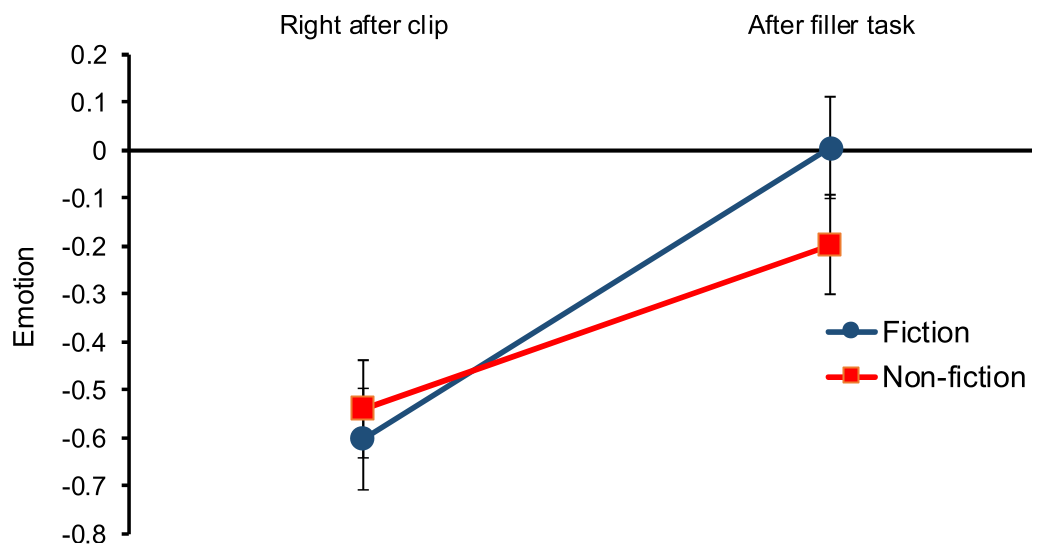 Figure 1: The feedback loop of HED-ID shows how adaptation level increases as a function of current emotion intensity.
Experimental Validation: Fiction vs. Truth
To prove that intensity isn't the only factor, the authors conducted an experiment where subjects watched sad videos.
- Group A (Fiction): A scene from 'The Champ'.
- Group B (Non-fiction): A documentary about a terminal patient.
The results were striking. Both groups reported similar levels of peak sadness. However, because it is "easier" to explain away a movie as "just a story," the Fiction group recovered significantly faster. The Non-fiction group lacked that "Explanatory Ease," causing their sadness to linger.
 Figure 2: Despite similar initial peaks, the adaptation curves diverge over time based on the nature of the stimulus.
SOTA Performance: Mapping 9 Scenarios
The paper tests HED-ID against 9 world scenarios. It accurately predicts:
- Scenario 1 (Uncertainty): Why not knowing why you won a prize keeps you happy longer than knowing exactly why.
- Scenario 3 (The Paradox): Why victims of a tragedy (high SR) might eventually show faster emotional recovery than mere bystanders when the recovery is evaluated months later.
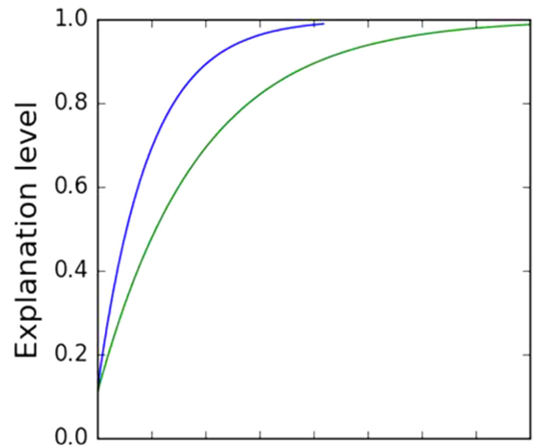 Figure 3: Simulated curves showing the Region-β Paradox (X crossing under Y) and the effects of varying explanation ease.
Critical Insight & Conclusion
HED-ID is a bridge between the Adaptation-Level Theory (which focuses on stimulus strength) and Appraisal Theory (which focuses on cognitive meaning). By proving that the adaptation speed () is actually a product of Self-Relevance and Explanatory Ease, the authors have given us a tool to quantify the "Psychological Immune System."
The Takeaway: For those building Virtual Reality training or Affective Robotics, HED-ID offers a computationally cheap way to simulate "realistic" emotional decay. Not every user reacts the same, and now we have the math to explain why.
Limitations: The model assumes a linear relationship for cognitive effort, which might not hold in cases of clinical rumination (where more "effort" actually leads to less adaptation). Future work is needed to integrate this into multidimensional emotion spaces.