
HellRank: Reimagining Centrality via Hellinger Distance in Bipartite Social Networks
HellRank: a Hellinger-based centrality measure for bipartite social networks
This paper introduces HellRank, a novel centrality measure designed specifically for bipartite social networks (e.g., user-item or author-paper networks). By leveraging the Hellinger distance to quantify structural similarity between nodes on the same side of a bipartite graph, HellRank effectively identifies "behaviorally representative" users without requiring network projection or global topological knowledge.
TL;DR
Bipartite networks (connecting users to items, events, or tags) are the backbone of modern social platforms, yet traditional centrality metrics struggle to find representative users. HellRank introduces a distance-based approach using the Hellinger distance to identify nodes that statistically represent the collective behavior of the network, all while functioning in a fully distributed manner.
Background: The Bipartite Dilemma
In a standard social network, "importance" is often equated with how many people you know (Degree) or how often you act as a bridge (Betweenness). However, in a bipartite system—where users only connect to items—these metrics can be misleading.
Imagine a user who buys hundreds of niche, unpopular items. Traditional metrics might label them "central" due to high volume. But a truly representative user is one who interacts with items in a pattern that reflects the broader community's logic. Existing solutions often "project" these networks into simple user-user graphs, but this destroys the nuances of the original structure and creates false "cliques."
Methodology: The Geometry of Similarity
The core innovation of HellRank is treating the neighborhood of a node as a probability distribution. Instead of counting links, the authors look at the types of neighbors a node has (specifically, their degree distributions).
1. From Divergence to Distance
To compare two users, the authors use the Hellinger Distance (). Unlike the more common Kullback–Leibler (KL) divergence, Hellinger satisfies the triangle inequality and is symmetric, making it a "true" distance metric in a mathematical sense.
2. Theoretical Bounds
The authors rigorously prove that the distance between any two nodes and is bounded by their degrees ():
- Lower Bound:
- Upper Bound:
This ensures that the metric is mathematically stable and consistent across different network topologies.
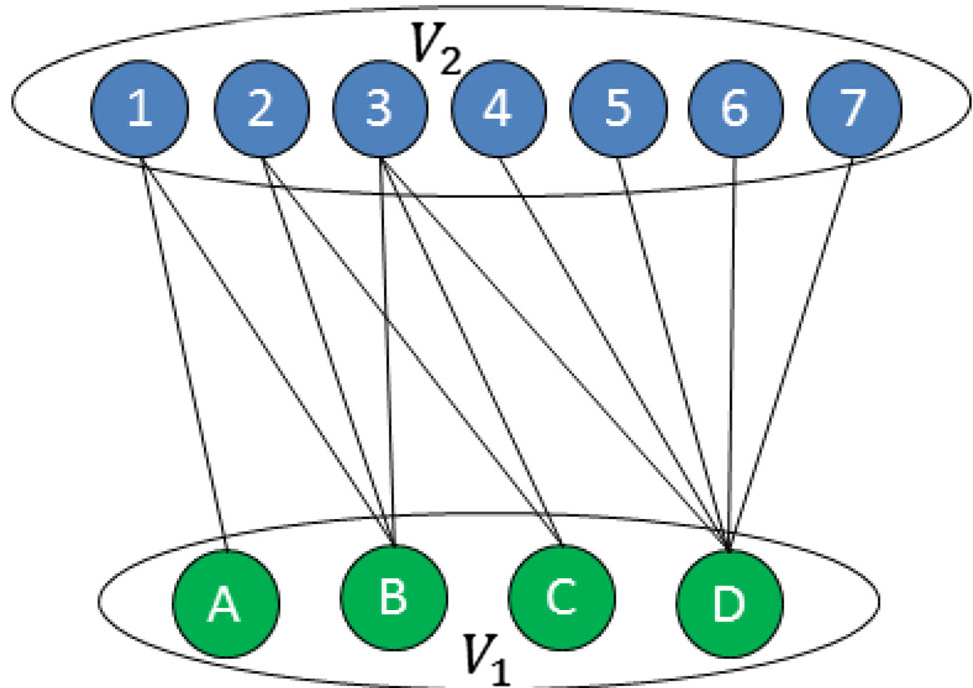 Figure 1: Comparison between a bipartite network and its one-mode projection.
Experiments and Key Insights
The researchers tested HellRank on the classic Southern Women dataset (social events) and the massive arXiv collaboration network.
Identifying "The Bridge"
In the Southern Women dataset, HellRank successfully identified individuals like Nora and Brenda as central. Interestingly, some of these individuals did not have the highest degree count, yet their removal would cause the most significant breakdown in information spread. HellRank captures the "bridging" position that Degree Centrality ignores.
Distributed Efficiency
Unlike Betweenness Centrality, which requires time and global knowledge, HellRank can be computed locally. Each node only needs to know the degrees of its immediate neighbors, making it a prime candidate for massive recommender systems.
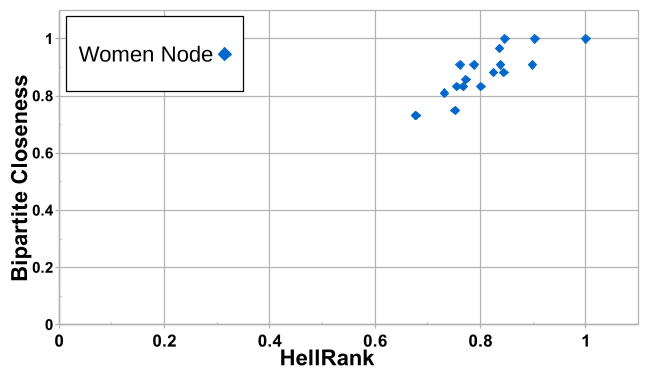 Figure 2: Comparison of HellRank vs. traditional metrics. Note the distinct ranking profiles that reveal "representative" behavior.
Critical Analysis & Conclusion
Takeaway
HellRank moves centrality from a "volume-based" perspective to a "topology-based similarity" perspective. It is one of the few measures specifically optimized for the 2-mode nature of real-world data like e-commerce and citation networks.
Limitations
The current method relies heavily on degree distribution. In networks where degree alone doesn't represent value (e.g., platforms with significant bot activity or automated transactions), HellRank might require additional metadata weights to remain accurate.
Future Outlook
The authors suggest extending this to weighted bipartite networks or applying compressive sensing to estimate rankings without full network knowledge. For practitioners in Recommender Systems, HellRank offers a robust way to identify "seed users" for cold-start problems.
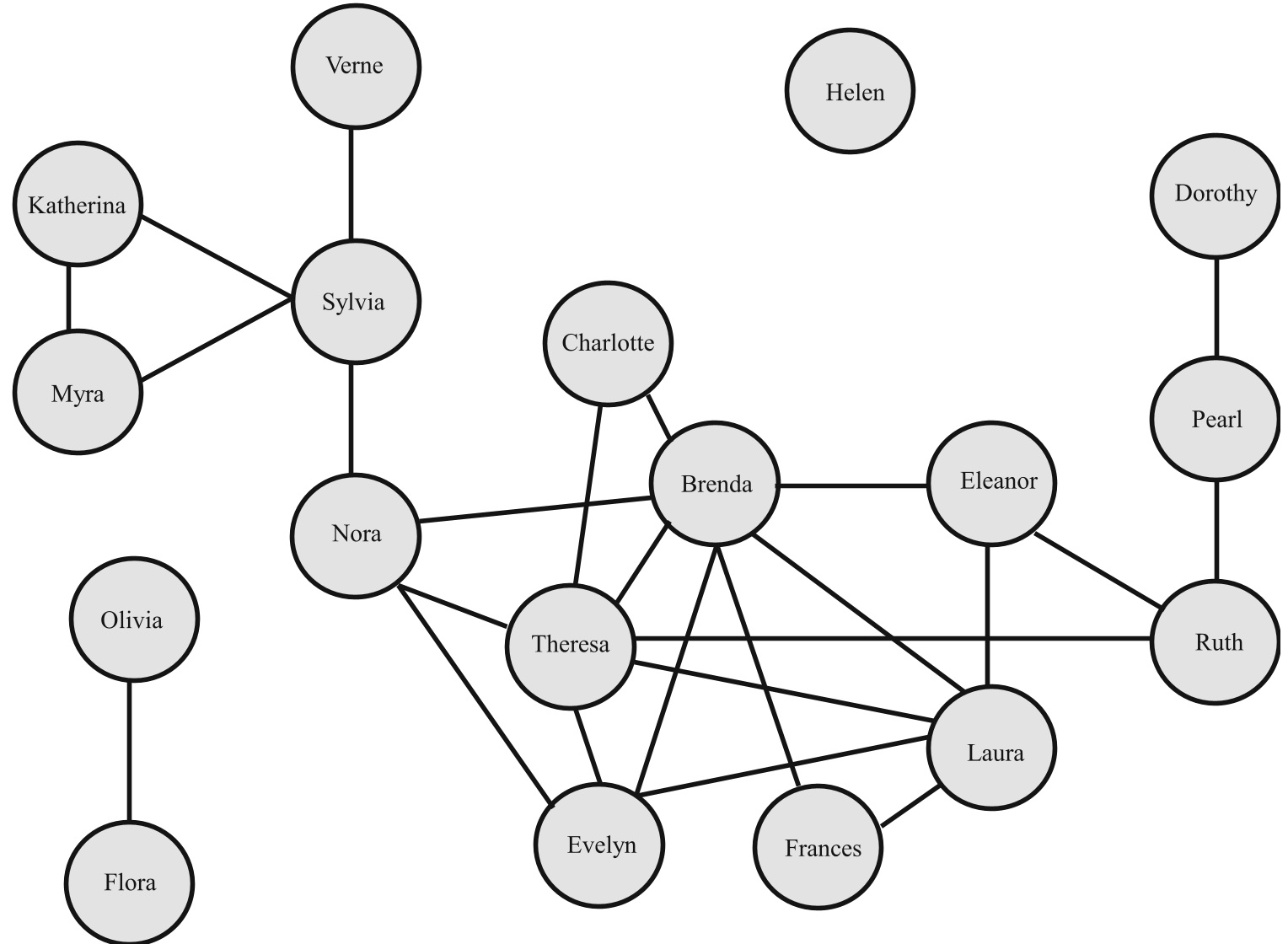 Figure 3: Visualizing the Hellinger distance matrix in Euclidean space to identify behavioral clusters.