
HM-Model: Minimizing the Price of Viral Entry in Social Networks
A Heuristic Mixed Model for Viral Marketing Cost Minimization in Social Networks
This paper introduces a Heuristic Mixed (HM) model to solve the Viral Marketing Cost (VMC) minimization problem by combining Reverse Independent Cascade (RIC) and Reverse Linear Threshold (RLT) models. The approach identifies the minimum set of influencers needed to activate target seed nodes, effectively outperforming existing reverse influence maximization (RIM) benchmarks.
TL;DR
Most viral marketing research asks: "How many people can I reach with these seeds?" This paper flips the script to ask: "What is the cheapest way to activate these seeds in the first place?" By introducing the Heuristic Mixed (HM) model, the authors reduce the cost of seed activation by up to 300% compared to previous methods by cleverly combining reverse-engineered diffusion models with greedy optimization.
Background: The Hidden Cost of "Free" Samples
In classical Influence Maximization (IM), we assume we give freebies to influential users to start a chain reaction. But in the real world, "influencers" are expensive. The Reverse Influence Maximization (RIM) problem treats seed activation not as a starting point, but as a destination. The goal is to find the minimum number of "pioneer" nodes required to trigger the desired influencers.
The Problem: Why Previous RIM Models Fail
Prior work like R-RIM or RLT-RIM often relied on random selection or simple thresholds, leading to:
- High Costs: Selecting nodes that aren't efficient at spreading influence upstream.
- Termination Issues: Difficulty in deciding when the "reverse" activation is sufficient.
- Complexity: Traditional greedy algorithms for these NP-hard problems are often too slow for massive networks like Epinions.
Methodology: The Heuristic Mixed (HM) Approach
The HM model operates on a "divide and conquer" intuition across two distinct phases:
Phase 1: Partial Cost Estimation (RIC)
The authors modify the Independent Cascade model into Reverse IC (RIC). For every potential in-neighbor of a seed node, the model simulates a reverse "coin toss" to see how many nodes would be needed to activate that specific neighbor. This provides a "price tag" for every entry point into the network.
Phase 2: Greedy Heuristic Optimization (RLT)
Once the "price tags" (partial costs) are known, the model uses a Reverse Linear Threshold (RLT) mechanism. Instead of just picking the most popular node, it uses a composite weight: Where is a heuristic inversely proportional to the cost. It prioritizes nodes that are highly influential yet cheap to activate.
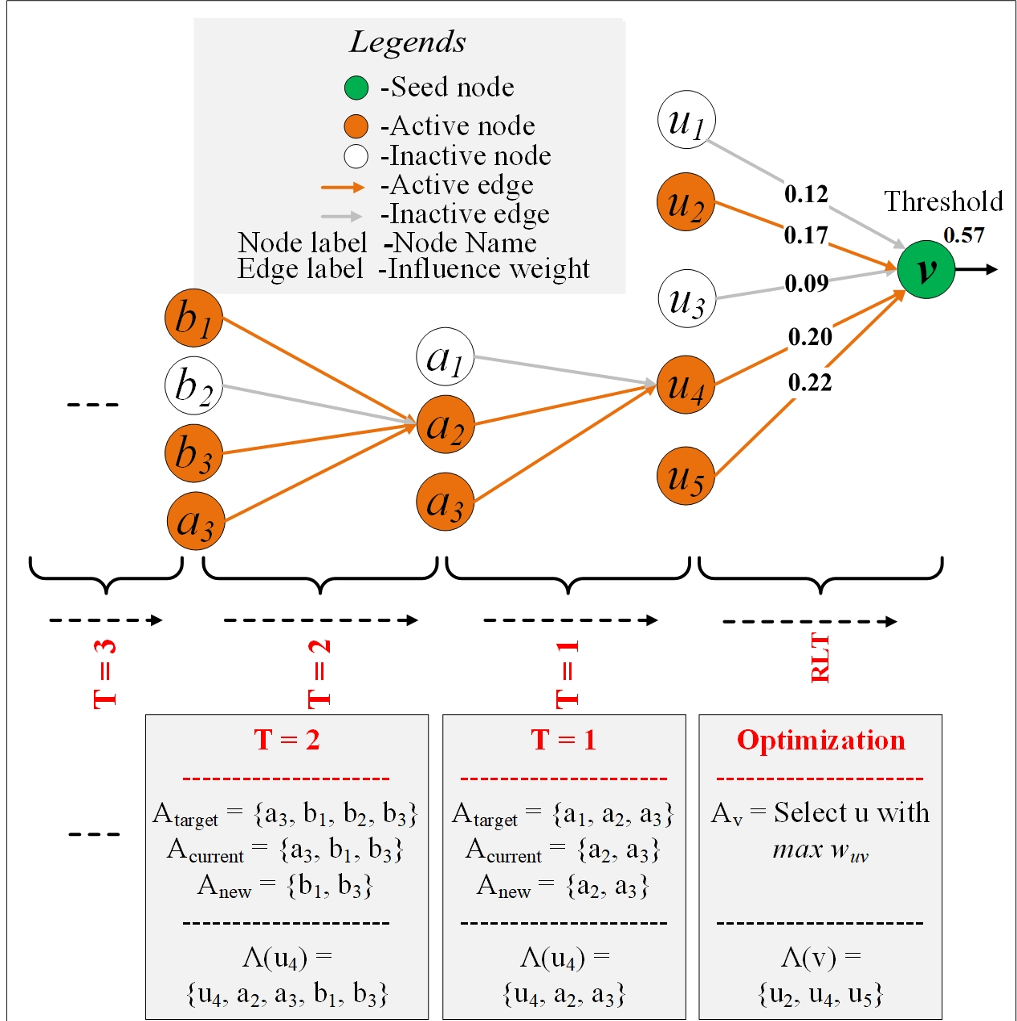 Figure 1: The dual-phase workflow of the HM model, showing how RIC and RLT are interleaved to find the optimal VM cost.
Experimental Results: Better, Faster, Cheaper
The authors tested the model on the Epinions (75k nodes) and Facebook (4k nodes) datasets.
- Cost Efficiency: The HM model consistently delivered the lowest Viral Marketing Cost (VMC). In some scenarios, it achieved the target activation with 1/3 the number of nodes required by random-based models.
- Computational Trade-off: While the Random RIM (R-RIM) is faster (due to its simplicity), its results are poor. The HM model is significantly faster than the complex RLT-RIM while providing superior cost savings.
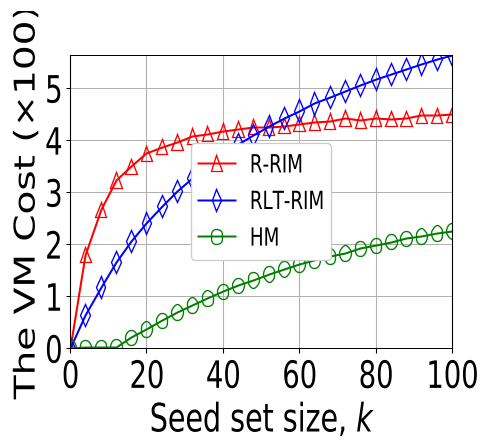 Figure 2: Performance comparison showing the dramatic reduction in VM cost across different seed sizes.
Critical Analysis & Future Outlook
The beauty of the HM model lies in its Inductive Bias: it recognizes that influence is not just a structural property (degree centrality) but a resource-management problem. By assigning an "activation cost" to every node, it transforms a social topology problem into a variation of the Knapsack Problem, achieving a provable 2-approximation bound.
Limitations:
- The model assumes a static network. In real viral marketing, edges (relationships) can be dynamic.
- The parameter (balancing heuristic vs. social weight) is currently set manually (0.5); an adaptive based on network density could further improve results.
Conclusion: This work shifts the focus of social network marketing from "maximum reach" to "maximum ROI." For startups with limited budgets, the HM model provides a mathematical roadmap to trigger high-value influencers without breaking the bank.