
Beyond Reach: Optimizing the Speed of Social Contagion via Heuristic Search
Heuristic search for optimizing diffusion of influence in a social network under the resource constraint
This paper addresses the "Complete Influence Time (CIT)" minimization problem in social networks under budget constraints. It introduces a modified A* heuristic search algorithm using an "incremental chance model" to find an initial target set that minimizes the expected time for information or influence to saturate the entire network.
TL;DR
Information doesn't just need to spread far; it often needs to spread fast. This paper tackles the Complete Influence Time (CIT) minimization problem. By moving beyond simple greedy algorithms and employing a modified A search* with novel heuristic functions, the authors provide a way to find the optimal "seed" group in a social network that ensures the entire population is influenced in the shortest time possible, even when different individuals cost different amounts to influence.
The "Greedy" Trap in Social Networks
In viral marketing, we usually assume the more people we influence, the better. But what if the goal is 100% adoption as quickly as possible? Current SOTA methods often use Greedy Algorithms. While greedy works well when every "seed" node costs the same, it fails miserably under Resource Constraints.
Imagine a network where a central hub is very expensive to influence but has high reach, while a cluster of smaller nodes is cheap. A greedy algorithm might blow the whole budget on the hub, only to find that the "social ripples" take forever to reach the periphery. The authors demonstrate that in such scenarios, a simple greedy choice leads to a massive delay in total network saturation.
Methodology: A* Meets Social Contagion
1. The Incremental Chance Model
The authors utilize the Incremental Chance Model. Unlike binary threshold models, here the probability of an inactive node becoming active increases progressively with the number of influenced neighbors. Influence is "dominant" and "progressive"—once you're in, you're in.
2. The Search Tree Transformation
To solve the optimization, they treat the selection of the "target set" (seeds) as a Tree Search Problem:
- Root: An empty set of seeds.
- Nodes: Subsets of individuals.
- Edges: Adding one more individual to the seed set.
- Goal: A set that utilizes the budget such that no more nodes can be added.
3. Heuristic Design:
The heart of the paper is the A* estimation function.
- : The estimated expected CIT for the current set. They use Stochastic Simulation (Monte Carlo) for accuracy or a Lower Bound () for speed.
- : The potential reduction in time if we add more nodes. They propose the Most-Social Strategy, which identifies the remaining "budget-friendly" nodes with the highest sociality.
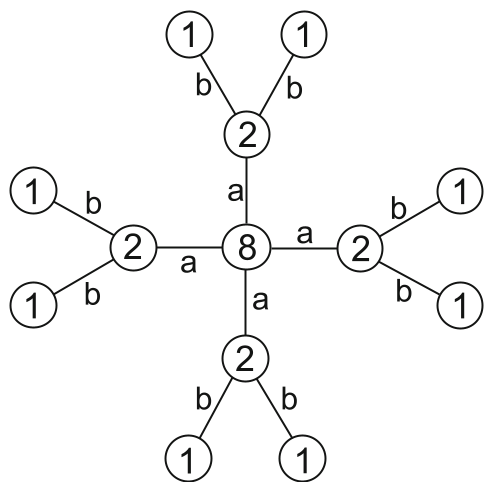 Figure 1: The A search process avoids the 'local optima' of greedy selection by exploring promising branches of seed combinations.*
Experimental Insights
The researchers tested their algorithm against standard benchmarks: High-Degree, High-Weight, and Greedy heuristics.
- Performance: The A* algorithm (using simulation-based heuristics) consistently achieved lower CIT across Random, Cascade, and Sociality-based cost models.
- Robustness: As the budget increases, the gap between A* and Greedy remains significant, proving that A* is better at finding the "synergistic" nodes that accelerate spreading.
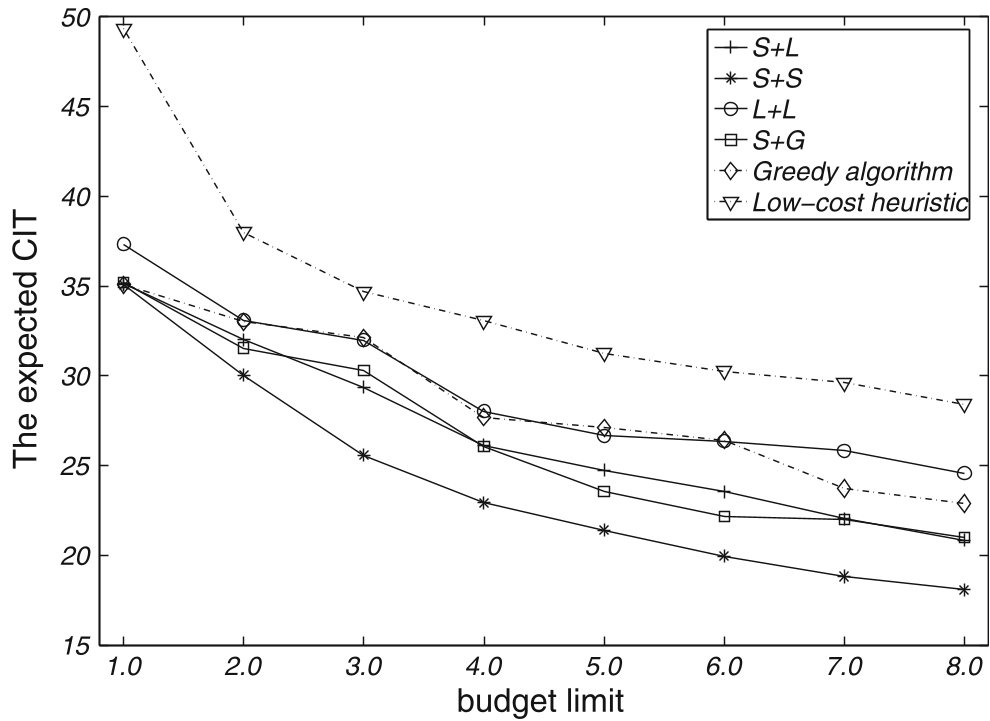 Figure 2: Comparison of Expected CIT across different budget limits. The A (S-S strategy) consistently stays below the greedy baseline.*
Critical Analysis: The Price of Precision
The primary trade-off here is Efficiency vs. Efficacy. As reported in their runtime analysis, the A* algorithm (especially using Monte Carlo simulation for ) is significantly slower than a greedy pass.
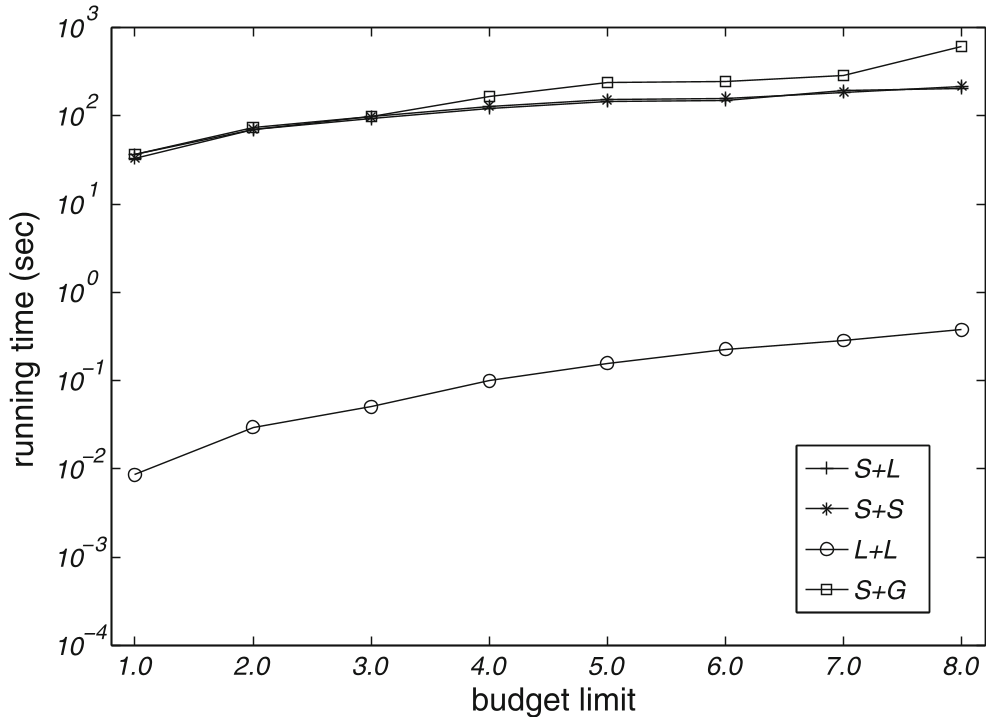 Figure 3: Runtime costs of various A configurations. High-quality heuristics (G*-based) require more node expansions.*
Takeaway: This method is ideal for "high-stakes" influence tasks—such as a government deploying a public health campaign or a brand launching a once-a-year product—where the cost of a few hours of extra computation is negligible compared to the value of saturating the market days or weeks earlier.
Conclusion
This paper shifts the focus of social network optimization from "How many?" to "How fast?". By leveraging A* search, it proves that even simple stochastic spreading processes have deep structural properties that can be exploited for timing-critical applications. Future work in Evolutionary Algorithms or specialized Graph Neural Networks may further reduce the computational overhead of these search-based methods.