
Hidden Champions: Solving the Rural Recruitment Crisis with Family-Centric UX
Hidden Champions: A Study on Recruiting Top-Level Staff in Rural Areas
This study investigates how "Hidden Champions" (highly successful SMEs in rural areas) can attract top-level talent from Generation Y. It introduces FAMIGO, a family-oriented information platform integrated into corporate recruiting sites to bridge the information gap regarding rural living conditions.
TL;DR
Rural "Hidden Champions"—market-leading SMEs—often lose the "war for talents" not because of their jobs, but because of their geography. This research introduces a family-oriented information ecosystem that integrates local infrastructure data (schools, childcare, leisure) directly into the recruitment funnel. Experimental results confirm that this transparency significantly boosts employer attractiveness and eases the psychological burden of relocation for Generation Y.
The "Rural Penalty" in Modern Recruiting
In the globalized market, highly qualified professionals are increasingly gravitating toward urban centers with robust social infrastructures. For Germany's "Hidden Champions"—SMEs that are world market leaders but located in rural areas like the Black Forest—this creates a "squeezing bottleneck."
The problem isn't the prestige of the company; it's the information gap. While companies invest heavily in "Recrutainment" and digital contracts, they forget that a job offer for a professional is a life-change offer for a family. If an applicant has to scour Google Maps and Wikipedia to find a Waldorf school or a kindergarten near your headquarters, you've likely already lost them.
Methodology: Bridging the Applicant Service Gap
The authors propose a solution called FAMIGO, a centralized content hub that connects municipalities, associations, and businesses.
1. The Platform Architecture
The system is designed as a White Label Service. Instead of forcing applicants to leave the corporate career site, FAMIGO uses REST/JSON APIs to embed regional data directly into the job listing.
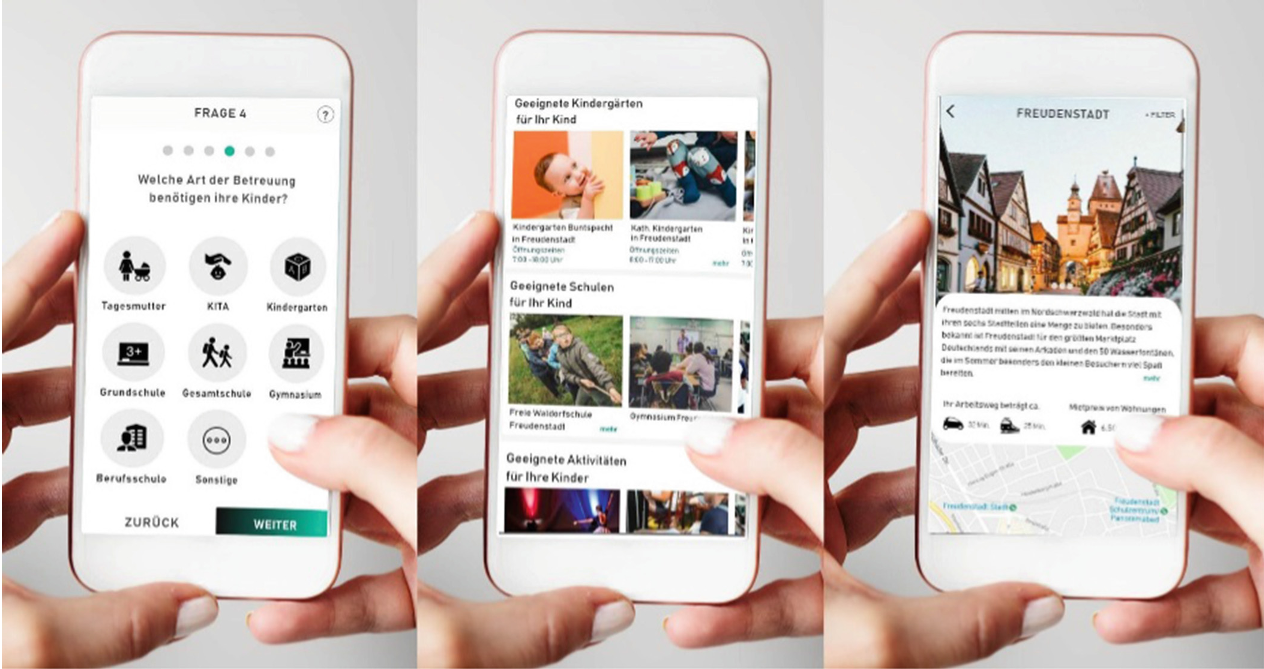 Figure 1: The mobile prototype tailored for a corporate career portal (Hansgrohe example).
2. The UX Study: Pragmatic vs. Hedonic Quality
Using the AttrakDiff2 model, the researchers measured two dimensions of the user experience:
- Pragmatic Quality (PQ): Is the tool useful and easy to use?
- Hedonic Quality (HQ): Does the tool stimulate the user and contribute to their identity/image?
Key Findings: Data-Driven Insights
The study conducted a survey of 208 individuals, primarily focused on Generation Y (born 1980–2000), yielding several critical insights for HR departments:
- The Early Search Signal: 62% of applicants examine the location at the first view of the job advertisement. For parents, this is even more critical (p < .01).
- Desktop is Not Dead: Despite the mobile-first trend, 63% of users still prefer a desktop PC for serious job searching, suggesting that recruiting platforms must remain cross-platform optimized.
- Employer Brand Perception: Participants noted that providing this platform made the employer seem more "innovative," "family-friendly," and "interested in the employee's personal well-being."
Portfolio Matrix Results
The evaluation via the AttrakDiff2 portfolio matrix categorized the prototype as "Desired".
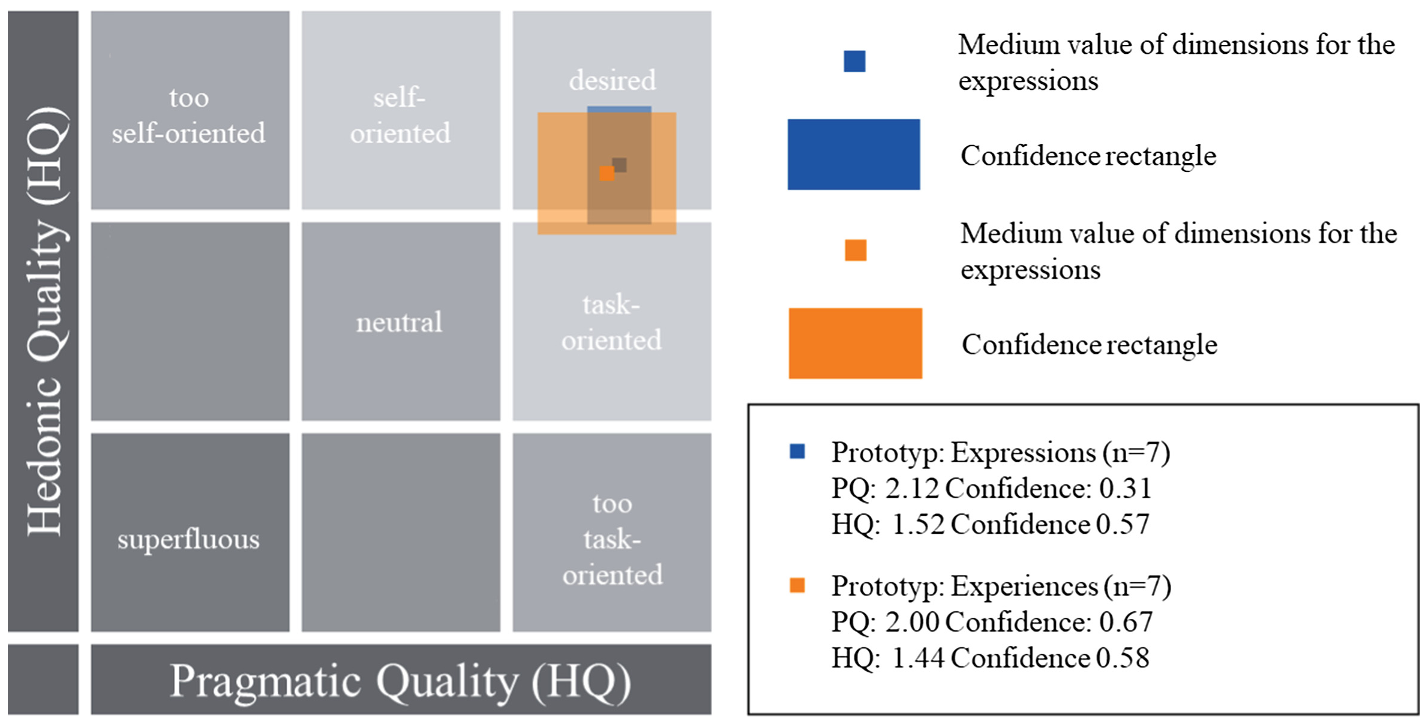 Figure 2: The Portfolio Matrix shows the prototype moving toward the "Desired" quadrant, indicating high pragmatic utility.
Critical Analysis: Why This Matters
The researchers identified a fascinating paradox (Finding 4): while parents find the information most useful, they are also the most skeptical. This suggests that "location marketing" cannot be mere PR—it must be high-quality, authentic, and data-rich.
Strategic Recommendations for Rural SMEs:
- Integrate Location Early: Don't hide the "About our Region" section in a submenu; put it on the job listing.
- Focus on "Hard" Transitions: Schools and childcare are the #1 priority for top-level staff.
- The Privacy Trade-off: Gen Y is willing to share personal family data if it results in personalized, valuable local insights (e.g., specific sports clubs for their children).
Conclusion & Future Outlook
This paper elevates "Recruiting" from a Human Resources task to a "User Experience" challenge. The success of Hidden Champions in the 2020s will depend on their ability to market their ecosystem as effectively as their products. While this study focused on Germany, the framework is a blueprint for any rural industrial hub globally—from the American Midwest to regional Japan—struggling to attract the next generation of leadership.
Takeaway: Your next lead engineer isn't just looking for a salary; they are looking for a community. If your website only talks about the salary, you are already behind.