
Decoding Collective Moods: A Hierarchical Approach to Group-Level Emotion Recognition
8527_Hierarchical Group-Level Emotion Recognition.
The paper proposes a novel Hierarchical Group-Level Emotion Recognition framework that decomposes the three-class classification task (Positive, Neutral, Negative) into a two-stage process. By integrating visual attention for face filtering and object-aware scene context, the method achieves SOTA performance on the GAF2 (80.41% UAR) and GAF3 datasets.
TL;DR
Recognizing the emotion of a crowd is significantly harder than individual face analysis. This paper introduces a hierarchical classification framework that first filters out obvious "Positive" expressions using visual attention and then dives deep into the semantic scene context—like identifying specific objects—to distinguish the fine line between "Neutral" and "Negative" group atmospheres.
Background: Why Group Emotions are Tricky
Most AI models try to classify a group as Positive, Neutral, or Negative all at once. However, the authors observe a fundamental flaw: while happy groups often smile (Positive), groups in a "Neutral" state and those in a "Negative" state (e.g., at a protest or a funeral) often share similar, dampened facial expressions. Using only faces leads to confusion.
The Hierarchical Insight
The core "Aha!" moment of this research is in the workflow. Instead of a one-shot guess, the system acts like a filter:
- Stage 1 (Facial Focus): Use facial expressions to identify "Positive" images. If the model sees broad smiles, it's done.
- Stage 2 (Context Focus): If it's not clearly positive, the model shifts focus from faces to the environment. It looks for discriminative objects (e.g., a "cake" suggests positivity, while a "protest sign" might suggest neutral/negative) to break the tie.
Methodology: The Technical Core
1. Visual Attention & Main Subject Estimation
Not every face in a crowd contributes to the "group mood." Background bystanders can be noise. The authors use a CASNet to generate a saliency map, determining which people are the "Main Subjects." They then apply Spectral Clustering to group these key individuals.
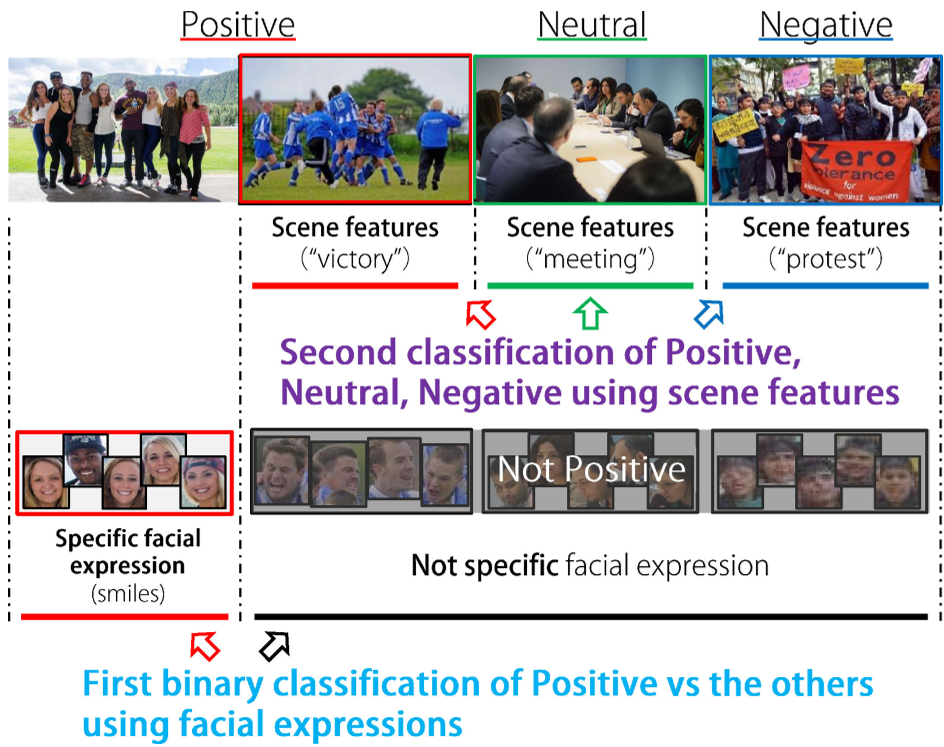 Fig 1: The overarching hierarchical pipeline showing the leap from Facial Features to Scene Features.
2. Semantic Scene Analysis (PLS & VIP)
For the second stage, the authors don't just look at the "background." They detect objects (Faster R-CNN) and use Partial Least-Squares (PLS) Analysis to calculate Variable Importance in Projection (VIP) scores. This determines which objects (like "dress" for weddings vs "sign" for protests) are statistically significant for identifying an emotion.
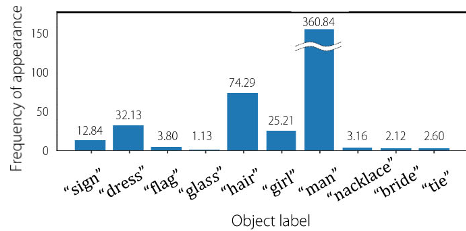 Fig 2: Estimating main subjects and discriminative objects. Notice how red boxes highlight subjects/objects with higher emotional weight.
Experimental Battleground
The model was tested on GAF2 and GAF3 (EmotiW datasets).
- The Results: Achieving 80.41% UAR (Unweighted Average Recall), this method outperformed various LSTM and GRU-based models.
- Why it worked: The confusion matrices show a massive jump in "Negative" and "Neutral" accuracy. Without the hierarchy, the model was essentially flipping a coin between those two labels.
 Table 1: Competitive performance against other SOTA methods.
Critical Analysis & Limitations
While the hierarchy is brilliant, the authors honestly point out limitations. The system can be "fooled" by non-human faces—like a poster of a smiling face at a serious event. Since the face detector treats posters as real people, the visual attention weight shifts incorrectly. Future integration of "Face Liveness Detection" is suggested as the remedy.
Conclusion: The Path Forward
This work demonstrates that group-level understanding requires a fusion of Subject-centric attention and Semantic environmental context. Moving forward, adding "Group Cohesion" (how closely people are interacting) could be the final piece of the puzzle for truly human-like emotional intelligence in AI.
Takeaway for Practitioners: When your multi-class problem has overlapping feature spaces (like Neutral vs Negative faces), consider a hierarchical split to specialized classifiers.