
HMCP-ABE: Solving the "Single Point of Failure" in Mobile Friend Discovery
Hierarchical Multi-Authority and Attribute-Based Encryption Friend Discovery Scheme in Mobile Social Networks
This paper introduces a Hierarchical Multi-Authority CP-ABE (HMCP-ABE) scheme for privacy-preserving friend discovery in Mobile Social Networks (MSNs). By decentralizing attribute management through a multi-layer authority structure, it achieves fine-grained access control and removes reliance on a single trusted entity.
TL;DR
In the world of Mobile Social Networks (MSNs), applications like WeChat or "My Life Here" often expose personal profiles to facilitate friend discovery. This paper proposes a Hierarchical Multi-Authority CP-ABE (HMCP-ABE) scheme. By shifting from a centralized authority to a tiered management system, the authors slash encryption overhead by 50% and eliminate the catastrophic risk of a single-point system failure.
The Bottleneck: Why One Master Key is a Mistake
Current privacy-preserving friend matching typically relies on an Attribute-Based Encryption (ABE) system managed by a Single Trusted Authority (TA). While functional, this architecture has three fatal flaws:
- Single Point of Failure: If the TA is hacked, the master key is leaked, and every user's profile becomes readable.
- Performance Congestion: A central server managing thousands of attributes and millions of keys becomes a massive bottleneck.
- Lack of Scalability: Localized social groups (e.g., a specific school or city) shouldn't need a global authority to manage their specific subsets of attributes.
Methodology: Tiered Management and Secret Sharing
The core innovation lies in a "Divide and Conquer" strategy for attribute management.
1. Hierarchical Architecture
The system is divided into three main layers:
- Trusted Authority (TA): Performs global initialization and manages top-level Attribute Authorities (AAs).
- Attribute Authority (AA): Manages specific subsets of attributes (e.g., location, hobbies, occupation) and issues keys to users.
- Users (Alice & Bob): Alice encrypts her profile using an access tree, and only a Bob who satisfies the conditions (multi-authority attributes) can decrypt it.
2. Mathematical Intuition
The scheme leverages Shamir's Secret Sharing to ensure that the master key shares are distributed. It uses Bilinear Mappings (Pairing-based cryptography) to enforce the logic that "Attributes = Keys."
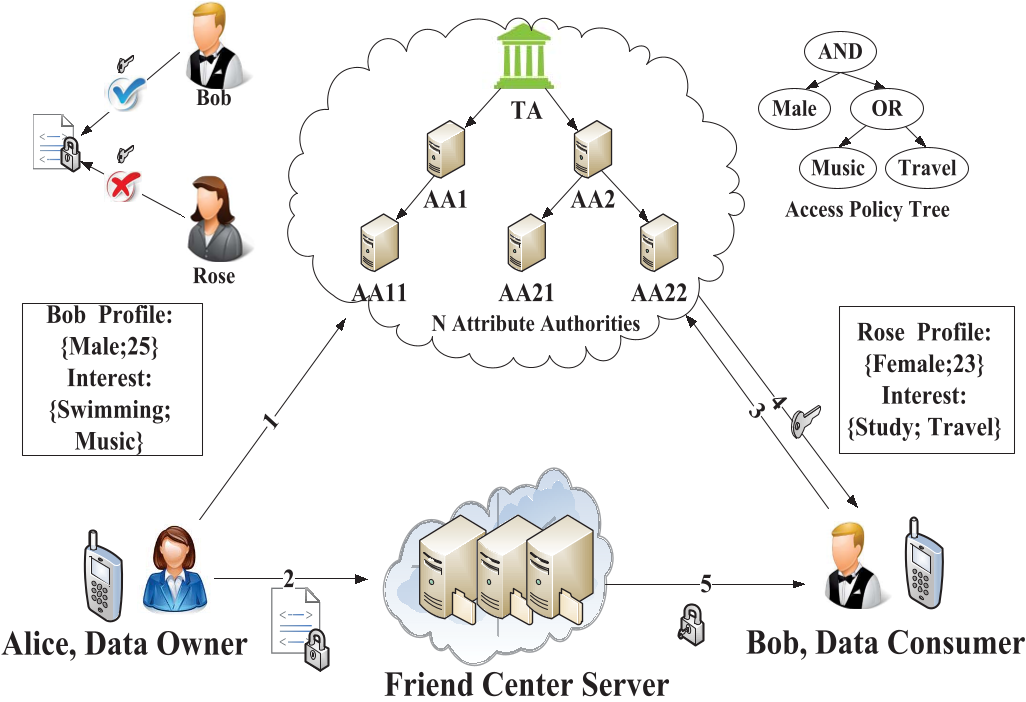 Figure 1: Mathematical foundation of Bilinear Groups used for secure mapping.
The user's secret key is uniquely tied to their Global Identifier (GID) across multiple authorities, preventing "collusion attacks" where two users combine their attributes to cheat the access policy.
Experimental Performance: Efficiency Gains
The authors measured their prototype against established benchmarks like the Chase and Li protocols.
Faster Initialization & Key Generation
Because the TA only defines the hierarchy and doesn't manage Every. Single. Attribute., the system setup is nearly instantaneous. Key generation is decentralized—each AA only calculates secret keys for its specific domain, parallelizing the workload.
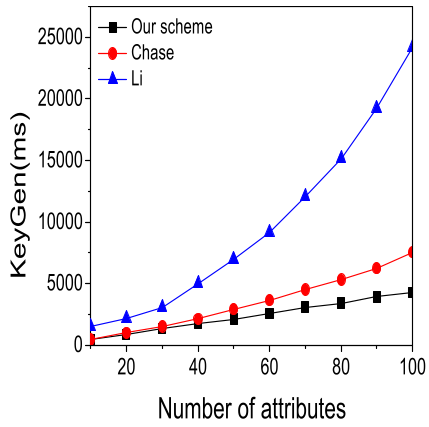 Figure 2: Performance comparison showing significantly lower initialization and key generation time compared to SOTA.
Mobile-Friendly Decryption
A major highlight is the Decryption Delegation. The scheme allows complex pairing operations to be offloaded to a "Friend Server" without revealing the underlying data. This results in:
- 50% faster encryption than Li et al.’s protocol.
- Minimal overhead as the number of attributes increases (scaling linearly rather than exponentially).
Critical Insight & Future Outlook
The HMCP-ABE scheme successfully transitions ABE from a theoretical cryptographic primitive to a practical tool for mobile networks. By using character attribute subsets, the system mirrors real-world organizational hierarchies.
Limitations: While it solves the "Single Point of Failure" for security, it still assumes the TA is "fully trusted" for initial distribution. Future work could integrate Blockchain to create a truly leaderless authority system where even the TA's actions are recorded on an immutable ledger.
Takeaway
For developers of privacy-centric social apps, the message is clear: Don't centralize your keys. Using a multi-authority, hierarchical attribute system not only makes your network unhackable from a single point but also makes it significantly faster for the end-user.