
Beyond the Clickstream: Advanced Event Detection and User Classification in Social Networks
High-Level Automatic Event Detection and User Classification in a Social Network Context
The paper presents a comprehensive framework for high-level automatic event detection and user classification in online social networks (OSNs). Based on an extended temporal relational algebra called ISEQL, it enables the identification of complex behaviors like spamming or fake accounts through a three-layer architecture and intuitive graphical user interfaces.
TL;DR
Researchers have developed a smart, interactive framework that transforms raw social network logs into high-level behavioral insights. By leveraging an extended temporal relational algebra (ISEQL), the system allows users—even those without coding expertise—to define and detect complex events like spamming or identity faking using intuitive visual tools.
Background & Positioning
In the world of Big Data, we are drowning in logs but starving for knowledge. Current Social Network Analysis (SNA) often relies on statistical metrics (access frequency, session duration) or Markov Chains. While useful, these methods struggle to represent the "geometry" of time—how different actions overlap, follow, or contain one another. This paper bridges that gap by positioning itself as a semantic bridge between raw data crawling and high-level behavioral modeling, moving from "what the user clicked" to "what the user is doing."
The Problem: The Abstraction Gap
Most existing tools for detecting harmful activities (like spamming) are "black boxes" or require heavy mathematical background to configure. There is a distinct lack of tools that:
- Handle the temporal relationship between actions (e.g., "The user started sharing content during a session that lasted less than 5 minutes").
- Provide an interactive UI for forensic investigators to define new threat models on the fly.
Methodology: The Power of Intervals
The core innovation lies in treating user actions not as points in time, but as intervals. The system uses a three-layer architecture to refine data:
- OSN Crawler: Collects raw timestamped actions (logins, shares, messages).
- Interval Action Detector: Groups raw actions into "Medium-Level" events (e.g., a series of "likes" becomes a "Like Activity" interval).
- High-Level Event Detector: The "brain" of the system where ISEQL (Interval-based Surveillance Event Query Language) resides.
Architecture Overview
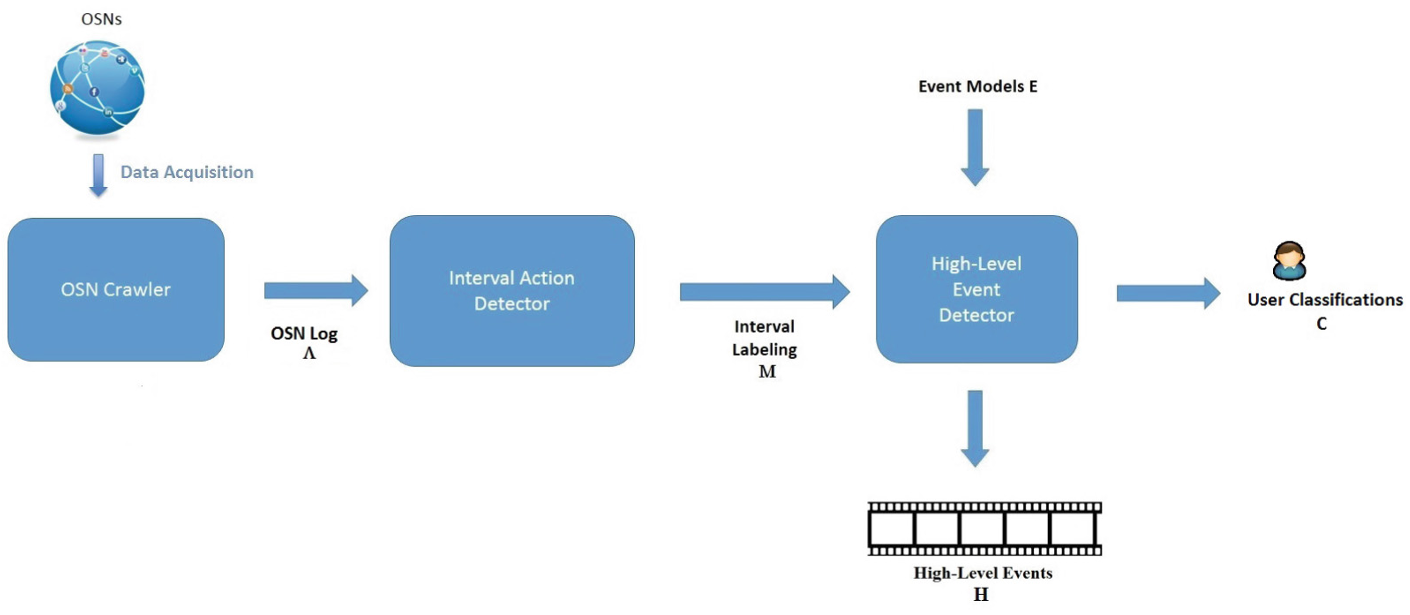 Fig 1: The three-layer approach from raw data to high-level classification.
The authors introduced two critical operators to the ISEQL engine:
- Cardinality: Checking if an action occurs at least times within another interval (e.g., >5 shares within one session).
- Overlap Percentage: Measuring how much of an interval is "consumed" by an activity (e.g., if >80% of a session is spent sharing links, it's likely a bot).
Visualizing Logic
Instead of writing complex SQL or code, users use a Temporal Canvas. By drawing blue bars (representing intervals) and defining their relationships (Overlap, During, Before, etc.), the system automatically generates PostgreSQL stored procedures to scan the database.
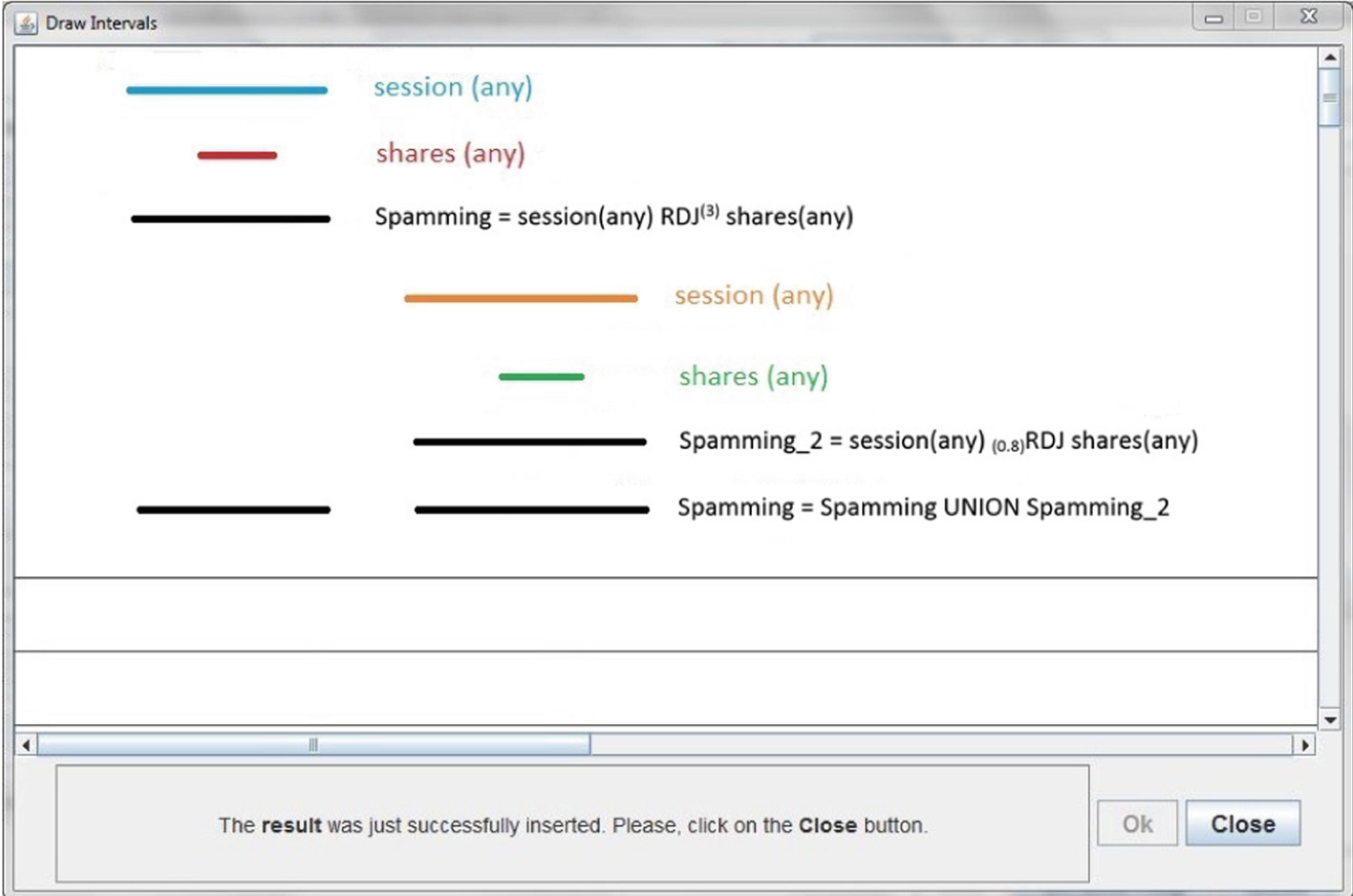 Fig 2: The GUI for defining a Spamming event model.
Experiments & Results
The framework was tested on a real-world Facebook dataset spanning two years. The researchers successfully defined "Spammer" and "Fake User" categories:
- Spammers: Identified via the new cardinality and overlap constraints.
- Fake Users: Users whose sessions predominantly fall into "Inactive" categories (no significant high-level events detected).
The system demonstrated its versatility by operating in two modes:
- Offline Mode: Useful for forensic investigations into historical data.
- Online Mode: Processing time-stamped data as it is generated, acting like a continuous query engine.
Critical Insight & Conclusion
Takeaway
The true value of this work is the democratization of complex event detection. By moving the logic into a relational algebra framework, the authors ensure that the detection is not only fast (leveraging database optimizations) but also explainable. You know exactly why a user was flagged as a spammer because you can see the temporal logic that triggered it.
Limitations & Future Work
While powerful, the current implementation relies heavily on PostgreSQL stored procedures. As social networks scale to billions of events, even the most optimized SQL may struggle. The authors' future plan to implement "plane-sweeping interval join algorithms" directly into the DBMS kernel is a necessary step for true real-time performance at scale. This framework paves the way for a more interactive and transparent approach to social network security.