
High-Performance Emotion Recognition: Bridging Deep Learning and Real-Time Robotics
High-performance and lightweight real-time deep face emotion recognition
This paper presents a high-performance Facial Emotion Recognition (FER) system leveraging a fine-tuned VGG-Face CNN and a robust pre-processing pipeline. By utilizing transfer learning and affine transformations for face alignment, the authors achieved competitive performance (69.8% accuracy on FER dataset) suitable for real-time Human-Computer Interaction (HCI) on low-performance robotics platforms like TurtleBot.
TL;DR
Recognizing human emotions in real-time is a holy grail for Human-Computer Interaction (HCI). This paper demonstrates a lightweight yet powerful approach to Facial Emotion Recognition (FER) by combining VGG-Face transfer learning with an optimized pre-processing pipeline. The authors achieved a benchmark-matching 69.8% accuracy and deployed the system successfully on low-power TurtleBot units using a distributed client-server architecture.
Problem & Motivation: The "In-the-Wild" Challenge
Deep learning has revolutionized computer vision, but FER remains a "hard" problem. Unlike controlled laboratory datasets (like CK+), "in-the-wild" data (like FER and AFEW) features unpredictable lighting, occlusions, and varying head poses.
The authors identified two major bottlenecks:
- Data Scarcity: Emotions are complex; training a deep CNN from scratch requires millions of annotated images which are rarely available for specific emotion sets.
- Hardware Constraints: Robots like the TurtleBot carry low-power CPUs (e.g., Intel i3) that cannot natively handle the billions of FLOPs required by modern CNNs at 30 FPS.
Methodology: Precision Alignment and Transfer Learning
The core innovation lies in the synergy between geometric pre-processing and deep feature extraction.
1. The Pre-processing Pipeline
Instead of feeding raw crops into the CNN, the authors utilized Facial Landmark Detection. By detecting 68 key points (eyes, mouth, nose), they applied an Affine Transformation. This ensures that the eyes and mouth of every subject are in the exact same pixel coordinates, effectively removing "pose noise" before the neural network even sees the image.
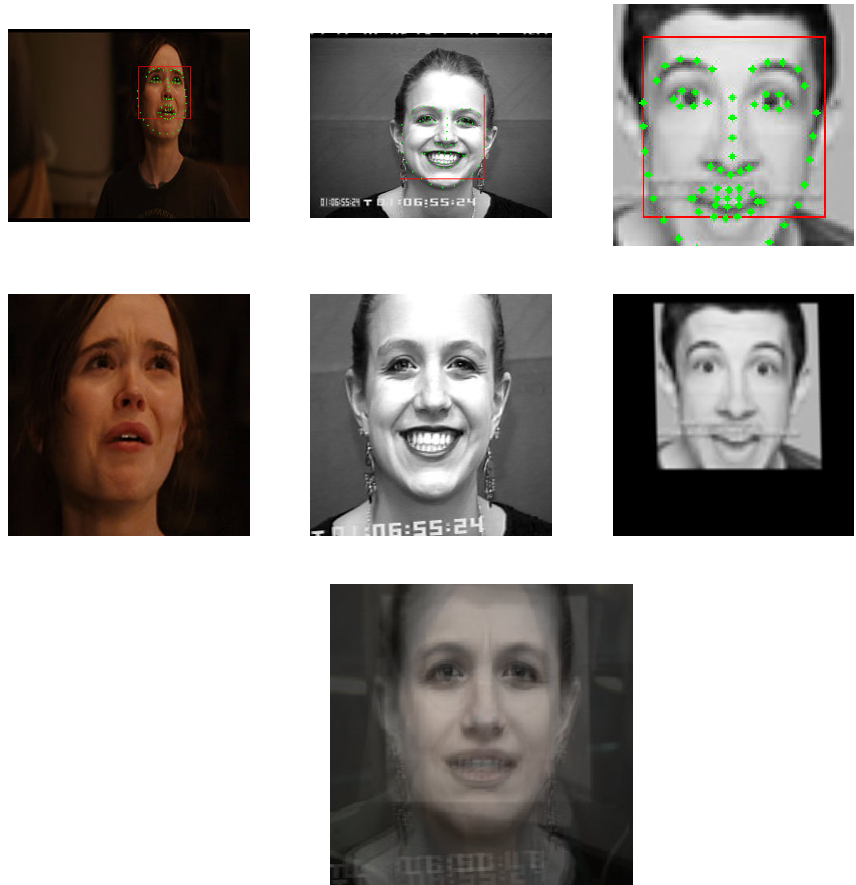 Fig 1: Superior alignment results using affine transformations to reduce intra-class variance.
2. Architecture: Standing on the Shoulders of Giants
The authors leveraged VGG-Face, a model pre-trained on 2.6 million celebrity faces. Their insight was that the early layers of a face-recognition model already "know" how to describe facial geometry.
- Frozen Layers: The convolutional layers were kept as feature extractors.
- Fine-Tuning: They replaced the final classification layers with a 7-way Softmax (Anger, Disgust, Fear, Joy, Neutral, Sadness, Surprise) and fine-tuned only the dense layers at a reduced learning rate (3%).
Experiments & Results
The model was rigorously tested across three major datasets: AFEW, FER, and CK+.
| Dataset | Test Accuracy | Note |
|---|---|---|
| FER | 69.8% | Matches top human-level challenge contestants |
| AFEW | 32.7% | Low due to extreme movie-scene complexity |
Despite the FER dataset using 48x48 grayscale images (while VGG-Face was designed for 224x224 RGB), the transferred features proved remarkably robust. The confusion matrix shows that the model is particularly strong at identifying Joy (high precision) but struggles with Fear, likely due to class imbalance in the training data.
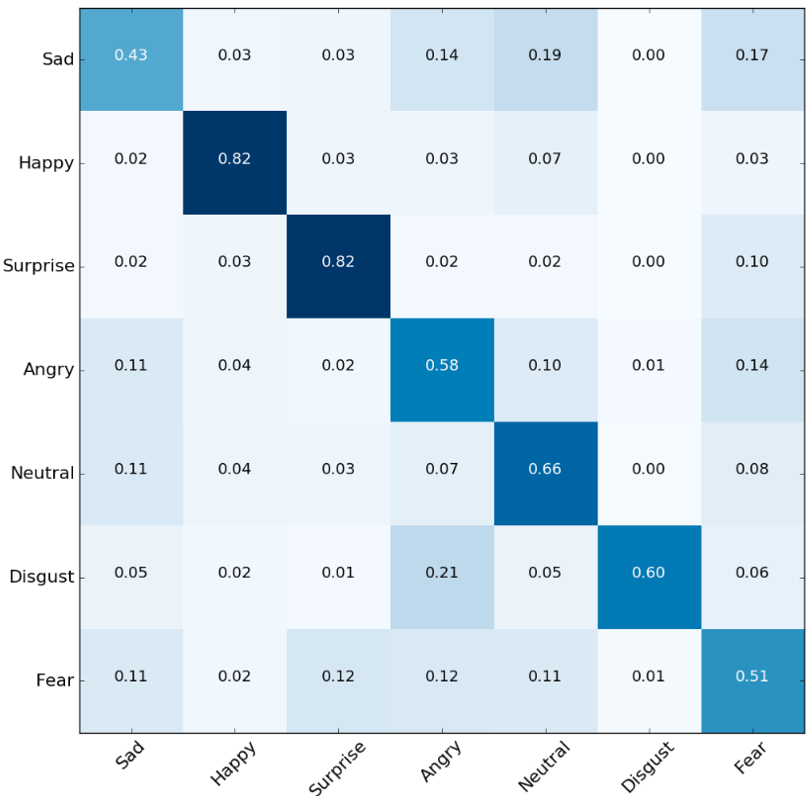 Fig 2: Classification accuracy across different emotional states.
Real-Time Implementation: Client-Server Logic
To make this viable for robotics, the authors designed a split system:
- Client (Robot): Handles Face Detection and Correlation Tracking (dlib) which runs at 80ms per frame.
- Server (GPU Workstation): Handles the heavy CNN forward pass (26 FPS).
This architecture allows a mobile robot to "feel" human emotions with a latency of only ~0.34 seconds, enabling responsive social behaviors.
Critical Insight & Conclusion
This work confirms that Inductive Bias—introduced through precise facial alignment—is just as important as model depth. By aligning the data, the network doesn't have to "waste" capacity learning to be pose-invariant; it can focus entirely on the micro-expressions that signal emotion.
Future Outlook: The authors suggest that moving from 2D snapshots to Temporal Analysis (using RNNs or LSTMs) will be the next frontier to distinguish subtle emotions like "Disgust" vs "Fear" that are often lost in static frames.