
History-Guided S-Monitors: Smart Proxies for High-Efficiency Stream Change Detection
History Guided Low-Cost Change Detection in Streams
This paper introduces a history-guided approach for low-cost change detection in data streams using "s-monitors"—simple models that act as proxies for computationally expensive models. By interleaving frequent s-monitor checks with infrequent full model evaluations, the method achieves high detection rates and low latency in applications like subspace clustering and frequent itemset mining.
TL;DR
Monitoring complex changes in high-speed data streams often requires heavy algorithms like subspace clustering or association rule mining, which are too slow for real-time use. This paper presents a History-Guided S-Monitor framework that uses historical data patterns to select "cheap" indicators (s-monitors). By checking these simple indicators frequently and full models infrequently, the system catches more changes with up to 90% lower computational overhead.
Problem & Motivation: The C&C Bottleneck
In the world of data streams, the standard approach is Compute-and-Compare (C&C):
- Generate a complex model for Window 1.
- Generate a complex model for Window 2.
- Compare and to detect shifts.
The fatal flaw? Complexity. Algorithms like MAFIA (subspace clustering) are far too heavy to run at every timestamp. If a change occurs and disappears between your sparse "checkpoints," the system is blind to it. The authors argue that we don't need the whole model to know a change happened; we just need a "smoke detector"—a simple model whose change correlates with the complex one.
Methodology: The Two-Phase Strategy
The core innovation is using History to move beyond random sampling or simple heuristics.
1. Offline Knowledge Acquisition
The system analyzes historical windows using the expensive algorithm. It identifies "causal" rules—for example, "If subspace A became dense last week, subspace B usually changes this week." These are stored as Association Rules with specific confidence scores ().
2. Online Strategic Monitoring
Instead of checking everything, the online phase follows a "Predict-and-Verify" loop:
- Feature Selection: Based on the current model's state, the system picks the top- s-monitors (e.g., specific dimensions or bins) that have the highest probability of changing next.
- Interleaved Checking: It runs many low-cost s-monitor checks (). If an flags a change, it triggers the heavy model () to confirm.
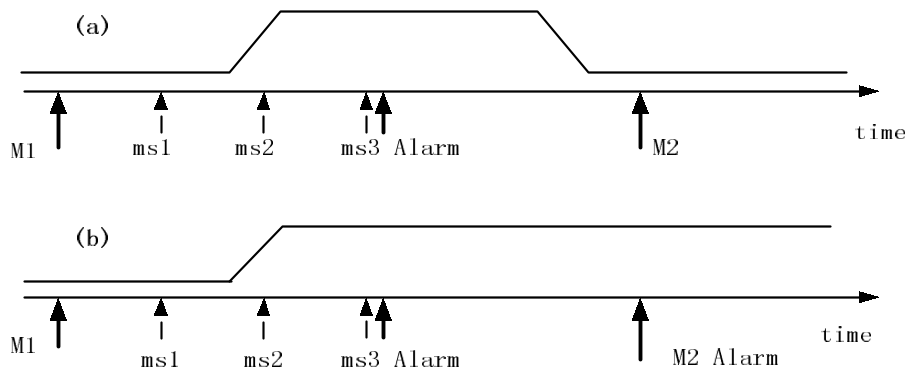 Figure 1: The architecture of the history-guided change detection process, showing the interplay between offline learning and online execution.
Experiments: Real-World Impact
The researchers tested the approach on two distinct domains: Web Server Logs and Retail Data.
Subspace Clustering (Web Logs)
Using the MAFIA algorithm on 4 months of server logs, they found that even with a very small number of s-monitors (40 vs. thousands of possible subspaces), they achieved a success rate of ~90%.
| Strategy | Success Rate | Total Cost (sec) |
|---|---|---|
| Traditional C&C | Low (misses spikes) | 18.0s |
| S-Monitors (40) | 89.6% | ~2.5s |
Retail Data (Sam's Club)
In a distributed retailer scenario, the "s-monitors" were specific local stores. By tracking only 10 out of 130 stores (the "voters"), the system could predict global frequent itemset changes with 85% accuracy, significantly reducing data communication overhead.
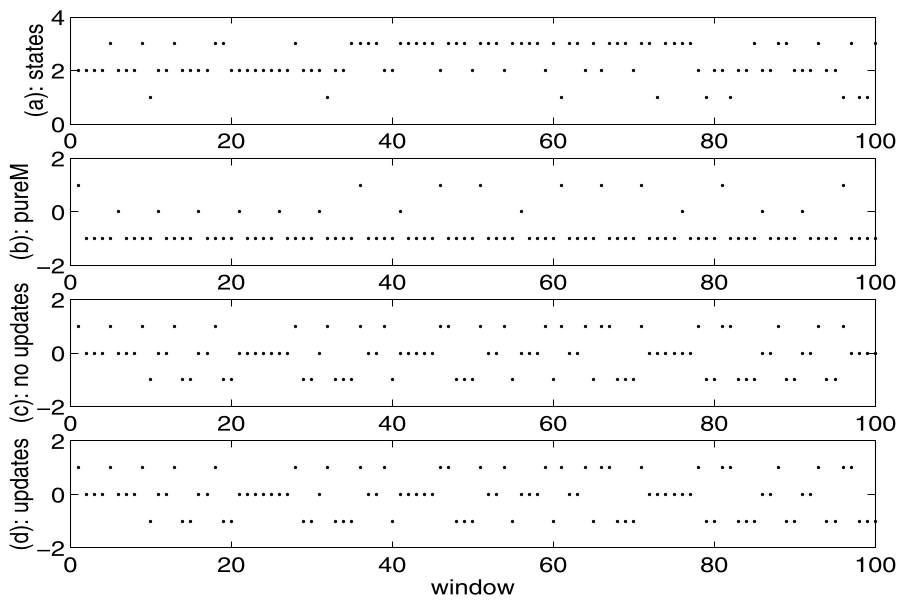 Figure 2: Visualization of change detection. Note how the interleaved approach (C & D) captures significantly more transitions than the sparse expensive checks (B).
Critical Analysis & Conclusion
Takeaway: The "History-Guided S-Monitor" approach proves that statistical correlation in historical data can be weaponized to optimize real-time monitoring. It effectively transforms a massive search problem into a targeted heuristic check.
Limitations:
- Staleness: The knowledge repository can expire. If the stream undergoes a "fundamental" concept drift (where even the causal rules change), the system's accuracy will plummet until it re-learns.
- Granularity: The current model uses discrete windows; adapting this to purely continuous, un-windowed streams may introduce window-boundary artifacts.
Future Outlook: This methodology is a precursor to modern "Model Cascades" in AI. Just as we use a small "distilled" model to flag data for a large LLM today, this paper pioneered using "s-monitors" to guard the gates for heavy data mining algorithms.