
Beyond the First Hop: Enhancing Relational Classifiers via Spreading Activation
Homophily of Neighborhood in Graph Relational Classifier
The paper introduces a method to improve the performance of a Simple Relational Classifier by replacing direct vertex neighborhood acquisition with a local graph ranking algorithm called "Spreading Activation." Tested on the Slovak Companies social network, this approach significantly enhances the "homophily" of the neighborhood, leading to higher classification accuracy in predicting geographic locations.
Executive Summary
In the world of graph data, "who you know" defines "what you are." This principle, known as Homophily, is the bedrock of relational classifiers. However, traditional models like the Simple Relational Classifier (SRC) often fail because they only look at a node's immediate neighbors.
This paper proposes a shift from direct neighborhood to weighted neighborhood ranking using Spreading Activation. By expanding the view of a node's vicinity, the authors significantly boost classification accuracy—raising it from a mere 30% to nearly 72% in real-world social network tests.
The Problem: The Poverty of Local Context
Relational classifiers are essential when instances have few attributes but many connections, such as people in a social network or web pages in a hyperlink structure. The standard SRC assumes:
If your direct neighbors are incorrectly labeled or too few, the classifier collapses. Most existing methods suffer from:
- Sparsity: Nodes with only one or two connections lack statistical significance.
- Weak Correlation: 1-hop neighbors might not be the most relevant "influencers" for a specific class.
The Methodology: Spreading Activation
Instead of a binary "neighbor or not" approach, the authors treat the graph like a network of pipes through which "energy" flows.
1. The Algorithm
Starting from a target node, a fixed amount of energy is distributed to neighbors. If the energy exceeds a threshold , it continues to spread recursively. This results in a weighted neighborhood where distant but structurally important nodes contribute to the classification.
2. Redefining Homophily
The authors quantify homophily using Information Entropy: This formula maps the consistency of the neighborhood to a scale of . A value of means all neighbors are of the same class (perfect homophily), while represents a completely random distribution.
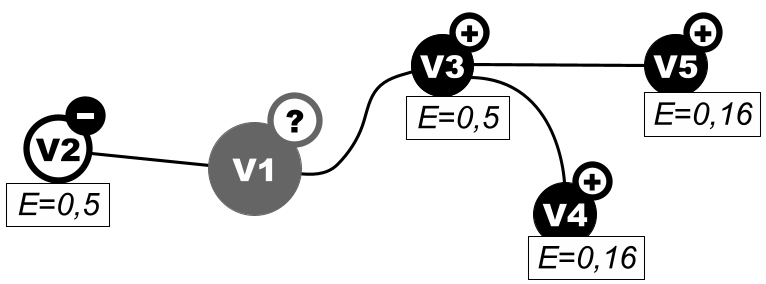 Fig 1: An example showing how Spreading Activation resolves ambiguity that direct neighborhood cannot.
Experimental Results: The FOAF.sk Case Study
The authors tested their hypothesis on the Social Network of Slovak Companies, a massive bipartite graph of 350,000 persons and 168,000 companies. The task: predict if a company or person is based in Bratislava.
| Metric | Basic Neighborhood | Spreading Activation |
|---|---|---|
| Accuracy (Company) | 30.0% | 71.9% |
| Accuracy (Person) | 36.2% | 69.4% |
| RMSE (Error) | 0.360 | 0.219 |
The results are striking. By using Spreading Activation, the RMSE dropped by nearly 40%. The wider neighborhood provided a "smoother" and more robust homophily distribution, aligning much closer to the optimal theoretical curve.
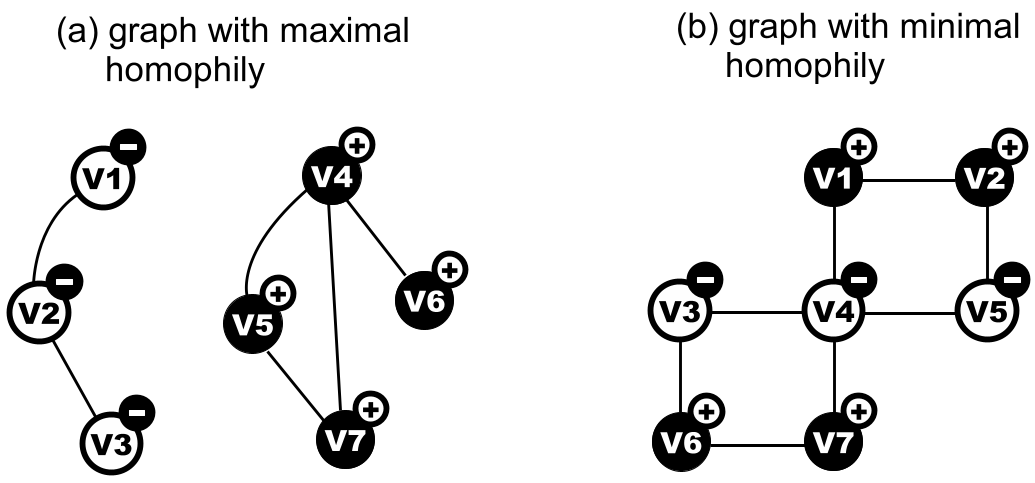 Fig 2: The Spreading Activation curve (red) tracks the optimal homophily distribution far more accurately than basic adjacency (blue).
Critical Insight: Homophily as a Proxy for Quality
Perhaps the most profound contribution of this paper is the argument that Homophily can replace traditional cross-validation. In relational datasets, splitting data into training and testing sets often introduces "linkage bias."
The authors suggest that if a neighborhood acquisition method increases measured homophily, it is inherently improving the classifier's potential, even without checking against a ground-truth test set. This provides a new way to optimize graph algorithms in real-time.
Conclusion
By moving beyond the immediate "1-hop" horizon, the authors have shown that the latent structure of a graph contains far more predictive power than simple edges suggest. Spreading Activation serves as a bridge, bringing in distant but relevant context that stabilizes classification in noisy, real-world networks.
Future Outlook: Integrating this entropy-based homophily measure as a loss function in modern Graph Neural Networks (GNNs) could potentially provide a powerful inductive bias for semi-supervised learning tasks.