
HAMM: Bridging the Gap Between Simple Mobility Models and Real-World Human Traces
A Hot Area Mobility Model for Ad Hoc Networks Based on Mining Real Traces of Human
This paper introduces the Hot Area Mobility Model (HAMM), a lightweight entity mobility model for Ad Hoc networks derived from mining large-scale Location-Based Social Network (LBSN) datasets. By analyzing human movement patterns in Gowalla and Brightkite traces, the authors propose a model that simulates realistic human trajectories using Pareto distributions for "hot area" selection, achieving realistic inter-contact time (ICT) distributions.
TL;DR
Researchers from Nanjing University of Posts and Telecommunications have developed the Hot Area Mobility Model (HAMM). By mining over 10 million check-ins from Gowalla and Brightkite, they identified that human movement is governed by a small number of "hot areas" that remain stable over time. HAMM replicates these patterns in Ad Hoc network simulations with significantly lower complexity than current SOTA models like SLAW.
Problem & Motivation: The Complexity Trap
In the world of Ad Hoc networks, the "Mobility Model" is the engine that drives the simulation. If the engine doesn't mimic how humans actually move, the resulting network metrics (like routing efficiency or packet delivery ratio) are useless.
Current models fall into two extremes:
- Too Simple: Random Waypoint (RWP) or Random Walk (RW) are easy to use but ignore the reality that humans don't move randomly—we return to the same offices, coffee shops, and homes.
- Too Complex: Models like SLAW (Self-Similar Least Action Walk) attempt to be realistic but involve heavy mathematical overhead and numerous parameters, making them difficult for many researchers to implement or tune.
The authors' insight was simple: Human mobility is defined by "Hot Areas." If we can model how nodes choose and stay within these areas, we can capture the essence of human movement without the complexity.
Methodology: Insights from the Data
The team analyzed two massive LBSN datasets (Brightkite and Gowalla). Their findings provided the "DNA" for HAMM:
- The Heavy-Tail Pattern: A tiny fraction of people travel extensively, while the vast majority stay within a few specific locations.
- Temporal Stability: If you have three favorite spots today, you will likely have those same three spots tomorrow.
- The Social Myth: Surprisingly, the number of social media friends has a very weak correlation with how far or where a person travels.
The HAMM Framework
HAMM operates by assigning "Hot Areas" to Mobile Nodes (MNs) using a Pareto distribution. This ensures that while most nodes hang out in a few common areas (like a city center), some act as "bridges" traveling between further distances.
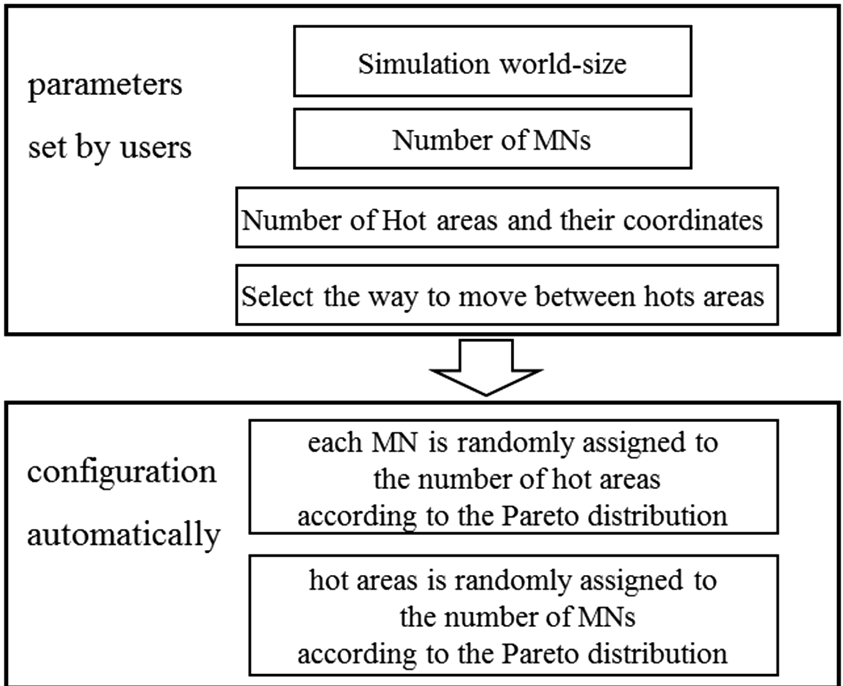 Figure 1: The HAMM Framework - From Data Mining to Simulation
Experiments & Results: Realism with Simplicity
The researchers implemented HAMM by extending the ONE (Opportunistic Network Environment) platform.
Trajectory Analysis
Visually, HAMM produces trajectories that exhibit the clustering seen in real human movement. Compared to the scattered randomness of RWP, HAMM nodes gravitate toward centers of interest, mirroring the "clumping" effect found in real urban traces.
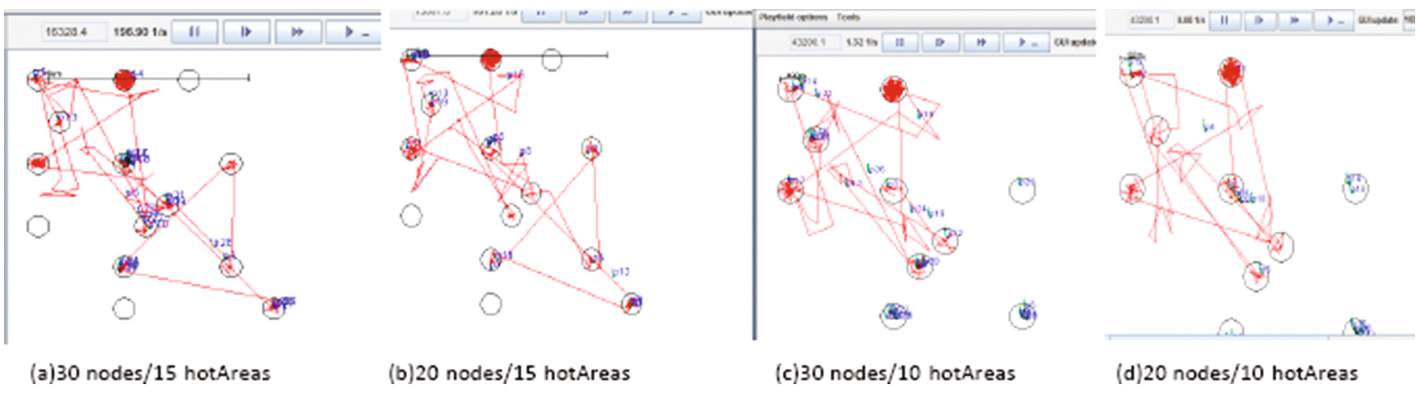 Figure 2: Testing Trajectories of HAMM under varying node/hot area densities.
Inter-Contact Time (ICT)
A critical metric for Ad Hoc networks is the Inter-Contact Time—how long it takes for two nodes to meet again. HAMM successfully produced a truncated power-law distribution for ICT (Figure 11 in the paper), which is the "Gold Standard" for validating human-centric mobility models.
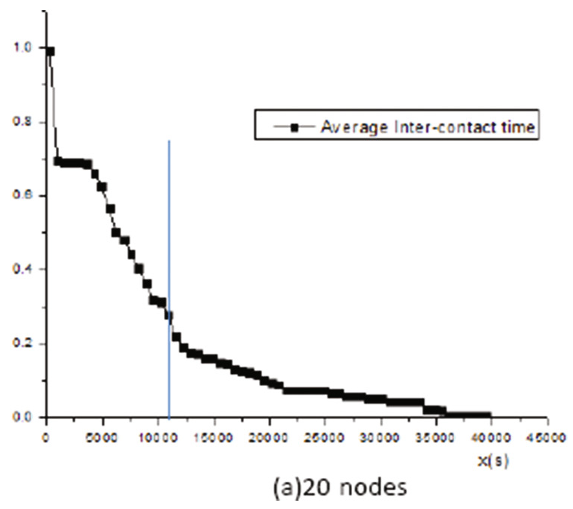 Figure 3: Inter-contact times in HAMM adhering to real-world power-law characteristics.
Critical Analysis & Conclusion
Takeaway
HAMM proves that we don't need "over-engineered" models to achieve simulation realism. By focusing on the spatial stability of hot areas rather than complex social interaction graphs, HAMM provides a "plug-and-play" solution for researchers who need realistic node movement for testing routing protocols.
Limitations & Future Work
While HAMM is efficient, it primarily focuses on entity mobility (individual nodes). Future work could explore how these "hot areas" shift during extreme events (like disasters or large-scale festivals), and how incentive mechanisms might be integrated to prevent "co-cheating" in mobile crowd-sensing tasks.
In summary, HAMM stands as a highly practical contribution to the field, offering a balanced path between the "too simple" and the "too complex."