
Balancing Quality and Speed: Redefining the "Sweet Spot" in Software Engineering
16502_How Much Software Quality Investment Is Enough A Value-Based Approach.
LiGuo Huang and Barry Boehm propose a value-based approach to software quality, integrating COCOMO II (cost estimation) and COQUALMO (quality estimation) models. The framework determines the optimal "sweet spot" for software release by balancing the risk of low quality against the risk of market-share loss due to delivery delays.
TL;DR
Software quality isn't "free"—it's an investment with diminishing returns. This paper by Huang and Boehm introduces a quantitative framework using the COCOMO II and COQUALMO models to find the "sweet spot" for releasing software. By analyzing risk exposure from both potential defects and late delivery, the authors demonstrate that the optimal amount of testing depends heavily on whether you are a high-stakes finance firm or a lean startup.
The Motivation: Moving Beyond "Value-Neutral" Engineering
In traditional software engineering, test cases are often treated as equal. This "value-neutral" perspective assumes that finding a bug in a cosmetic UI element is as important as finding one in a core financial transaction engine.
The authors argue that this is fundamentally flawed. In the real world, software value follows a Pareto Distribution: approximately 80% of the system's value is derived from only 20% of its features. Therefore, the "Why" behind this paper is clear: we need a way to quantify when the cost of further testing exceeds the potential business value gained by fixing more bugs.
Methodology: The Value-Based Framework
The authors synthesize three distinct models to calculate the optimal release point:
- COCOMO II (The Cost Side): Estimates the effort and time required based on desired reliability (RELY). Higher reliability requires exponentially more testing time.
- COQUALMO (The Quality Side): Predicts delivered defect density based on investments in automated analysis, peer reviews, and execution testing.
- Value Estimating Relationships (VERs): Maps software quality and delivery time to actual business benefit or loss.
The Balancing Act
The core of the methodology is the calculation of Risk Exposure (RE).
- RE_q (Quality Risk): The probability of loss due to defects multiplied by the economic impact of those defects.
- RE_m (Market Risk): The risk of losing market share or missing a fixed-event window (like a Mars Rover launch) due to delays.
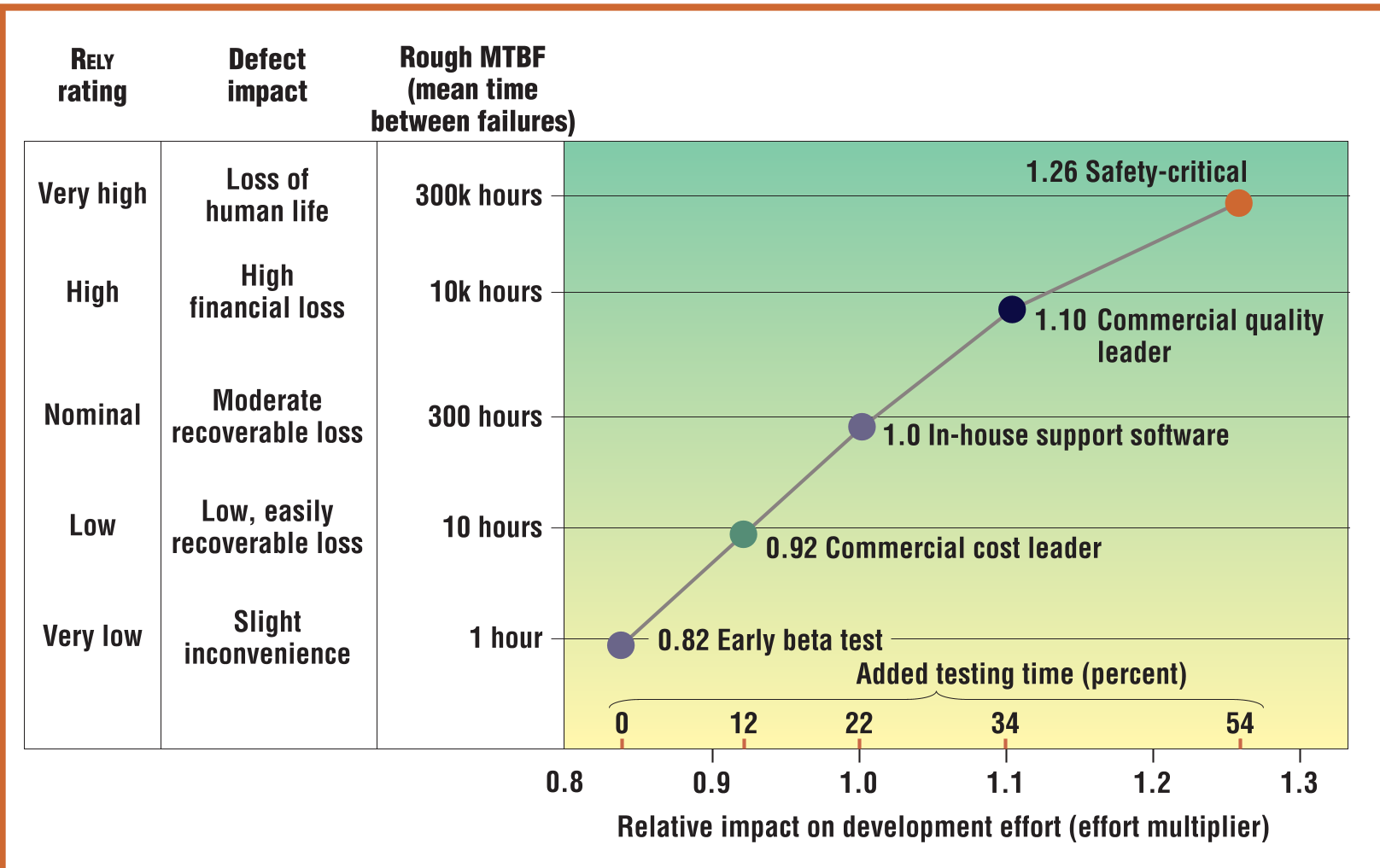 Figure 1: The trade-off between testing time, development cost, and reliability.
Experimental Results: Identifying the "Sweet Spot"
The authors analyzed three distinct business cases to show how the "enough quality" threshold shifts:
- Early Startups: The "sweet spot" is shifted left. Because market-share erosion (RE_m) is the dominant risk, early adopters are willing to tolerate more defects in exchange for speed.
- High Finance: The "sweet spot" shifts right. Here, the risk of a single defect (RE_q) is catastrophic, justifying an extra 54% of calendar time spent on rigorous testing.
- Routine Business: A middle-ground approach where nominal reliability is targeted.
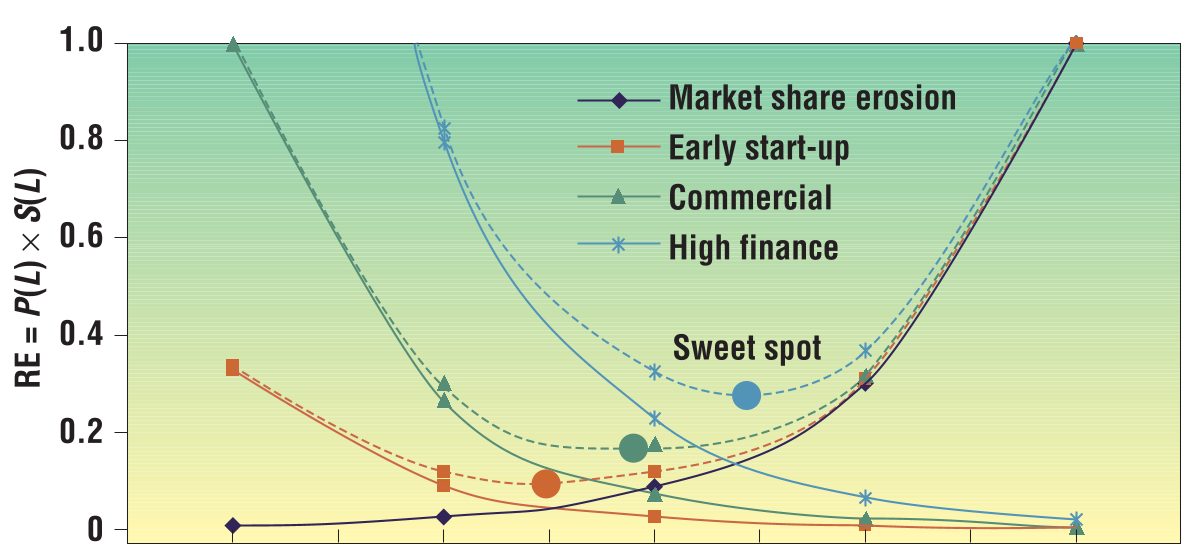 Figure 5: Finding the minimum total risk for different business profiles.
One of the most striking findings is that Value-Based testing (prioritizing the 20% high-value features) results in much lower total risk exposure than Value-Neutral testing, which plods through test cases linearly regardless of their business impact.
Critical Analysis & Conclusion
The value of this paper lies in its movement away from "Quality at all costs" toward "Quality for a purpose."
Takeaway
For technical leads and product managers, the lesson is clear: Stop testing when the risk of the next defect is lower than the risk of the next day's delay.
Limitations & Future Work
While the framework is robust, it relies on stakeholders' ability to estimate the "Size of Loss" (Sq(L)), which is notoriously difficult in volatile markets. However, even using relative values—rather than absolute dollars—provides a more scientific basis for the "Go/No-Go" decision than gut feeling. The next frontier, as suggested by the authors, is developing value-based counterparts for modern automated test generators and CI/CD metrics.
Based on the research "How Much Software Quality Investment Is Enough: A Value-Based Approach" by LiGuo Huang and Barry Boehm.