
Beyond the Smart Home: Design for Smart Relationships and Multimodal Connectedness
Hugs, Bible Study, and Speakeasies: Designing for Older Adults’ Multimodal Connectedness
The paper investigates older adults' social behaviors during the COVID-19 pandemic through the lens of multimodal connectedness. By surveying 146 and interviewing 23 U.S.-based older adults, the authors propose a shift from designing for "smart homes" toward "smart relationships" that persist across digital and physical spaces.
TL;DR
COVID-19 served as a massive "infrastructural breakdown" of social life. This study reveals that older adults (65+) are far from tech-averse; instead, they are resilient "repairers" of their own social lives. By blending Zoom, Snapchat, and even physical "speakeasy" barn gatherings, they maintain connectedness. However, the study argues that our current tech falls short of providing true intimacy and playfulness, sparking a call to shift from "Smart Homes" to "Smart Relationships."
The "Broken" Infrastructure of Aging
In technical terms, an infrastructure becomes visible only when it breaks. For older adults, the pandemic broke the invisible social infrastructures of churches, senior centers, and family dinners. Historically, HCI research has viewed aging through a medicalized lens—focusing on fall detection, monitoring, and "aging in place."
The authors argue this is a mistake. Older adults don't just want to be "safe"; they want to be connected. The study explores how these users performed "infrastructural repair" to keep their social worlds from collapsing.
Methodology: A Multi-Layered Investigation
The researchers conducted a survey (n=146) followed by deep-dive interviews (n=23) during the height of social distancing. They looked for Multimodal Connectedness—the way people weave together different devices (landlines, tablets, smartphones) and platforms (Facebook, Zoom, WhatsApp) to satisfy social hunger.
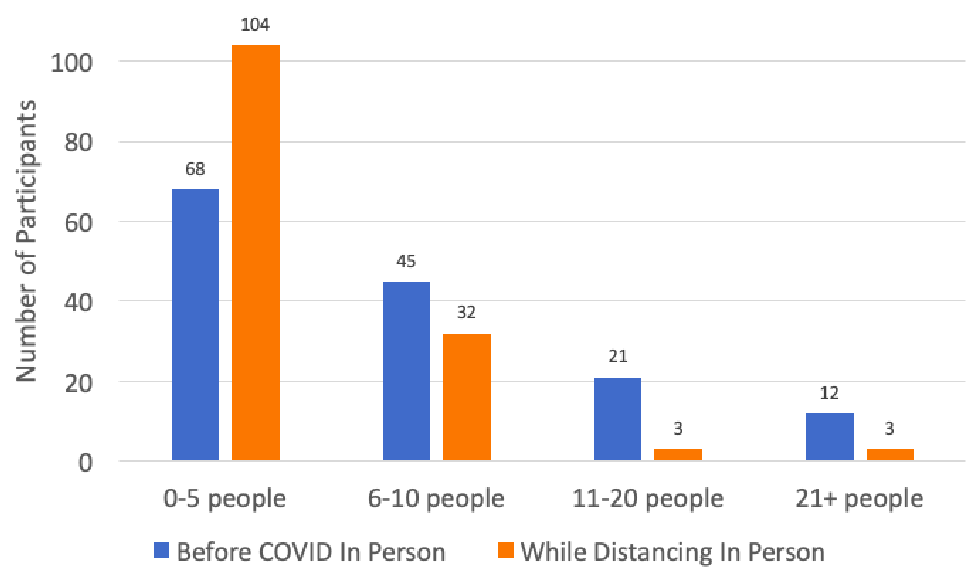 Analysis of how social distancing shifted interactions from 0-5 people daily to a higher reliance on larger digital groups.
Key Insights: Innovation through Necessity
The results shattered the stereotype of the "technologically illiterate" senior.
- Driven Adoption: Many participants felt "forced into the 21st century" but showed incredible persistence, often learning Zoom to attend "virtual funerals" or "online Bible studies."
- Creative Blending: One user combined Zoom with a physical chessboard, while others created "speakeasies" in open barns to maintain social proximity safely.
- The Snapchat Shift: Interestingly, some older adults preferred Snapchat over Facebook because it felt more "authentic" and "natural," offering a raw window into their grandchildren's lives rather than a curated feed.
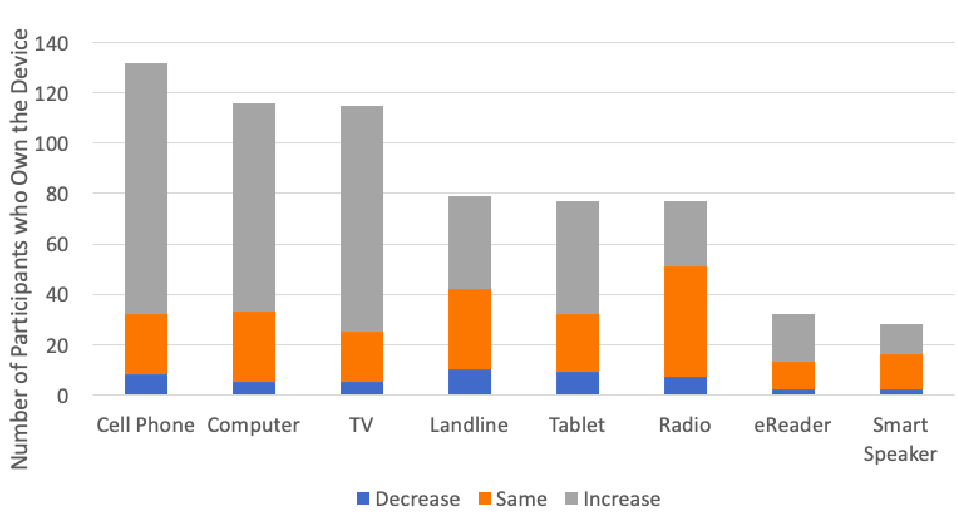 Ownership vs. Usage: Note the massive surge in cell phone and computer usage during the lockdown period.
Limitations: What Tech Can't Fix (Yet)
Despite the surge in use, "digital repair" has limits:
- The Loss of Touch: Video calls cannot replicate a hug. For those grieving or worshiping, the "physical void" was the hardest to fill.
- Meeting the "New": While tech helps maintain existing ties, it is poor at facilitating new encounters. Participants missed meeting new people at church or sororities.
- The "Talking Head" Problem: Video chat is often seen as "impersonal" because it lacks full-body language. Users expressed a desire for "life-sized" or "holographic" presence to make the connection feel "real."
The Design Agenda: Smart Relationships
The paper concludes with a provocative design manifesto. Instead of building better monitor-based "smart homes," we should build for:
- Familiar Touch: Using haptics (like a sensing blanket or pulsating watch band) to simulate warmth and presence during a call.
- New Relationship Scaffolding: Using "randomized breakout rooms" or digital meet-and-greets to help older adults expand their social circles, not just maintain them.
- Pure Playfulness: Designing for the "Third Wave" of HCI—where tech is for enjoyment, storytelling, and "Speakeasy" vibes, not just productivity or health tracking.
Conclusion
Older adults are innovators, not just users. By understanding their "repair behaviors," designers can create a future where technology doesn't just monitor aging—it enriches the human experience of staying connected, no matter the distance.